 yoga-mahendra
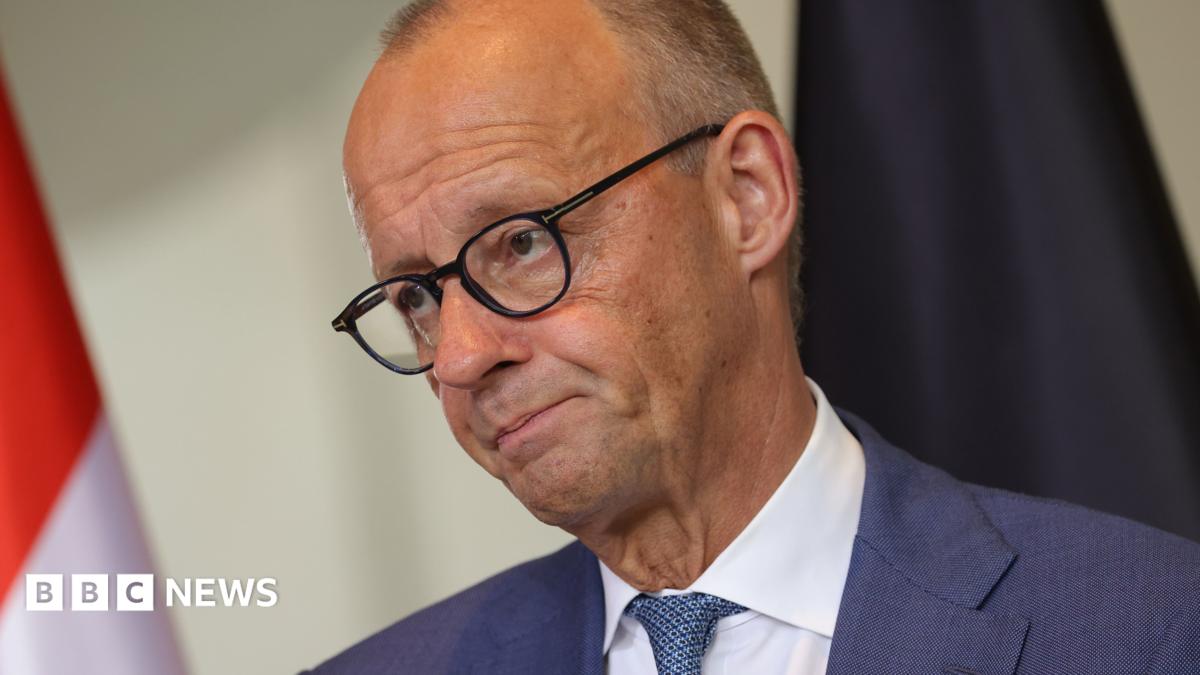
Eight conservative state premiers have united in support of German Chancellor Friedrich Merz, seeking to quell mounting speculation regarding his political future amid declining approval ratings and substantial electoral setbacks. The coordinated show of solidarity comes at a critical juncture for the Christian Democratic Union (CDU) leader, who has faced intense scrutiny over whether he remains an asset or a growing electoral liability for his party.
The regional leaders, all representing the CDU, issued a joint statement arguing that restoring public confidence in conservative leadership requires concrete political accomplishments rather than internal conflict. They emphasized that regaining voter trust depends entirely on attentive listening and decisive policymaking, firmly rejecting distractions brought about by debates over leadership personnel.
The declaration was signed by the premiers of Schleswig-Holstein, Saxony, Hesse, Rhineland-Palatinate, Saxony-Anhalt, Thuringia, Berlin, and North Rhine-Westphalia. Together, they stressed that the nation urgently requires institutional stability, warning that Germany must maintain an effective and dependable federal government backed by its own working majority inside the Bundestag.
Merz's standing has become increasingly precarious just sixteen months into his chancellorship. His tenure has been weighed down by persistently low public approval figures, exacerbated by a confrontational communication style that has alienated voters. A recent survey conducted by the Bild newspaper revealed that a mere 14 percent of respondents believed he was the right person to lead the federal republic.
Compounding the chancellor's vulnerabilities is the rapid rise of the anti-immigration, far-right Alternative for Germany (AfD) party. Discontent reached a boiling point in early September following a landmark state election in eastern Saxony-Anhalt, where the CDU suffered a punishing defeat. In that contest, the AfD surged to 43.8 percent of the vote, while the CDU collapsed to a distant second place with just 17.2 percent.
The Saxony-Anhalt result marked the first instance since the Second World War in which a far-right political entity has moved within striking distance of governing a German federal state. Although the AfD remains three seats short of an absolute majority, and mainstream political forces have categorically refused to enter into a coalition with it, the far-right group could still attempt to establish a minority administration.
In the wake of that historic setback, Merz adopted a fiercely combative stance against the AfD, branding the party as a fundamentally destructive force seeking to align Berlin with Moscow. He further contended that the far-right faction's hardline immigration policies amounted to an economic and social ethnic cleansing of vital skilled foreign workers.
Those remarks prompted swift legal retaliation from the AfD, which filed a formal defamation complaint against the chancellor. Party officials denounced Merz's public accusations as disgusting, baseless fabrications designed to malign their political movement and obscure the ruling coalition's broader failures.
The chancellor now faces an immediate test of authority with upcoming state elections in Berlin and Mecklenburg-West Pomerania. Party strategists view these weekend ballots as a decisive indicator of Merz's ability to maintain discipline across the CDU's federal apparatus and stall the momentum of rival political factions.
The electoral landscape differs significantly across the two contests. In Berlin, polling suggests a tight multi-party race in which the CDU is locked in competition for first place with Die Linke, closely followed by the Greens and the AfD. In Mecklenburg-West Pomerania, polls show the AfD leading ahead of the centre-left Social Democrats (SPD), though projected to fall short of a full majority.
For Merz, the worst-case scenario on election night would involve the CDU losing governing power within the city-state of Berlin while simultaneously failing to secure sufficient votes to retain any parliamentary representation in Mecklenburg-West Pomerania. According to an unnamed party source, senior CDU officials are scheduled to assemble on Sunday to manage the political response to the returns.
Speculation surrounding a potential "Kanzlertausch"—a mid-term swap of the chancellor—has gathered pace in recent months. Potential alternative candidates frequently mentioned within political circles include Bavarian Premier and CSU leader Markus Söder, North Rhine-Westphalia Premier Hendrik Wüst, and Federal Interior Minister Alexander Dobrindt, although Söder has publicly affirmed his backing for Merz.
Unlike parliamentary systems such as the United Kingdom, post-war Germany possesses little precedent for deposing a sitting chancellor mid-term. Although Merz could theoretically face intense pressure to step down voluntarily or confront a formal vote of no confidence, such dramatic interventions are widely viewed by analysts as improbable given the absence of an open challenger.
Merz's broader political trajectory suggests he will vigorously resist any attempts to force his departure. Even prior to taking office, he demonstrated significant clout by securing support for a €500bn ($547bn; £420bn) defense infrastructure package, drawing international praise for his decisive security posture in Europe.
Nevertheless, Merz's path to power was exceptionally protracted. He required three separate campaigns over several years to secure the CDU chairmanship and suffered an unprecedented initial defeat in his parliamentary confirmation vote despite holding a formal coalition pact with the SPD. Having spent decades pursuing the chancellorship, he appears determined to defend his mandate regardless of internal headwinds.









Comments (0)