 fitri-handayani
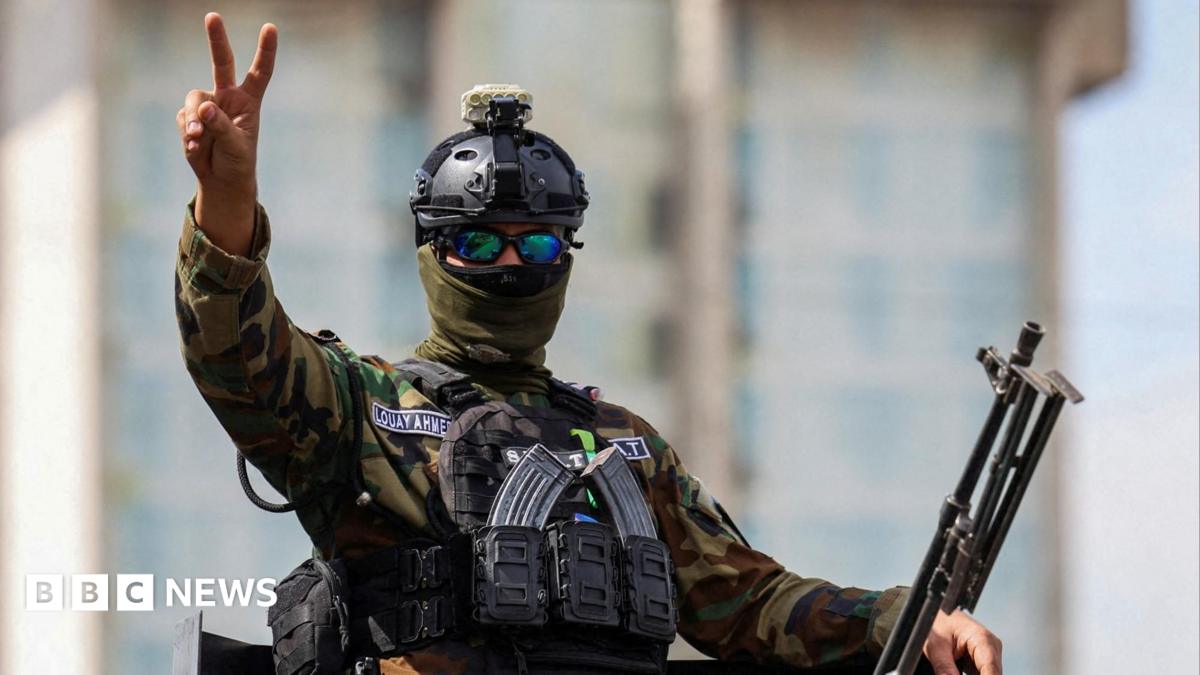
The last remaining British and American military personnel have departed Iraq, closing a chapter that began more than ten years ago and formally bringing the international coalition's campaign against the Islamic State group to an end. Roughly 100 UK troops left their base in Irbil, located in the northern Kurdistan region, in an operation that had been coordinated over recent weeks with US forces. American personnel also completed their withdrawal on Wednesday.
The drawdown had been set in motion two years ago under an agreement between Washington and Baghdad that required foreign troops to be out of the country by the end of this month. That deadline has now been met, marking the conclusion of a mission officially designated as Operation Inherent Resolve. The coalition originally deployed in 2014, when IS militants seized vast swathes of Iraqi territory and threatened to overrun the country's government.
Iraqi Prime Minister Ali al-Zaidi framed the moment as a turning point for the nation. He stated that the termination of the coalition's mission represented Iraq's shift into a phase in which it assumes full responsibility for its own security and stability. To commemorate the occasion, Iraq plans to observe four "Sovereignty Days" as a national holiday honoring the withdrawal of foreign forces.
The UK Ministry of Defence issued a statement paying tribute to the contribution made by British personnel over the course of the campaign. It noted that Iraqi Security Forces and the Kurdish Peshmerga had achieved the lasting territorial defeat of Daesh, using the Arabic acronym for the group, following more than a decade of operations, training, and capacity building. According to the ministry, those forces are now well positioned to take primary responsibility for safeguarding the country. The statement added that with these objectives accomplished, Iraq and its international partners can embark on a new chapter of enduring security cooperation under Iraqi leadership.
The Pentagon struck a similar tone. Spokesman Sean Parnell described the coalition's departure from Irbil as the successful conclusion of the military mission that defeated IS in Iraq. He emphasized that the primary burden for tackling Iraq's remaining security threats now falls to the government in Baghdad. Those challenges, he noted, include both lingering IS remnants and Iran-aligned militias that undermine Iraqi sovereignty and regional stability.
Iraq's government declared victory over IS in 2017, but coalition forces stayed on in a supporting role to prevent the group from regrouping. A recent United Nations assessment estimated that sustained counter-terrorism pressure from Iraqi security forces had reduced IS to several hundred fighters, who are now capable only of carrying out unsophisticated operations. While the territorial caliphate has long been dismantled, the risk of a resurgence persists in parts of the country.
A more immediate concern for Baghdad is the presence of Iranian-backed militias. Zaidi, who assumed office in May, has pledged to disarm these groups and bring all weapons under state control now that the coalition has left. However, several powerful factions have resisted his proposals, and analysts suggest their influence could expand in the absence of a US military presence, complicating the government's efforts to assert authority over the entire country.
The final months of the coalition's presence were marked by heightened danger. Since the outbreak of war between the United States and Israel on one side and Iran on the other earlier this year, militias had been actively targeting the remaining US and UK forces stationed at Irbil air base. Hundreds of NATO troops based in Baghdad were withdrawn in March as tensions escalated. A BBC team visiting the coalition base in April, during a fragile ceasefire between Washington and Tehran, was forced to circle the airfield in an RAF transport aircraft while drones were being launched in the vicinity.
At the peak of the US bombing campaign against Iran, the base was subjected to as many as 28 drone and missile attacks in a single day. RAF Regiment Gunners, among the last British personnel on the ground, shot down more than 100 drones during the first six weeks of the conflict. Many of the attacking drones were launched by Iranian-backed militias operating from within Iraq.
In its farewell statement, the MoD highlighted the scale of the training effort undertaken by UK forces. British personnel provided support, instruction, and assistance to more than 111,000 members of the Iraqi Security Forces, including over 21,000 Peshmerga fighters in the semi-autonomous Kurdistan Region. The Royal Air Force also flew thousands of sorties and struck more than 2,300 IS targets over the course of the campaign.
Looking ahead, the RAF is expected to continue conducting missions over neighboring Syria as part of ongoing efforts to prevent IS remnants from regaining a foothold there. The Pentagon confirmed that the United States would maintain targeted training and intelligence support for its Iraqi partners. US Central Command said the coalition's joint taskforce remains operational and is now headquartered in Jordan. In Syria, where the UN estimates that IS still has as many as 3,000 fighters, American forces will continue their separate mission against the group.
This marks the third occasion on which US and UK forces have pulled out of Iraq. Tens of thousands of troops were first deployed to the country in 1991 after Saddam Hussein's invasion of Kuwait. They returned in 2003, when President George W. Bush ordered Operation Iraqi Freedom to topple the dictator and eliminate weapons of mass destruction that ultimately proved nonexistent. The violent sectarian insurgency that followed the invasion claimed tens of thousands of lives, leaving deep scars that continue to shape Iraq's political and security landscape today.










Comments (0)