 yoga-mahendra
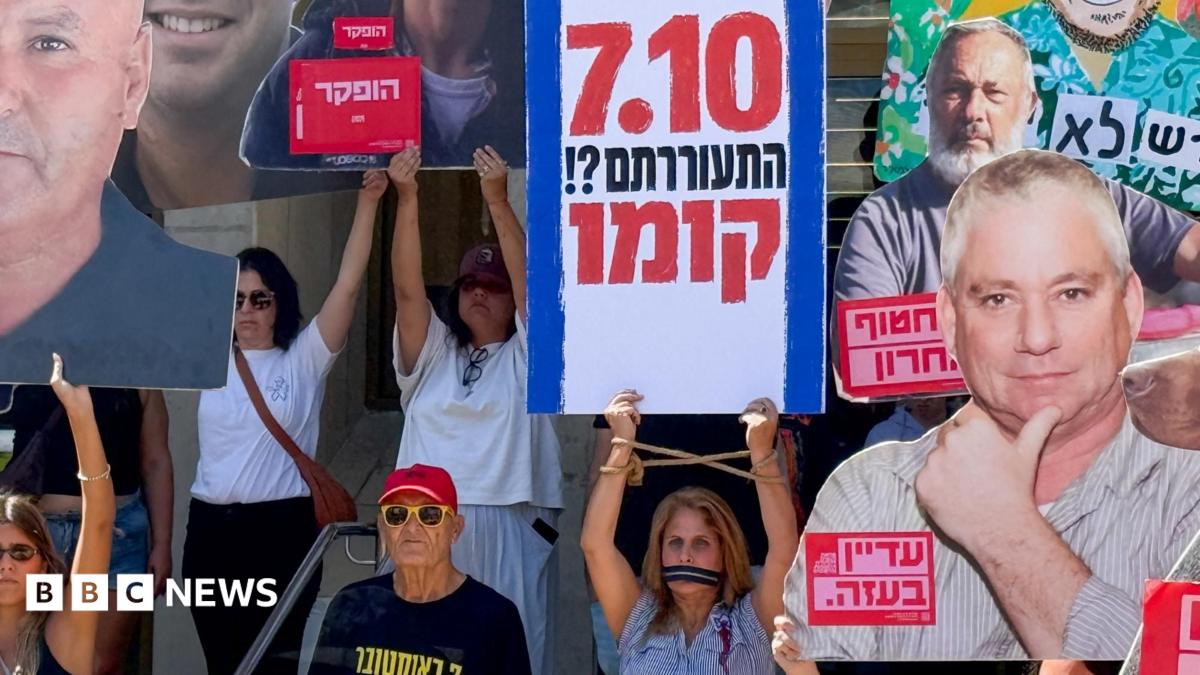
Three years after the deadliest single attack in Israel's history, the residents of Kibbutz Kfar Aza gathered at dawn on Wednesday, walking in silence toward the armoury at the centre of their community. It was there, shortly after 7am on 7 October 2023, that Hamas-led gunmen killed half of the kibbutz's 14-member civil defence squad. In total, 64 people from the community were killed that day and 19 were taken back to Gaza as hostages. The memorial ceremony marked a wound that has not healed, but it also underscored a deepening political rift over who should answer for the security catastrophe that allowed the attack to happen.
The assault three years ago saw approximately 1,200 people killed across southern Israel after gunmen breached the border fence and swept through nearby communities. Another 251 people were dragged into Gaza as hostages. It was the worst intelligence and military failure the country had experienced since its founding in 1948, and yet, three years on, no independent state inquiry has been established to examine how it was permitted to occur.
For families like that of Inbar Goldstein, whose brother and niece were killed and four other relatives abducted from Kfar Aza, the absence of a formal investigation is a continuing betrayal. "I need my country to take responsibility," she said, arguing that the attack's origins extend far beyond a single day. "Nobody investigated the roots. It didn't start or end on October 7th — it's a long process of abandonment."
That sense of abandonment is echoed by relatives of soldiers who died on the border. Roni Eshel was one of 15 soldiers killed when gunmen overran their base at Nahal Oz, adjacent to Kfar Aza. Months before the attack, she and other young female observers stationed along the Gaza border had repeatedly warned their superiors about signs of unusual activity and possible preparations for an assault. Their warnings, according to multiple accounts, went unanswered.
"There are so many questions," said her uncle, Elad Levy. "Were the Egyptians warning the prime minister? The Emiratis? Were there no other warnings Netanyahu ignored? We need to find out what happened — not just on the day, but the year before, and five years before that." He added that only a thorough inquiry could prevent a repeat of the failure. "If we don't inquire into this, it will happen again and again."
At the centre of the accountability dispute is Prime Minister Benjamin Netanyahu, who was in office at the time of the attack and is now campaigning for re-election on a platform promising to be tougher and stronger than any rival in protecting Israel. He has consistently rejected personal responsibility for the security failures and has instead pointed the finger at his own security chiefs, accusing them of deliberately choosing not to wake him in the hours before the assault.
In an interview with Israel's right-wing Channel 14 television network, Netanyahu suggested that his subordinates feared he would order a massive mobilisation of the Israel Defense Forces and escalate the situation. "God forbid we wake up the prime minister and he says, 'Wake up the entire IDF immediately, scramble the air force!'" he said. "What would have happened if they had woken me? This would not have happened." His remarks implied that a more aggressive response on his part would have shielded Israel from the attack.
Over the past three years, however, a steady stream of reports has suggested that Netanyahu received warnings from multiple quarters, including his own security chief and regional neighbours. He denies all such claims. Last month, the Israeli newspaper Haaretz published extracts from a new book alleging that the leader of the United Arab Emirates telephoned Netanyahu ten days before the attack to warn of Hamas plans for a major operation. Netanyahu's office dismissed the report as "an absolute lie" and said he would sue the newspaper.
Amir Ohana, a member of Netanyahu's Likud party, defended the prime minister in a social media video last month, calling it "preposterous and absurd" to suggest that Netanyahu could have known about the attack when the former Hamas leader in Gaza, Yahya Sinwar, had confided in only a handful of people. Ohana credited Netanyahu with reshaping the Middle East and said he did not give up "even when voices inside and outside Israel called on him to stop."
Yet the demand for an independent inquiry continues to grow. Critics argue that without a full accounting of the intelligence and policy failures that preceded 7 October, the country cannot properly prepare for future threats. The victims' families say the lack of accountability is not merely a political issue but a moral one. For them, the memorial ceremonies held this week are not only acts of remembrance but also protests — quiet, persistent calls for a truth that has so far been denied.
As Israel moves toward another election, the question of who bears responsibility for the worst security failure in its history is set to remain a central and divisive issue. For the people of Kfar Aza and the families of the soldiers who died at Nahal Oz, the answer may determine not only the outcome of the vote but the future of the country's collective memory. The pain of that October morning remains vivid, and with it, the conviction that silence is no longer acceptable.








Comments (0)