 yoga-mahendra
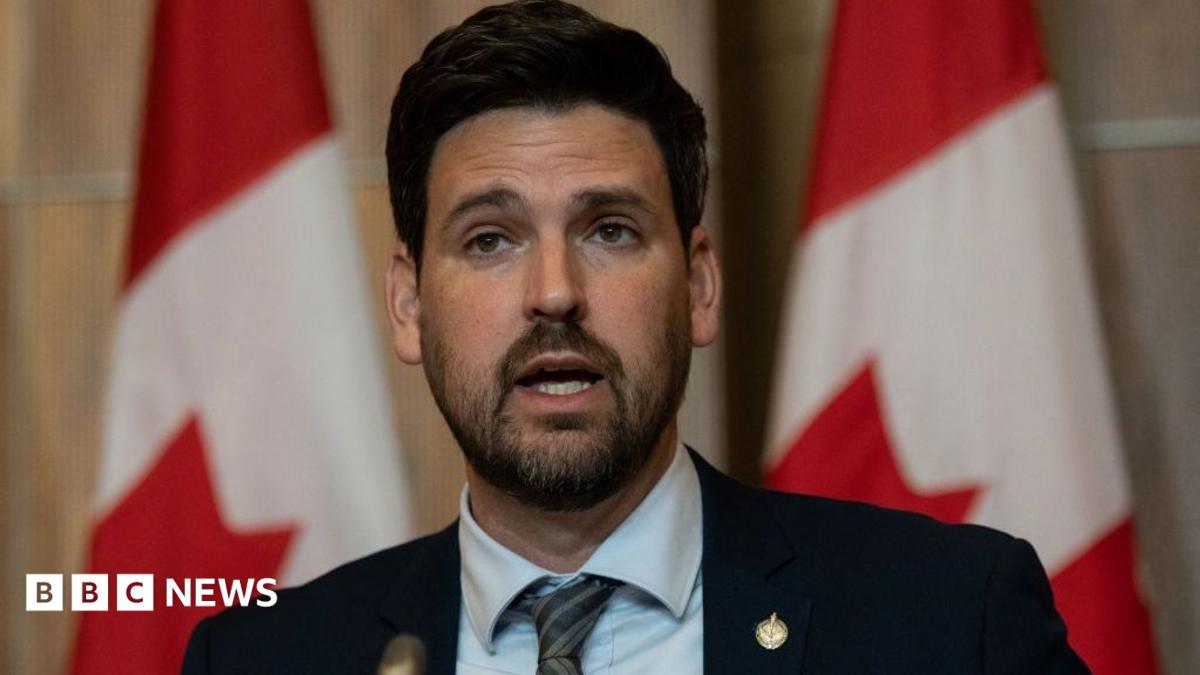
Canada has announced it will indefinitely shelve plans to widen its medically assisted dying programme to include individuals whose only medical condition is a mental illness. The decision, revealed on Wednesday by Justice Minister Sean Fraser, marks a significant reversal for a country that has been at the forefront of expanding end-of-life choice legislation.
Fraser told reporters that the government had reached the conclusion after weighing deeply divided opinion among medical professionals, legal experts, and the public. He described the matter as one of the most difficult files he has handled, acknowledging that no perfect agreement exists within Canadian society or the medical community on how to proceed.
The practical effect of the announcement is that Canadians suffering solely from a mental disorder will not gain access to the procedure by March 2027, the deadline that had previously been set. Instead, the federal government intends to bring forward fresh legislation in the coming weeks that would suspend that expansion for an indefinite period. The same bill is also expected to introduce a separate change allowing patients with a progressive, incurable illness to provide advance consent for assisted dying before their condition deteriorates to the point where they can no longer make such a request. That advanced-request mechanism is not currently permitted under Canadian law.
Medically assisted dying, commonly referred to in Canada as Maid, was first legalised in 2016 for people with terminal illnesses. Those patients continue to represent the overwhelming majority of cases. Five years later, following a court ruling in Quebec, the law was broadened to cover individuals with incurable conditions whose deaths were not yet imminent. That second pathway is widely known as "track two" Maid.
The prospect of extending eligibility to those whose sole underlying condition is mental illness has been under discussion since 2023, when the expansion was first scheduled. It was postponed twice to give health authorities and regulators more time to study how such a system could be safely implemented. Wednesday's decision effectively ends that timeline, at least for the foreseeable future.
Supporters of expanding the programme argue that excluding people with mental illness alone amounts to discrimination and violates their constitutional rights, including equal access to healthcare. They contend that patients with mental disorders should be afforded the same dignity and autonomy as those with physical illnesses.
Among those challenging the current restrictions is Claire Brosseau, a woman with treatment-resistant bipolar 1 disorder who is part of a federal court case contesting the government's earlier decision to delay access. She has previously told the BBC that euthanasia would offer her what she described as "a safe death." Her case remains before the courts, and Fraser acknowledged that the Supreme Court of Canada could ultimately weigh in on the issue.
Opponents of expansion, however, have raised persistent concerns about whether medical science currently understands mental illness well enough to determine, with confidence, when a condition is truly irremediable. Fraser echoed that unease, noting that when he hears there is a lack of consensus within the medical community about the irremediable nature of certain mental illnesses, it gives him real cause for concern.
The government's position also reflects a recommendation made earlier this year by a parliamentary committee, which concluded that Canada should indefinitely exclude individuals whose sole underlying medical condition is a mental illness from assisted dying. The committee's report noted sharply competing views on the matter but also stressed what it called a pressing need for increased and more equitable access to adequate mental health services.
That conclusion followed testimony from doctors, advocates, and experts from countries that already permit assisted dying for people with mental illness alone, including the Netherlands and Belgium. Not every committee member endorsed the recommendation, however. A dissenting report argued that the process had been fundamentally flawed and biased, underscoring how polarising the debate has become.
Broader criticisms have also been directed at Canada's assisted dying regime as a whole. Some experts warn that the programme risks becoming a means of alleviating suffering for people who would be better served by improved access to affordable housing and healthcare, rather than functioning strictly as an option of last resort.
Public opinion research suggests that while a majority of Canadians support access to medically assisted death in general, that support drops noticeably when the question turns to patients whose only condition is mental illness. That split helps explain the political sensitivity surrounding the file.
Fraser framed the decision as a careful and necessary step rather than a permanent foreclosure of the debate. He said the choices involved were not easy but expressed confidence that they would prove to be the right ones for the country at this particular time. The forthcoming legislation will now face scrutiny in Parliament, where lawmakers are likely to revisit the boundaries of one of the world's most permissive assisted dying frameworks.








Comments (0)