 fitri-handayani
BBC News, Delhi — India is governed by a civil service numbering in the millions, staffing the offices that issue documents, run police stations, inspect food outlets and run public hospitals. Almost all of these officials work anonymously. Every few years, however, a handful become unlikely household names simply for appearing to do their jobs well — and for turning up online in a country where government offices are widely regarded as places of endless queues and unanswered complaints.
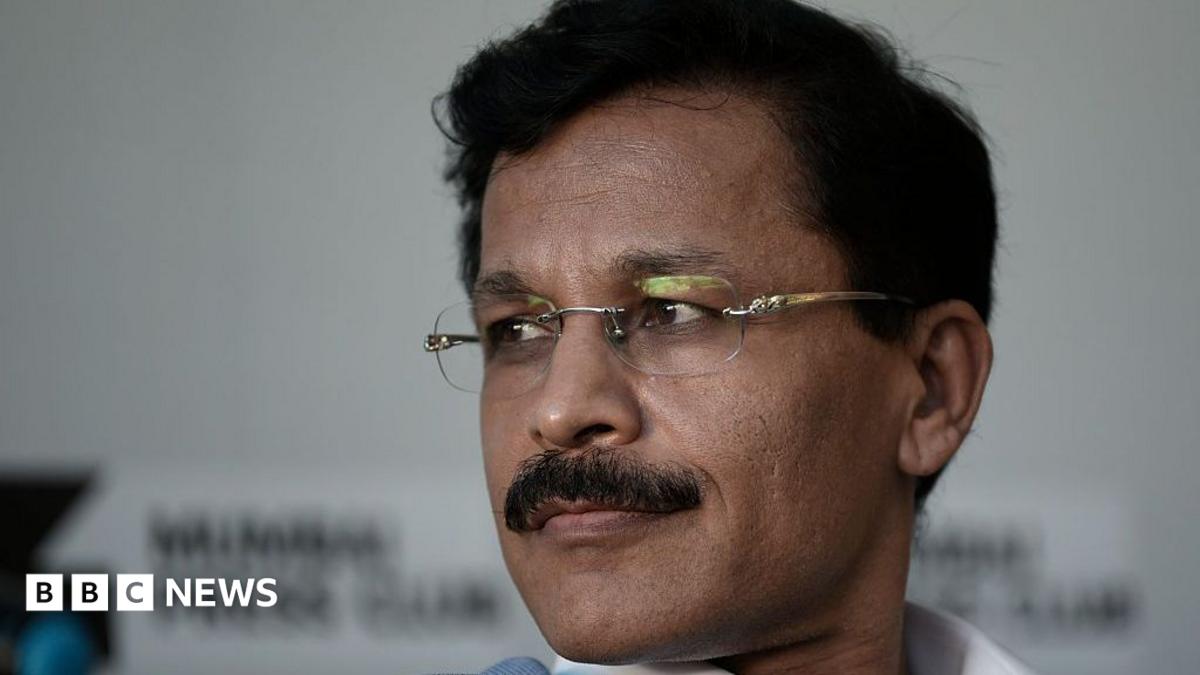
Tukaram Mundhe, 51, is the most recent example. Since taking charge in May as commissioner of Maharashtra's Food and Drug Administration, he has presided over a succession of enforcement drives. His inspectors have swept through restaurants and other food businesses, documenting conditions that are frequently sanitised by proprietors: signs of pest infestation, unhygienic kitchens, and food being sold past its expiry date. The unedited images and inspection footage have travelled far beyond Maharashtra.
Mundhe has also drawn attention to a different kind of gap — the wide distance between what hospitals pay for routine medical supplies and what patients are eventually billed. That work has made him, in effect, a social-media celebrity. Videos and photographs from his inspections are shared and reshared in enormous numbers, and hundreds of commenters have said they wish officials of his calibre would turn up to deal with food safety in their own state. Enforcement that is meant to be routine has been recast, almost overnight, as a kind of public service entertainment.
In Gurugram, the satellite city that has grown into Delhi's southern edge, district town planner RS Batth has attracted similar acclaim for moving against illegal construction and encroachments. He, too, has found his enforcement clips circulating widely — and, like Mundhe, he has attracted a second kind of attention from people who object to his methods.
The reason these stories resonate is not hard to see. In India, civil servants are responsible for a huge share of the everyday infrastructure people depend on, from paperwork to policing, food safety and healthcare. At the same time, they are routinely criticised for delays, demands for bribes and for forcing applicants to "run from pillar to post." Kamal Kant Jaswal, a retired civil servant, argues that the enthusiasm comes from that contrast: for a public conditioned by delay and indifference, competent administration is the surprise, not the baseline. What ought to be unremarkable, he says, now reads as exceptional, because so little of ordinary administration is experienced as efficient.
Ordinary citizens are the engine of that expectation. Rajesh Singh, 43, who works for a finance company in Delhi, describes long waits simply to get routine work processed, and far longer processes when a complaint has to be escalated. He says he has personally watched a task that was supposed to be finished within 24 hours stretch to six months, with no certainty of a favourable result even at the end of it. Against that backdrop, an official who produces results in a week appears to be performing a miracle rather than fulfilling a job description.
Mundhe is not the first, and the pattern stretches back decades. TN Seshan, who served as India's chief election commissioner in the 1990s, became a household name for enforcing electoral rules without flinching. Kiran Bedi, the first woman to be inducted into the Indian Police Service, was dubbed "Crane Bedi" in the early 1980s after it was widely reported that a car illegally parked by the then prime minister, Indira Gandhi, was towed away — an action carried out by a sub-inspector reporting to her, and one she has said in retrospect she would have supported. Ashok Khemka became nationally known for intervening in a contested land transaction in 2012, and police officer Neeraj Jadaun was praised for confronting a mob during deadly religious violence in Delhi in 2020. Together, these cases have made the idea of the "no-nonsense" bureaucrat both recognisable and rare.
There is, however, an important second layer to the story. Jaswal points out that thousands of officers do their jobs competently every day without attracting any attention at all — often because their work involves little direct contact with citizens, or because the results are simply not visible. The cases that go viral tend to be the visible, dramatic, highly filmable ones: raids, summonses, demolitions. Quiet administrative competence rarely produces a clip.
Popularity also comes with a price. Officials praised for enforcing rules can be attacked for enforcing them rigidly, without regard to local realities. Mundhe has been criticised by sections of India's food and hospitality industry, which have accused him of overreach; he has rejected claims that his action is selective or unlawful, saying inspections are driven by evidence and that licences are suspended only in serious cases. Batth has faced similar flak, with critics alleging selectivity and arguing that his actions fall hardest on vulnerable people. In widely circulated videos, he has said he acts strictly according to town-planning rules.
Jaswal's explanation for that friction is economic as much as legal. A street vendor's cart or stall may count as an unauthorised structure on paper, but for one family it can be the only source of income there is. And in a country where millions migrate to cities in search of work, an unsanctioned room, shack or housing unit may be the only shelter a newcomer can afford. Enforcement can be entirely lawful and still be experienced as cruel, because the law does not adjust for who is able to absorb the loss.
The wider implication is uncomfortable. Hero worship of the incorrupt official is not evidence that India has solved the problem of bureaucratic dysfunction; it is a measure of how far the median experience has fallen. It also raises a question about what happens after the cameras leave: whether attention sustains reform, or whether the spotlight fades and the same conditions reassert themselves. As the BBC report notes in closing, officials face their own difficulties while carrying out their duties — a point underscored by writers such as Pushpa Sundar, who briefly served as a civil servant herself. For now, though, the lesson from Mundhe and Batth is the one millions of Indians appear to have drawn: the most radical thing a bureaucrat can do is do the job.








Comments (0)