 yoga-mahendra
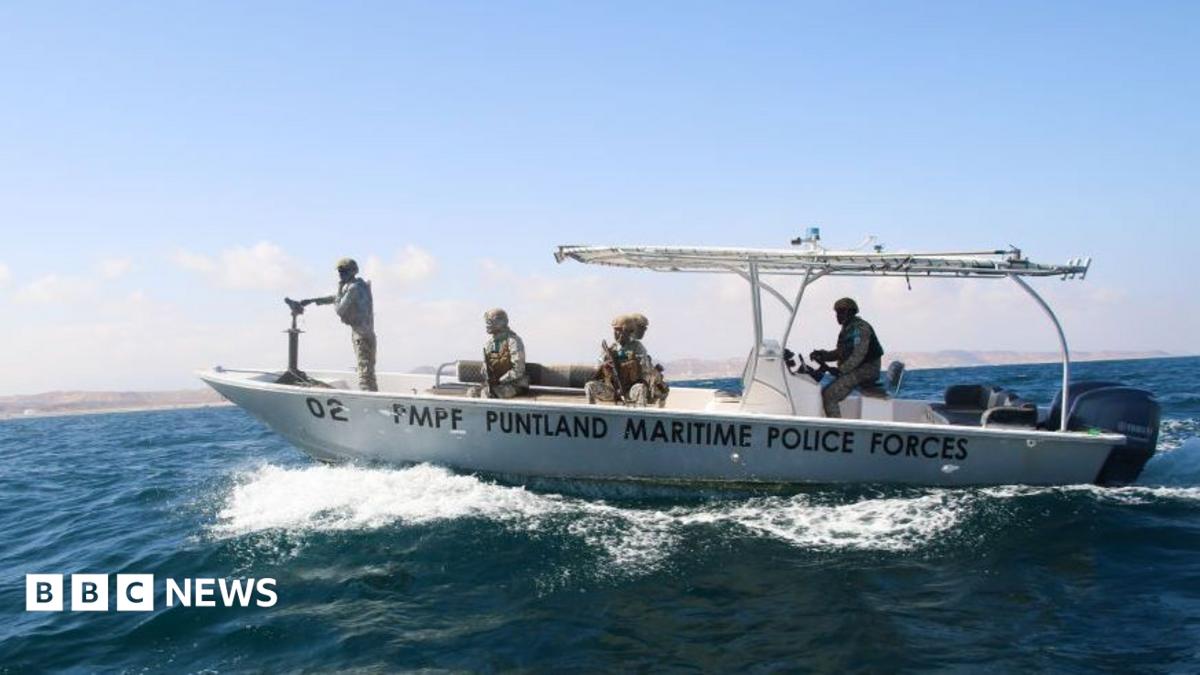
Five crew members aboard an oil tanker hijacked by pirates off the coast of Somalia were killed before regional security forces managed to retake the vessel, a senior official from Somalia's semi-autonomous Puntland region has told the BBC.
Bile Qabowsade, the Deputy Information Minister of Puntland, said the five seafarers were killed by the pirates before Puntland maritime forces boarded the MT Hoarner 25. According to the official, the deceased included three Pakistani nationals, one Indian citizen and one individual from Myanmar.
The disclosure provides the first detailed account of fatalities in the hijacking, which had previously been reported primarily as a seizure of the vessel and its crew rather than a deadly attack. The confirmation that crew members lost their lives marks a significant escalation in the severity of the incident and underscores the growing danger posed by resurgent piracy in the waters off Somalia.
Four other crew members were wounded during the ordeal, Qabowsade said. Those injured included three Pakistani nationals and one Indian, according to the official's account. The condition of the injured crew members has not been publicly disclosed, and it remains unclear whether they have received medical treatment or have been transferred to safety.
The tanker was transporting approximately 18,500 barrels of oil at the time of the hijacking, with the cargo destined for Mogadishu, Somalia's capital. The vessel was seized in April by six armed men while sailing off the Somali coast, according to officials.
At the time of the initial hijacking, authorities had reported that 17 crew members were aboard the tanker. The multinational crew comprised 10 Pakistanis, four Indonesians, one Indian, one Sri Lankan and one Myanmar national, reflecting the diverse labour force that typically staffs commercial shipping vessels operating through the region.
Following the seizure, the hijacked tanker was anchored near the Somali coastline, positioned between the fishing towns of Xaafun and Bander Beyla. The location is within the broader region where pirate gangs have historically operated, using the lengthy and poorly monitored coastline to hold vessels and crews while negotiating ransoms.
Puntland authorities have arrested 16 suspected pirates in connection with the hijacking, while other suspects managed to escape and are being pursued, officials said. The arrests represent a substantial law enforcement response to the incident, though questions remain about how the remaining suspects were able to flee.
Qabowsade specifically rejected suggestions that forces from Puntland had assisted some of the pirates in escaping. The denial appears to respond to allegations that local security personnel may have facilitated the flight of suspects, a sensitive accusation in a region where pirate networks have sometimes been accused of colluding with officials.
Authorities have not provided further details about the circumstances in which the five crew members were killed, nor have they explained precisely how the pirates managed to take control of the vessel. The absence of a detailed timeline leaves key questions unanswered, including whether the killings occurred during the initial seizure, during the period the tanker was anchored, or during the operation to retake the ship.
The incident highlights the persistent threat posed by Somali piracy, which had declined dramatically after 2011 following an international naval campaign involving multiple countries. At its peak, Somali piracy cost the global shipping industry billions of dollars annually and prompted the deployment of warships from NATO, the European Union and other naval powers.
However, attacks and hijackings have increased again in recent years, with analysts pointing to a range of contributing factors. These include the withdrawal or reduction of international naval patrols, economic hardship in coastal Somali communities, and the availability of weapons and experienced pirate networks. The apparent link between piracy and broader regional conflicts has also drawn concern.
The BBC has reported separately on how Somali piracy has surged as the impact of the US-Iran war ripples outward across the region. In July, a second tanker within three months was hijacked off the coast of Yemen by suspected Somali pirates, indicating that the threat has expanded beyond Somali waters into adjacent shipping lanes.
Piracy off the Horn of Africa affects a vital global trade route. The Gulf of Aden and the waters off Somalia sit along the approach to the Suez Canal, one of the world's busiest maritime corridors. Disruption to shipping in this area can raise insurance premiums, increase transit times and ultimately affect consumer prices in markets far from the region.
For the families of the five slain crew members, the confirmation of their deaths brings a tragic conclusion to a hijacking that had drawn little international attention in its immediate aftermath. The victims came from Pakistan, India and Myanmar — countries whose nationals make up a significant share of the merchant mariners working on vessels traversing high-risk waters.
The Puntland government's decision to share the casualty figures with the BBC reflects both the seriousness of the incident and the region's desire to demonstrate its capacity to respond to piracy. Puntland has stepped up maritime patrols in response to the increase in attacks, positioning itself as a frontline force against pirate gangs operating along its coastline.
The status of the MT Hoarner 25 and its remaining crew has not been fully clarified. It is also unclear what will happen to the 16 arrested suspects, whether they will face prosecution in Puntland or be transferred to Somali federal authorities, and what legal framework will apply to their cases.
International maritime organisations have repeatedly called for a comprehensive approach to Somali piracy that combines naval enforcement with onshore development programmes aimed at reducing the economic incentives that drive young men into piracy. Without such measures, analysts warn, the recent resurgence may continue, placing more crews at risk.
The killing of five seafarers aboard the MT Hoarner 25 serves as a stark reminder that piracy is not a victimless crime. As regional forces pursue the remaining suspects and investigators piece together the sequence of events, the incident is likely to intensify debate over how best to protect commercial shipping and hold perpetrators accountable in one of the world's most dangerous maritime environments.










Comments (0)