 yoga-mahendra
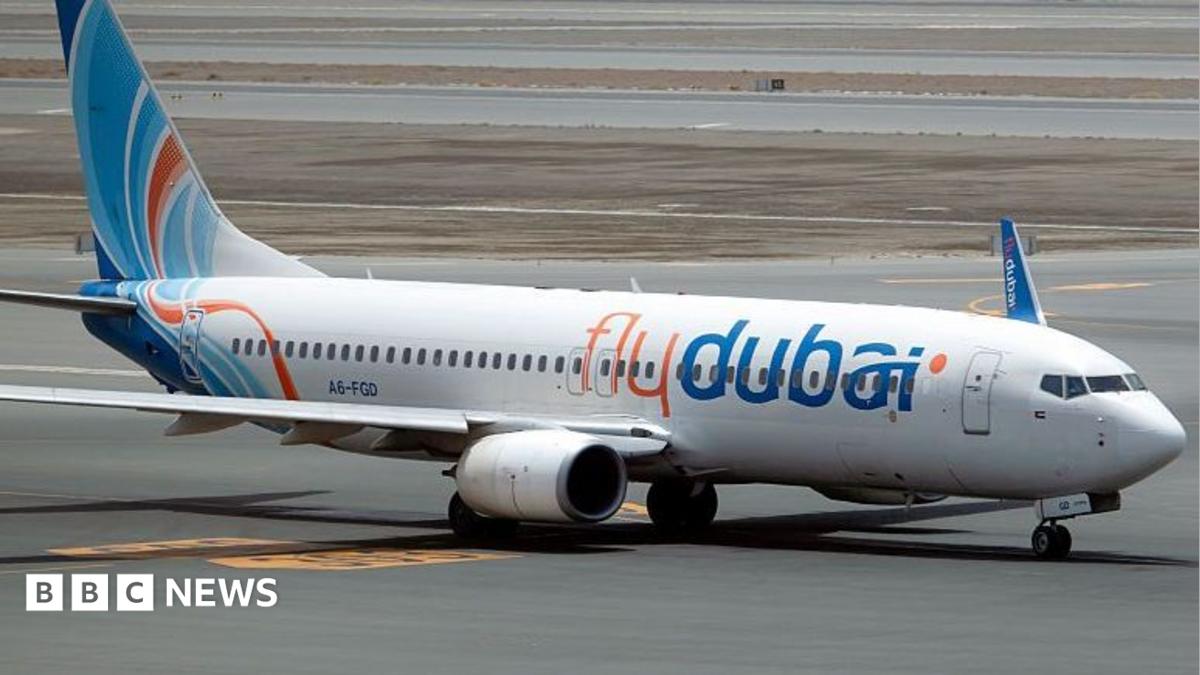
A commercial flight traveling from Dubai to Tel Aviv was forced to change course on Wednesday morning after what Israeli officials describe as a physical altercation broke out between the aircraft's pilots, according to accounts relayed to Israeli media.
The Flydubai jet departed Dubai International Airport in the United Arab Emirates in the early hours of Wednesday, bound for Ben-Gurion Airport near Tel Aviv. Roughly two hours into the journey, however, the aircraft transmitted an emergency squawk code, drawing the attention of air traffic controllers and flight tracking services monitoring the region, the flight tracking website Flightradar24 reported.
Within minutes of issuing that initial signal, the plane briefly switched to a code reserved for reporting a hijacking, according to Flightradar24's account of the flight's transponder data. That hijacking code was subsequently replaced by the standard general emergency signal, suggesting the situation on board was being reassessed by the crew.
Israeli authorities moved quickly to dampen fears of an aerial piracy incident. The office of Prime Minister Benjamin Netanyahu stated that the episode was not believed to have been a hijacking, pushing back against the most alarming possible interpretation of the transponder signals tracked by observers on the ground.
Instead, the emergency declarations were thought to have followed a confrontation between the pilot and the co-pilot inside the cockpit, according to local media reports that cited Israeli defence officials. The precise sequence of events leading to the scuffle, and what triggered it, remained unclear in the immediate aftermath.
The aircraft was carrying approximately 150 people, the majority of them Israeli citizens, when it was redirected away from its intended destination. Rather than completing the final leg of its journey to Ben-Gurion Airport, the plane landed at Tabuk Airport in northeastern Saudi Arabia.
The diversion to Saudi territory is notable given the broader regional context. Saudi Arabia and Israel have no formal diplomatic relations, though the kingdom has in recent years permitted Israeli civilian aircraft to cross its airspace, a shift that has quietly reshaped flight routes between Israel and parts of Asia and the Gulf. Wednesday's unscheduled landing nonetheless placed an Israeli-linked flight on Saudi soil under emergency circumstances, handled through whatever coordination channels exist between the relevant aviation and security authorities.
Israel's air force scrambled fighter jets in response to the unfolding incident, and Prime Minister Netanyahu convened urgent consultations as the situation developed, underscoring the seriousness with which Israeli officials treated the mid-air disturbance even as they discounted the hijacking hypothesis.
The involvement of military aircraft reflects standard practice in many countries when an airliner overflies or approaches national territory while broadcasting an emergency code, particularly one as sensitive as a hijack signal. Intercepting jets are typically dispatched to visually identify the aircraft involved and establish radio contact if possible.
Aviation safety experts note that emergency transponder codes are a critical layer in the global air traffic system, allowing crews to silently alert controllers to distress, radio failure, or unlawful interference. The momentary confusion over which code was being transmitted aboard Wednesday's flight illustrates how quickly ground-based observers, including public flight tracking platforms and national security agencies, must interpret ambiguous signals in real time.
The incident also raises questions about cockpit resource management and crew conduct, areas that international regulators and airlines have scrutinized for decades. Physical confrontations between flight deck crew members are exceedingly rare in commercial aviation, but when they occur they pose obvious risks to the safe operation of an aircraft carrying scores of passengers.
Flydubai, the Dubai-based carrier operating the flight, has yet to publicly detail its account of what transpired on board. The airline is a state-linked low-cost carrier that has expanded rapidly across the Middle East, Africa, and Europe, and it maintains a busy schedule of services connecting the UAE with destinations in the region, including Tel Aviv.
For the roughly 150 passengers on board, what began as a routine early morning flight became an unexpected diversion to a third country. The process of disembarking, undergoing any security screening, and eventually being transported onward to Israel would require coordination among Emirati, Saudi, and Israeli authorities, a logistical undertaking complicated by the absence of normal diplomatic ties between Jerusalem and Riyadh.
The episode is likely to prompt reviews on multiple fronts: by Flydubai into its crew protocols, by Israeli aviation and security agencies into their response to the emergency signals, and by regional authorities into how an aircraft linked to Israel came to be handled at a Saudi airport under such unusual circumstances. For now, officials have stressed that the most feared scenario, a hijacking, did not materialize, and that the flight's diversion stemmed from a dispute among the people at the controls rather than any external threat to the aircraft.










Comments (0)