 yoga-mahendra
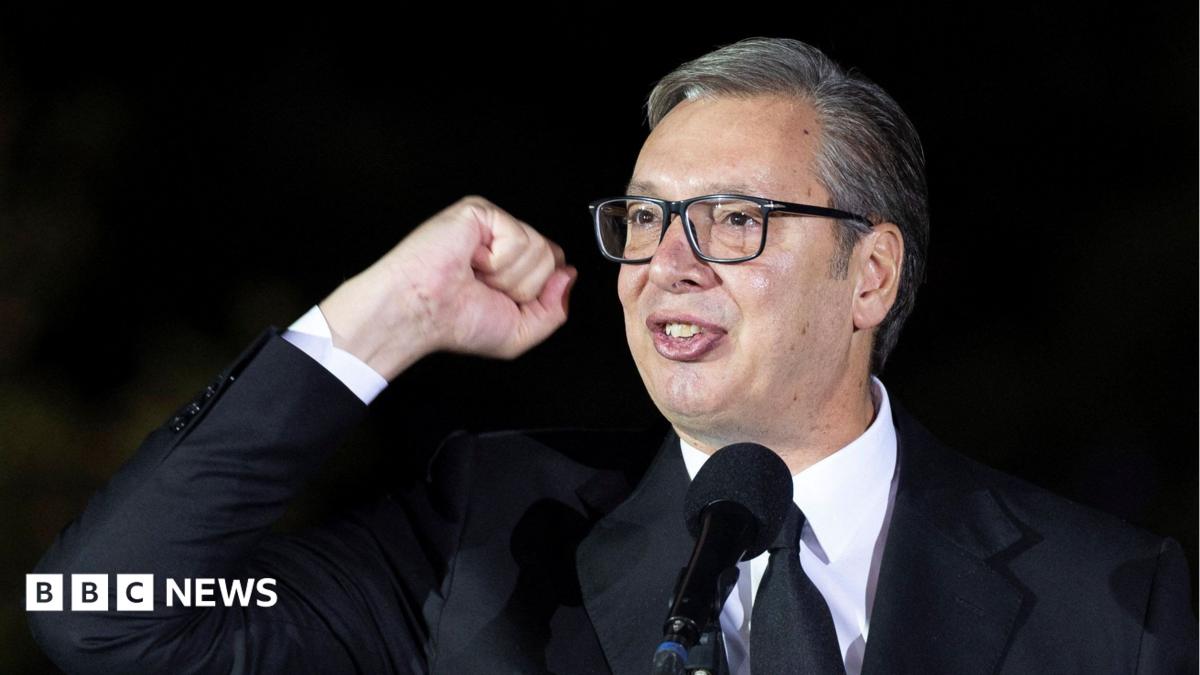
Serbian President Aleksandar Vučić has stepped down from office, bringing an end to a presidency that spanned nearly a decade and conceding to more than a year of sustained pressure from student-led demonstrations and mounting public anger over corruption allegations within his government.
In an address delivered outside the presidential building in Belgrade, Vučić told a gathering of supporters that his administration had safeguarded peace and stability throughout his nine years in the country's highest office. The resignation formalizes an intention he had first made public back in June, and it marks a significant political shift in a nation that has been a key player in the geopolitics of the Western Balkans.
Because Serbia's constitution bars him from seeking a third presidential term, Vučić has instead set his sights on the office of prime minister. He is currently contesting the leadership of his party's parliamentary ticket ahead of snap elections scheduled for late October. That vote was itself called in response to the protest movement, which had folded a demand for early elections into its broader list of grievances.
Speaking after his resignation, Vučić indicated that the presidential election would be held slightly more than a month after the parliamentary vote. Under the country's constitutional framework, a presidential election must be staged within three months of the president's departure. The practical result is that Serbian voters will head to the polls twice before the calendar year is out — an unusually compressed electoral schedule for the country.
The roots of the discontent stretch back to November 2024, when a concrete canopy at the railway station in Novi Sad gave way, killing 16 people. The disaster became a focal point for public outrage. For many demonstrators, the tragedy came to symbolize something larger than a single engineering failure: what they saw as more than ten years of governance by Vučić's Serbian Progressive Party, marked by corner-cutting and a lack of accountability.
Vučić had tied himself closely to the station's renovation, which had been promoted as a showcase of Serbia's modernization and progress. That association made the collapse politically explosive. Although a series of officials resigned in the aftermath, those departures did little to calm the streets. Protests continued through the summer and, in some instances, tipped into unrest, particularly after accusations emerged of excessive force by police against demonstrators.
What distinguished this wave of protest from earlier episodes of discontent was its breadth. Students were the driving force, but they were joined by teachers, factory workers, farmers, and citizens from a wide range of backgrounds. That coalition gave the movement a staying power that previous demonstrations had lacked, sustaining momentum across seasons and defying the usual pattern of protest fatigue.
With the parliamentary election now set for late October, Vučić's Progressive Party will face a field that includes at least two significant challengers. One is Students Win, an anti-corruption movement born out of the protest wave and led largely by the student activists who first mobilized the streets. The other is European Serbia, a coalition of pro-Western opposition parties that have long sought to steer the country closer to Brussels.
The coming campaign will effectively serve as a referendum on Vučić's record, his party's dominance, and the direction of a country that sits at a strategic crossroads between East and West. The outcome could determine whether Serbia's political system experiences genuine turnover or whether Vučić, through a shift to the premiership, retains his position at the center of national power.
Vučić has been a defining figure in Serbian politics for well over a decade. He became prime minister in 2014 and won his first presidential term in 2017, consolidating influence across the machinery of state. His foreign policy has been described as balancing act: he has repeatedly stated his ambition for Serbia to join the European Union while simultaneously cultivating close ties with Moscow and welcoming Chinese investment into the country.
That balancing posture has drawn scrutiny, particularly given the war in Ukraine and the European Union's expectations of candidate countries. Critics argue that the government's drift toward Russia and its reliance on Chinese capital complicate Serbia's accession path and raise questions about its commitment to democratic norms. Supporters counter that the strategy has extracted economic benefits without sacrificing Serbian sovereignty.
In one of his final acts as president, Vučić exercised his constitutional power of pardon, clearing 49 individuals of offenses tied to what he described as the "terrible events we have gone through over the past year and a half." According to the Serbian public broadcaster RTS, those pardoned included 23 students as well as party loyalists. The move is likely to be interpreted by critics as an attempt to shield allies from legal jeopardy.
Parliamentary speaker Ana Brnabić, a fellow member of the Progressive Party, will serve as interim president until a new head of state is chosen. Her assumption of the role ensures continuity of the ruling party's control over the presidency in the interim period, though the arrangement is temporary and constitutionally prescribed.
The political uncertainty arrives at a delicate moment for the region. Serbia has long been regarded as a stabilizing anchor in the Balkans, and any prolonged instability could ripple outward. European officials will be watching closely to see whether the electoral process proceeds peacefully and whether the next government maintains the country's stated EU ambitions.
For the protest movement, the resignation represents a hard-won concession after months of persistence. Yet the activists have shown little inclination to declare victory. Their demands have centered not only on personnel changes but on systemic reforms: independent courts, transparent public procurement, and accountability for the deadly failures that sparked the unrest in the first place.
Whether those demands can be translated into policy will depend on the parliamentary election's results. If the opposition fragments, Vučić's party could preserve its grip on government through the premiership. If the opposition coalesces, the country could be entering a period of genuine political reconfiguration.
For now, Serbia stands between two votes and an uncertain future, with the president who dominated its politics for nine years betting that a change of office can preserve his influence, and the movement that drove him from power determined to ensure that it does not.





Comments (0)