 yoga-mahendra
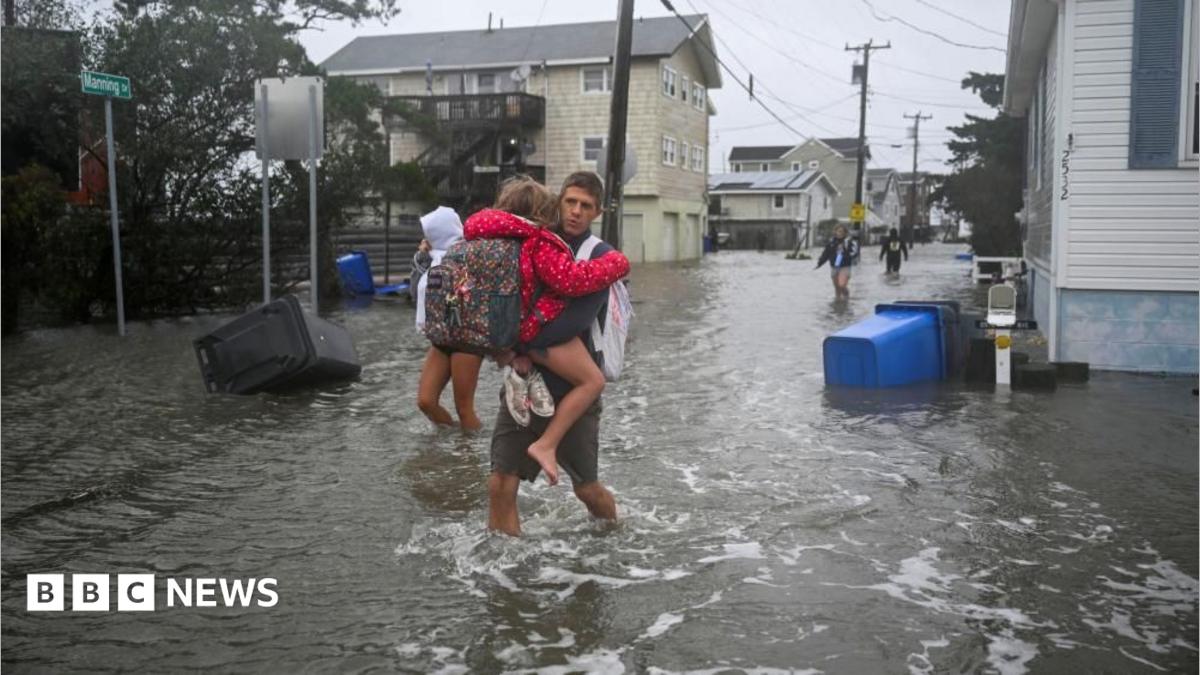
A powerful autumn nor'easter is sweeping across the north-eastern United States this weekend, putting tens of millions of people in its path and forcing the shutdown of headline concerts, sporting fixtures and hundreds of flights. The storm, which is expected to peak on Saturday, has already triggered coastal flooding in New Jersey, knocked out power to nearly 150,000 households and created severe travel disruption across the region.
Forecasters at the US National Weather Service warned that the system will bring "dangerous coastal flooding and beach conditions, strong winds, and heavy rainfall" to a wide swathe of the Northeast, including the dense urban corridor that runs from New York City north through Boston. Rain and blustery winds are forecast over a span of more than 1,000 miles, from Virginia all the way to Maine.
Both New York and New Jersey have declared states of emergency. New Jersey, where some coastal communities are already being deluged, acted first in practical terms — streets and homes in Surf City and Manasquan were inundated on Saturday as residents took to kayaks on flooded roads and waded through waist-high water with children in tow.
The timing of the storm is particularly treacherous. Saturday's full moon, which produces higher-than-normal astronomical tides, is projected to compound coastal inundation just as the storm's strongest winds and heaviest rain are arriving. In effect, the weather and the tide are stacking on top of each other, meaning water levels in low-lying shoreline areas are far more likely to overtop sea walls, flood roads and overwhelm drainage systems than either hazard would alone.
The National Weather Service urged residents to prepare immediately for significant inundation in low-lying areas close to the shore, warning of roads disappearing under water and serious impacts to homes and businesses. Residents in the hardest-hit seaside communities were advised to treat the danger as immediate rather than something that might develop overnight.
New Jersey Governor Mikie Sherrill issued a direct appeal to residents, urging them to take the storm seriously, remain alert and follow local guidance from emergency officials rather than waiting to see how conditions deteriorate. Her warning underlined the seriousness of the situation in a state where some areas had already seen serious flooding before the worst of the weather arrived.
In New York City, officials are bracing for wind gusts of up to 55mph (86km/h) throughout the weekend, a forecast that raises the prospect of downed trees, blocked roads and further power outages on top of the flooding risk. Mayor Zohran Mamdani delivered a video message to residents, asking them not to travel unless they absolutely have to and warning people never to drive or walk through floodwater — a standard but genuinely life-saving instruction during storm flooding.
Electricity supply is already under strain. Nearly 150,000 homes and businesses had lost power as of the latest reporting, according to outage tracker poweroutage.us, with numbers expected to climb as the storm intensifies. Utilities in the region have generally urged customers to avoid downed lines and to report outages, but restoration crews face a difficult task while flooding and high winds continue.
Air travel has been badly disrupted. The Federal Aviation Administration advised passengers to check with their airlines on the status of individual flights, while flight-tracking data from FlightAware showed more than 1,100 flights delayed and some 400 grounded outright. Boston Logan International Airport displayed a board of cancellations as the storm battered the coast, and knock-on disruption spread well beyond the region as travellers were rebooked or diverted.
The cultural and sporting fallout has been significant. Ed Sheeran's much-anticipated Boston show at Gillette Stadium was cancelled for safety reasons, with the venue confirming the decision in light of the storm warning — a blow for fans who had been waiting years for the tour. The Global Citizen Festival in New York City's Central Park, headlined by Lauryn Hill, Wyclef Jean and John Legend, was also called off, meaning a major free concert in the heart of Manhattan will not go ahead.
Professional sports was affected too. In the Boston area, the Red Sox moved the weekend series against the Chicago Cubs from Sunday afternoon to next Friday to avoid fans travelling in hazardous conditions. In New York, a football match between Red Bull New York and St Louis City SC was cancelled, extending a weekend that has seen organisers repeatedly prioritise safety over scheduling.
For residents of the coastline, the immediate priority is shelter and caution. Forecasters say the combination of high winds, heavy rain and elevated tides means conditions could deteriorate further before the system moves away, and emergency services are braced for calls relating to flooding, road closures and downed power lines across New Jersey, New York, Massachusetts and the surrounding states.
The wider picture is one of a region effectively pausing. Transit, flights, concerts and sport are all being put on hold so that tens of millions of people can stay out of harm's way. Even with the storm forecast to move through, the cleanup — restoring power, clearing flooded roads and inspecting shorelines — is likely to stretch well beyond the weekend, and officials have cautioned that returning to flooded areas without checking local advice could prove hazardous.










Comments (0)