 yoga-mahendra
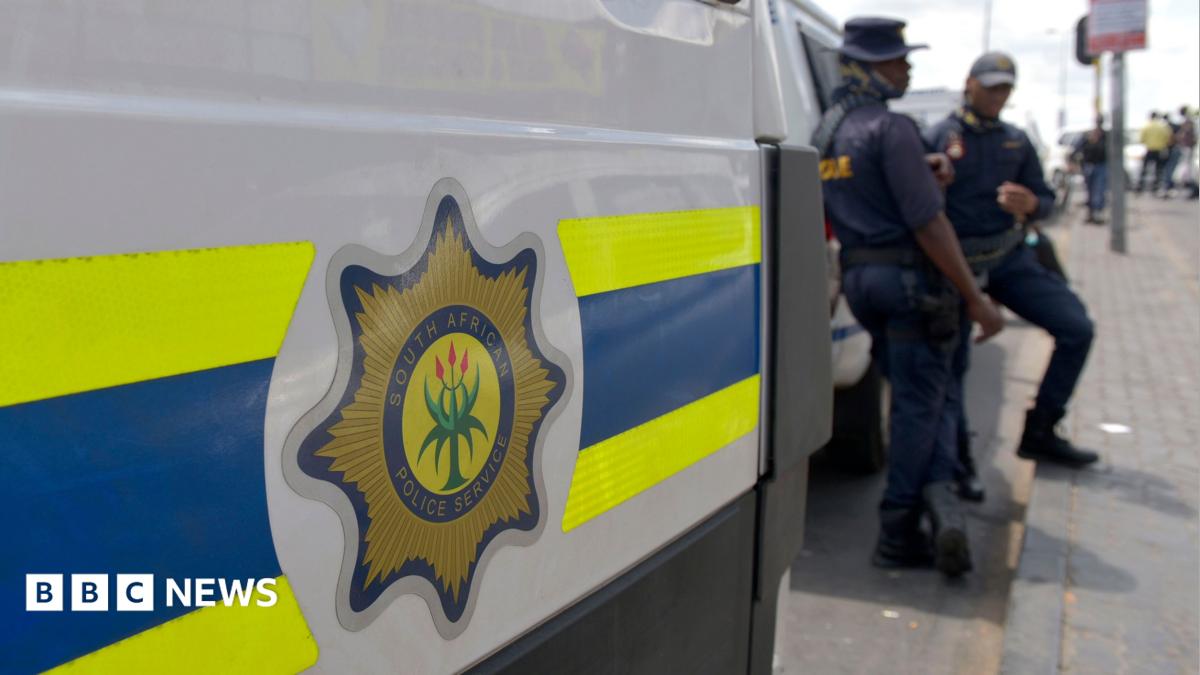
South African police have recovered the body of a woman in a Johannesburg suburb — the tenth such discovery in recent months — as detectives work through the possibility that a single serial killer may be behind a growing cluster of deaths in the province.
The body was found on Saturday morning at a cemetery in Tembisa, a neighbourhood lying north-east of central Johannesburg. It was identified by the friend who had been with the victim at a bar the previous evening, the only person so far to have come forward and formally recognised the remains.
Police said in a statement issued shortly afterwards that crime scene investigators were at the site collecting evidence. Officials had not publicly named the victim by the time of publication, and no information has yet been released about the circumstances in which she died.
The woman who reported the death told the national broadcaster SABC that she was shown a picture of the body and recognised her friend's clothes from the night before. Speaking through tears, she said she was at a loss for what she would say to the deceased's children, describing the news as painful.
Speaking to reporters, Gauteng Police Commissioner Tommy Mthombeni said it was far too early in the investigation to say whether the latest death was connected to the others. He cautioned that while the similarities between the killings are being examined seriously, a definitive conclusion cannot be drawn at this stage.
Lt Gen Mthombeni said the other bodies shared a "similar victimology" — a pattern in how victims are selected and killed — pointing to a shared "modus operandi". In his view, establishing that pattern is what would allow investigators to determine whether the Tembisa death belongs to the same series.
He was explicit that the pattern is not yet proof. At present, he said, the evidence does not rule out the existence of a serial killer, but nor can police conclusively point to one. Commissioner Mthombeni has previously drawn attention to similarities across 10 deaths in the Ekurhuleni area, as well as a further killing in Soweto.
The wider cluster has been building since July. The other bodies were recovered in broadly similar circumstances, with the majority discovered in Kempton Park, the neighbourhood immediately adjacent to Tembisa — meaning the latest victim was found just a short distance from the previous scenes.
Investigators have noted that most of the victims were young women, and that almost all of them suffered extreme violence before they died. That pattern, more than the raw number of cases, is what has driven public fear across the city and the wider province.
The killings have also become a national talking point,fuelling an outcry about the scale of violence against women in a country that the BBC's reporting notes has one of the highest rates of gender-based violence in the world. The response has been felt far beyond Johannesburg, where many women say the accumulating death toll has left them living in fear.
Official figures underline the scale of the problem. South Africa has one of the highest homicide rates in the world, with 5,427 people murdered in the three months between April and June this year alone — a figure that covers all victims, regardless of gender.
Because police statistics do not separate victims by gender, campaigners and rights groups have filled the gap. The South African Human Rights Commission said last week that 569 women were killed and a further 1,052 survived attempted murder during the same April-to-June period, highlighting the scale of the epidemic of violence against women and girls.
The discoveries have placed fresh pressure on the national government, less than a year after ministers declared gender-based violence and femicide a national disaster — a designation intended to unlock dedicated resources and accountability but which critics say has yet to slow the killing.
Progress on the criminal side is limited but not non-existent. Three men appeared in court earlier this week accused of being involved in one of the murders, with police saying they are working to trace additional suspects who may have been involved in that case.
Analysts caution that the identification phase will be decisive. Forensic examination of the Tembisa remains, comparison with earlier scenes, and verification of the pattern described by the commissioner will determine whether this case is added to the same series or treated as a separate homicide.
For now, the commissioner is holding the line on caution — a serial killer remains a possibility that cannot be dismissed, but not one that can be declared. The family of the woman found on Saturday, and the ten households already bereaved, are waiting for an answer that investigators say will take time.










Comments (0)