 yoga-mahendra
Republic of Ireland footballers will wear black armbands when they take on Israel in Debrecen on Sunday, with the captain's group confirming a symbolic protest designed to honour "all lives lost in the Gaza conflict" even as the team agreed to play the fixture. The announcement came after a day of intense internal debate that at one stage threatened to collapse the match entirely.
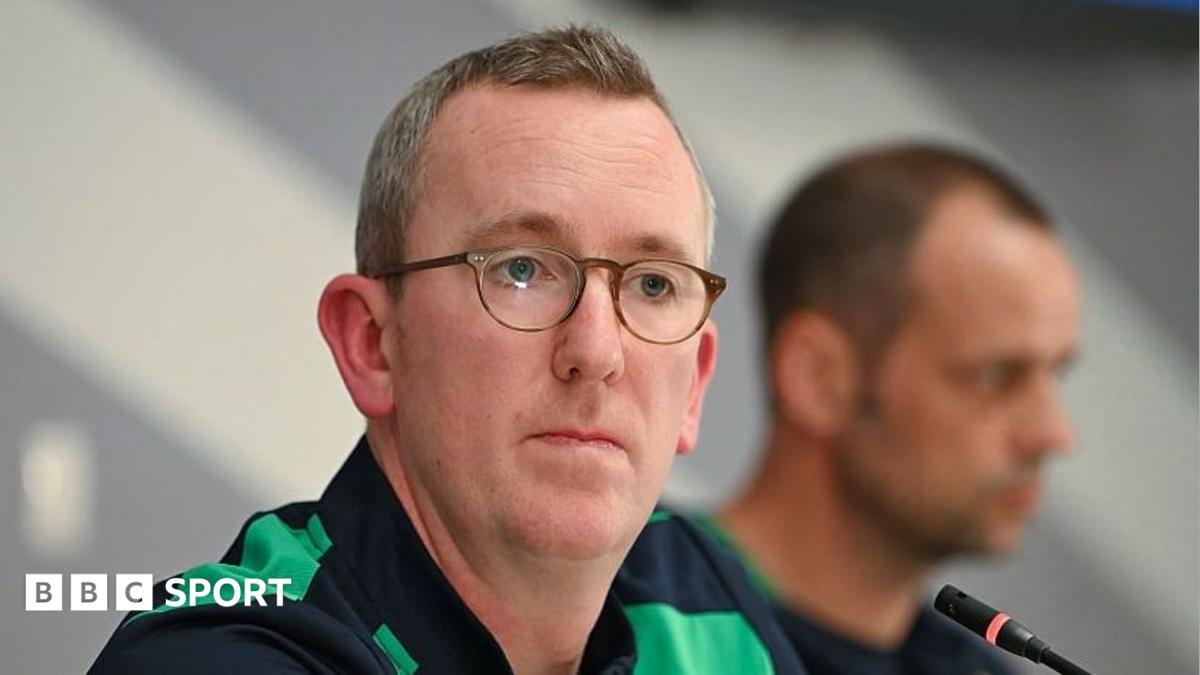
The Football Association of Ireland confirmed late on Saturday evening that the squad had voted by a "significant majority" to go ahead with the Nations League Group B3 game, staged in Hungary because of the contentious circumstances surrounding the original draw. Chief executive David Courell, flanked by manager Heimir Hallgrimsson and FAI director of football John Martin, said players had spent the best part of five hours in discussion — first among themselves, and at times with coaching staff and association executives — before reaching a decision.
The armband plan is only part of a wider package of protests. Courell said there would be elements of the pre-match ceremony from which the Republic of Ireland side would deliberately abstain, and that the players intended to make further gestures during next Sunday's reverse fixture, which will be played in Serbia. That match has been labelled the "home" game, a reflection of the neutral or host-nation arrangements that have made this two-legged tie so unusual, with no travelling "away" support widely reported for the first encounter.
Money is also being used as a lever of protest. Courell said the squad plans a "significant contribution to charitable donation", funded by the players' match fees from both the Israel fixtures and the Republic's game against Austria at the Aviva Stadium in Dublin on Thursday. The move effectively converts the team's appearance — and the broadcast exposure that comes with it — into a fundraising act.
The decision was far from straightforward. Pressure to cancel the fixtures had been building through a "Stop The Game" campaign organised by the pressure group Irish Sport for Palestine, which called on Republic of Ireland players to withdraw from both matches in response to the ongoing Israel-Gaza war. One of the campaign's requests, Courell said, was for players to remove their media obligations for the remainder of the international window.
On Saturday morning, those calls became personal. Goalkeeper Gavin Bazunu pulled out of the squad and the fixture in protest, with several team-mates expressing their concerns about going ahead. The players held a lengthy meeting at their hotel while the FAI's scheduled pre-match press conference — due to feature Hallgrimsson and a senior player at 09:15 BST — was postponed just 15 minutes before it was set to begin. Training was also pushed back, and reporters were told the media duties would only take place after the session.
Around 13:00, players began to emerge from the meeting room. The press conference was then confirmed for 14:30 at the Nagyerdei Stadion — more than five hours after its original slot — with training to follow. Courell insisted the association would not pressure anyone, telling reporters that "a lot of positions" had been put forward during the discussions and that the FAI "is fully respectful of everyone's right to their respective opinion."
Bazunu, who had been one of the two men due to face the media, explained his decision on social media later that evening, saying the choice had been one he had "not taken lightly". A man of "strong faith" who tries to be "a person of character and principle", he wrote, it would be wrong for him to participate in the fixtures. His objection, he stressed, was not aimed at the Israeli people or the Jewish community but at "the atrocities in the region", resting on a "personal belief that the killing of innocent people is wrong". He added that there are "few times when you get a chance in life to stand up for something bigger".
The circumstances of the tie have been disputed since the two nations were drawn together in Group B3. Playing a senior European fixture in a third country, with supporters largely absent and no traditional home or away designations, is a logistical arrangement that requires explanation in its own right — and one that has drawn criticism for stripping the match of much of the atmosphere that normally surrounds competitive international football.
For Hallgrimsson, the task has been to manage a squad split down the middle. The Iceland-born coach has been reluctant to impose a collective decision on individuals, preferring to let the players reach their own conclusions, and has described his position as a situation "you can't win" — win or lose politically, whichever way the game goes.
Reaction has also come from outside the current group, with commentary from figures including former Republic of Ireland manager Brian Kerr and ex-international James McClean, both of whom have been drawn into the debate over whether the team should travel, play, or stand down entirely.
What is certain is that the squad has chosen a middle path: compete, but visibly object. The armbands, the skipped ceremony elements and the donation pledge form a coordinated statement that avoids the risk of sanctions or a forfeited fixture while making the players' position unmistakable.
For the wider debate, Sunday's match in Debrecen now becomes a test of whether such gestures are treated as a one-off or as a template. Whatever happens on the pitch, the Republic of Ireland's two fixtures against Israel have already produced the kind of split, hours-long, player-led deliberation rarely seen in international sport.









Comments (0)