 fitri-handayani
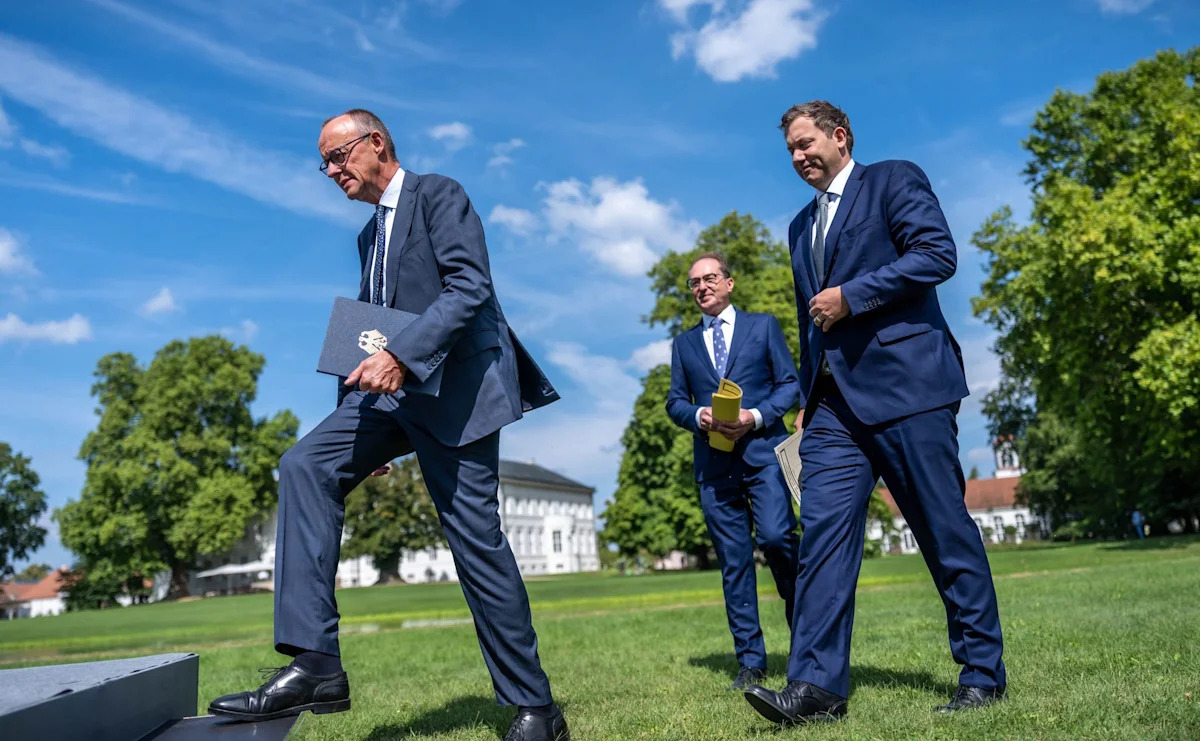
Germany has returned to growth after a three-year recession, Chancellor Friedrich Merz has declared, marking a potential turning point for Europe's largest economy following one of the longest slumps in its postwar history.
The chancellor's announcement carries weight well beyond Germany's borders. As the eurozone's biggest economy and the world's leading exporter of capital goods, Germany's fortunes shape the outlook for the entire continent, and its prolonged stagnation has been a persistent drag on regional growth since 2023.
The downturn began after the economy contracted in 2023, when the loss of inexpensive Russian natural gas following Moscow's full-scale invasion of Ukraine sent energy bills soaring for energy-intensive industries such as chemicals, metals and glass. Output shrank again in 2024, and the slump extended into a third year, leaving German factories operating below capacity and businesses reluctant to invest.
Several forces combined to produce the recession. German manufacturers, long reliant on export demand, were squeezed by weakening sales in China, where domestic competitors have increasingly outpaced German carmakers in the shift toward electric vehicles. At the same time, trade policy uncertainty, including tariff threats from the United States, made companies hesitant to commit to long-term investments, while chronically low public investment left bridges, railways and digital networks creaking.
Merz, who took office in May 2025 at the head of a coalition between his conservative CDU/CSU bloc and the center-left Social Democrats, staked his chancellorship on reversing the decline. Shortly before forming his government, he pushed through a landmark revision of Germany's constitutional debt brake, exempting defense spending above a set threshold and establishing a special infrastructure fund worth hundreds of billions of euros for repairs and modernization projects spread over more than a decade.
Those measures, designed to unlock public investment after years of strict fiscal restraint, are central to the government's argument that the recovery can be sustained rather than remaining a brief statistical rebound. Business groups have broadly welcomed the fiscal pivot, though many executives continue to complain that excessive bureaucracy, slow planning approvals and a shortage of skilled workers remain obstacles to faster expansion.
The return to growth offers Merz a political reprieve at a delicate moment. His coalition has faced criticism over internal disagreements and the pace of reform, while the far-right Alternative für Deutschland has polled strongly amid public frustration over the economic malaise, high living costs and debates over migration. Demonstrating that ordinary households feel the recovery in their paychecks and job security will be critical to the chancellor's standing.
For policymakers at the European Central Bank, firmer German growth would remove one of the main arguments for aggressive monetary easing, after a series of interest rate cuts helped stabilize the eurozone economy through the downturn. Financial markets, too, have been watching for signs that German industry has passed its trough, with sentiment indicators in recent months suggesting that expectations among manufacturers had begun to improve from depressed levels.
Economists caution that emerging from recession does not mean Germany's problems are solved. Structural challenges persist: industrial electricity prices remain far above those of international competitors, the working-age population is shrinking, permitting procedures still delay projects for years, and the automotive sector faces a difficult transition that will determine the fate of hundreds of thousands of jobs.
Even so, the end of a three-year contraction represents the first genuine good news for the German economy in some time. Whether the upturn gathers pace will depend on how quickly public money flows into infrastructure, whether export markets stabilize, and whether confidence among companies and consumers continues to mend. For now, Merz and his government are presenting the return to growth as proof that Germany's economic model, written off by critics only months ago, retains its capacity for renewal.
--- END ---





Comments (0)