 yoga-mahendra
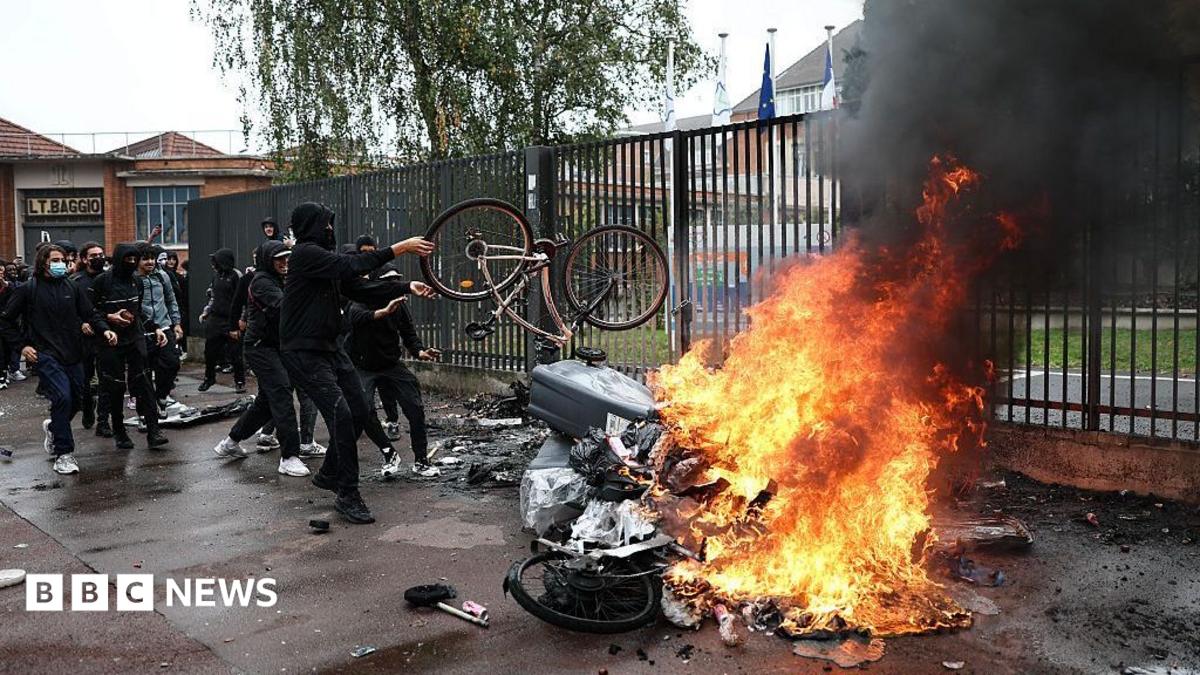
French authorities detained more than 400 people on Tuesday, the vast majority of them minors, after student demonstrations at high schools across the country escalated sharply, Interior Minister Laurent Nuñez confirmed. The figure, announced during an appearance on BFMTV, marks a significant jump from the 164 arrests reported just a day earlier, underscoring the rapid expansion of a movement that began last week in the Paris region and has now spread nationwide.
According to Nuñez, roughly two-thirds of those detained were placed in police custody, though he cautioned that the final tally had not yet been completed. The detentions followed a day of widespread disruption in which teenagers blockaded school entrances, set bins alight, and damaged property including bus stops, according to photographs and video footage circulating from the scene.
The protests at French lycées — roughly equivalent to sixth form colleges in the United Kingdom or high schools in the United States — initially took root in the Île-de-France region surrounding the capital before spreading to other parts of the country. At the heart of the students' grievances are long-standing structural problems in the education system, including class sizes that frequently exceed 30 pupils and persistent difficulties in recruiting and retaining teachers.
A 16-year-old female student who spoke to the AFP news agency offered a direct account of the frustrations driving the movement. She stressed that demonstrators were not motivated by a desire for destruction, but rather by a sense that the system itself is failing. "We're here to deliver a message," she said. "We're not here to smash everything up for no reason. We're here precisely to say that the education system is completely broken. There are 34 of us in each class, and it's just not feasible. The teachers are overworked."
The scale of the disruption was considerable. Officials reported that at least ten teachers were injured during Tuesday's protests, along with several students and 48 members of the law enforcement services deployed to manage the demonstrations. The education ministry estimated that at least 400 schools were affected by the blockades and related actions, a figure that reflects how deeply the movement has penetrated the country's secondary education network within a matter of days.
The demonstrations have also proved politically charged. Education Minister Édouard Geffray took to social media platform X to acknowledge that students possess a legitimate right to protest, but he sharply criticised the scenes of violence and disorder that accompanied Tuesday's actions, describing them as indefensible. In a separate post that evening, he argued that the right to demonstrate, while a fundamental freedom, cannot be invoked to justify such conduct. He warned that legitimising the unrest or calling for blockades to be extended would put both students and public employees at risk, calling such appeals irresponsible.
Interior Minister Nuñez faced questions about the police response, which has drawn criticism from several French politicians. When pressed on the matter, he defended the tactics employed by officers as having been carried out in an extremely proportionate manner. French media outlets reported that demonstrators hurled projectiles at police lines, prompting officers to respond with batons and tear gas.
Opinion among student representatives was sharply divided from the official account. Ryad Rani, president of Union Syndicale Lycéenne, an organisation that represents students, told AFP that the government was engaged in repression and accused police of using excessive force against young demonstrators.
The escalation follows a warning issued on Monday by Prime Minister Sébastien Lecornu, who said that any further escalation in the student protests would be irresponsible. He made the remark after 164 people were arrested. In a post on X, Lecornu cited reported incidents at protest sites, noting the use of fireworks, outbreaks of fire, and violence in the vicinity of high schools, and stated that nothing could justify endangering students, staff, or police officers.
Tuesday's student demonstrations coincided with a broader day of industrial action across France, as unions representing teachers, hospital staff, and civil servants staged nationwide walkouts. Those strikes centred on grievances including low wages and deteriorating working conditions across the public sector. Nuñez said the union-led protests, which reportedly drew at least 200,000 participants, largely passed without incident, contrasting with the disorder at some school sites.
The convergence of the student movement with the wider public sector strikes presents a significant challenge for the French government, which must now contend with a youth-led protest wave that shows little sign of abating. With minors accounting for the overwhelming majority of those detained, questions are likely to intensify over how authorities balance public order concerns against the fundamental right to demonstrate — particularly when those exercising that right are children.
For the students themselves, the message remains focused on the classroom conditions they say make effective learning impossible. As blockades continue at schools in Paris and beyond, and as unions weigh further industrial action, the pressure on ministers to address chronic underinvestment in education appears set to grow rather than subside.








Comments (0)