 yoga-mahendra
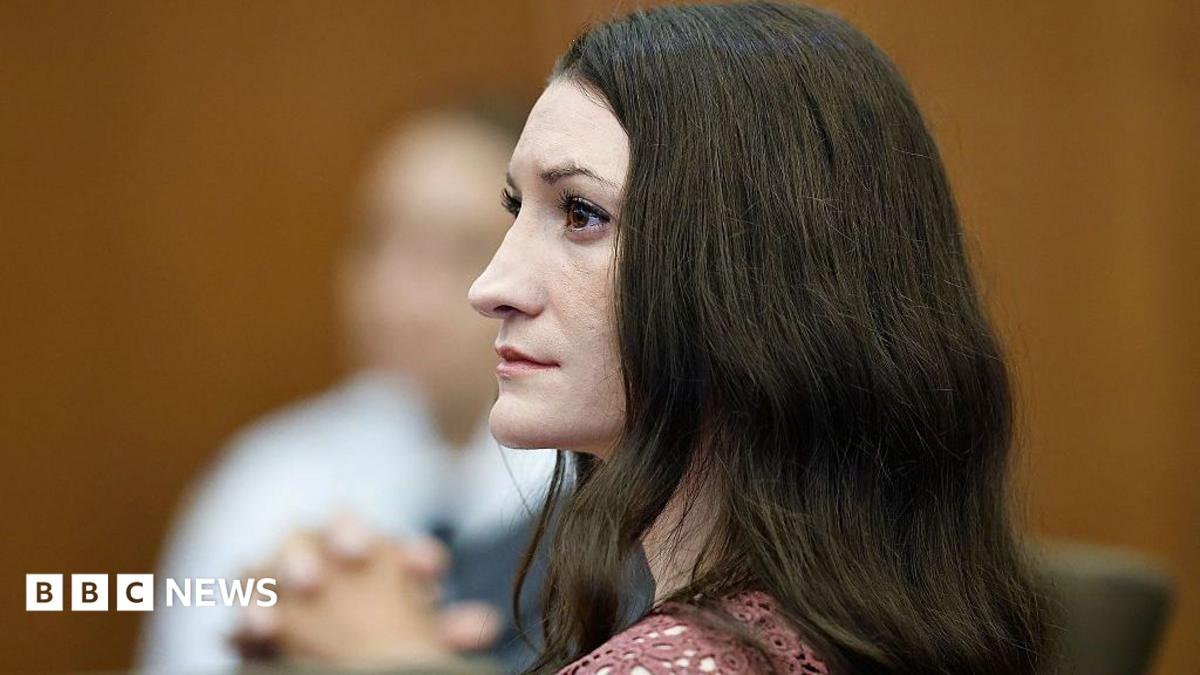
Lindsay Clancy, the Massachusetts woman accused of killing her three young children, appeared in court on Tuesday for the first time since her highly publicised murder trial collapsed earlier this month. The 36-year-old has been receiving treatment in a psychiatric facility since the killings, and her return to the courtroom marked a fresh chapter in a case that has drawn national attention and sparked difficult conversations about maternal mental health.
Clancy does not dispute that she killed her three children in 2023. What remains fiercely contested is why. Her defence team has long maintained that she was in the grip of severe postpartum psychosis at the time, a condition that can distort a mother's perception of reality and, in rare cases, lead to catastrophic outcomes. Prosecutors, by contrast, insist the killings were deliberate and that Clancy understood exactly what she was doing.
The hearing on Tuesday centred on a defence motion asking the judge to dismiss the case outright. Clancy's lawyer, Kevin Reddington, invoked Rule 25, a Massachusetts procedural mechanism under which a defendant can be found not guilty if the prosecution failed to present its case effectively. Reddington also advanced a new argument, contending that the evidence was simply insufficient to prove Clancy carried out the killings.
"This entire case is based on speculation," Reddington told the court, according to the source material. His shift in strategy was notable: during the trial, he had focused heavily on Clancy's mental state, imploring jurors to find her not criminally responsible because of her psychiatric condition. Now, he appeared to be attacking the prosecution's evidence on a more fundamental level.
Prosecutor Shanan Buckingham pushed back forcefully, describing the defence's position as "laughable." She said the state had presented extensive evidence showing Clancy was in a sound mental state at the time of the murders and that the Commonwealth had "met its burden" of proof. In her account, Clancy knew precisely what she was doing when she killed Cora, five, Dawson, three, and eight-month-old Callan inside the family's Massachusetts home.
The judge, William Sullivan, made clear he wants the case to progress. When both sides declined to commit to a possible retrial date during Tuesday's proceedings, he urged them to come prepared to discuss scheduling at a hearing set for 2 November. Sullivan said his goal was to "get this thing moving," signalling his reluctance to let the matter drift.
The question of whether Clancy will face a second trial remains unresolved. District Attorney Timothy Cruz told reporters outside the courthouse that prosecutors have not yet decided whether to pursue murder charges again. "We're doing our due diligence, we're going to continue doing that," he said. "We're going to do what we can for the children. That's what this case is about." His comments underscored the emotional weight the case carries for the community and for the family affected.
Reddington indicated that if a retrial does go ahead, he would not be ready to proceed until at least June, a timeline that could add months to an already lengthy legal saga. The logistics of a second trial would be considerable, involving the reassembly of witnesses, expert testimony on postpartum psychosis, and the emotional toll on everyone involved.
The mistrial was declared on 4 September after a week of jury deliberations. Jurors informed Sullivan they were deadlocked, unable to reach a unanimous verdict because of a single holdout juror. In Massachusetts, a hung jury in a murder case typically leaves the door open to retrial, but it also raises questions about whether the prosecution can secure a conviction the second time around.
The case has become a flashpoint for discussions about postpartum psychosis, a severe and relatively rare psychiatric condition that can emerge after childbirth. Symptoms may include hallucinations, delusions, paranoia and a profound detachment from reality. Medical experts distinguish it from postpartum depression, which is far more common and generally less acute, though both conditions have been the subject of growing public awareness campaigns in recent years.
Clancy's defence has argued that her condition at the time of the killings met the legal threshold for criminal responsibility to be set aside. Under Massachusetts law, a defendant may be found not guilty by reason of insanity if a mental disease or defect left them unable to appreciate the wrongfulness of their conduct or to conform their behaviour to the law. The trial jury evidently found that question difficult to resolve, with at least one member unwilling to convict.
The killings took place in 2023 at the family home, and the deaths of three young children shocked the region and drew widespread coverage. Clancy has remained in a psychiatric facility since then, and her courtroom appearances have been closely watched. Tuesday's hearing was her first public appearance since the mistrial, and the proceedings drew attention both for the legal manoeuvring and for the raw human tragedy at their centre.
For the prosecution, the burden now lies in deciding whether a second trial serves the interests of justice and the victims. For the defence, the immediate priority is persuading the court that the case should never reach a jury again. Both sides will return to court on 2 November, when Sullivan is expected to hear arguments on the dismissal motion and to press for clarity on scheduling.
Whatever the outcome, the case has already left a mark on public understanding of maternal mental illness. It has also highlighted the agonising questions courts face when severe psychiatric conditions intersect with the criminal law. The families of the children, the jurors who could not agree, and the defendant herself remain bound together by a tragedy that no verdict can fully resolve.






Comments (0)