 irwan-setiawan
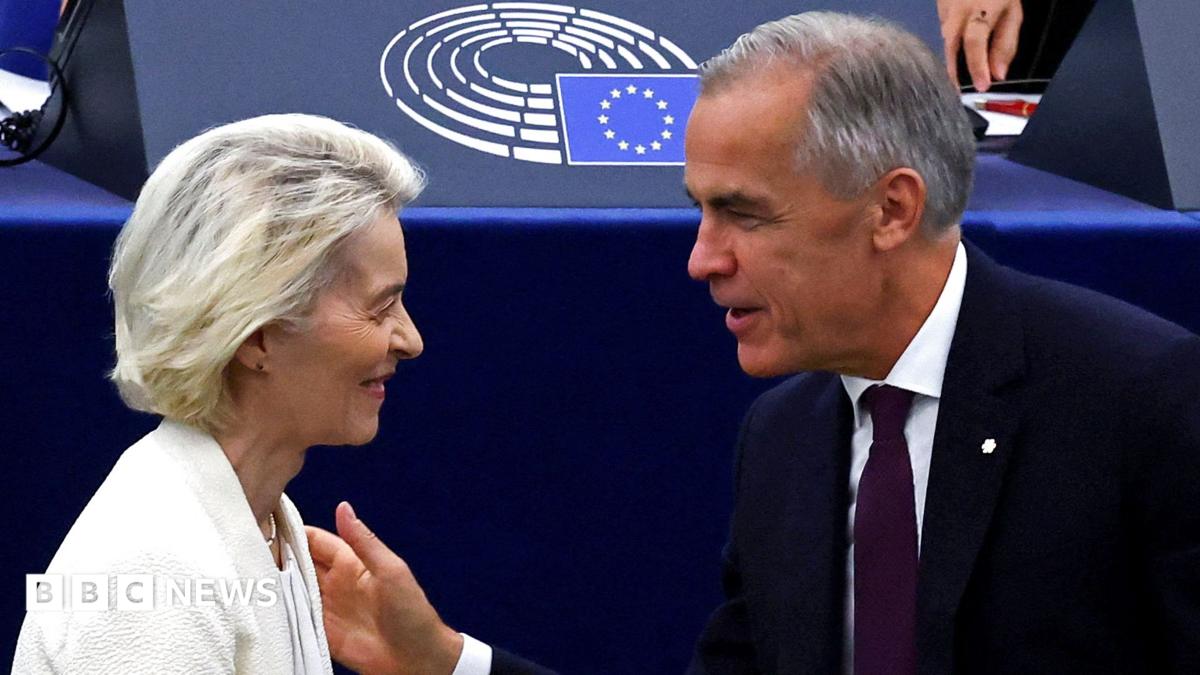
The European Commission’s leadership has formally endorsed a landmark initiative to establish an "associate membership" status for Canada, signaling a profound shift toward deepening transatlantic integration between Brussels and Ottawa. European Commission President Ursula von der Leyen presented the initiative during her annual State of the Union address to the European Parliament, declaring her intention to facilitate structural ties and open new diplomatic pathways for the North American democracy across several critical sectors.
The announcement arrived against a backdrop of escalating geopolitical friction, with Canadian Prime Minister Mark Carney present in the parliamentary chamber in Strasbourg ahead of his own scheduled address. Carney had publicly advocated just days earlier for forging a "unique alliance" alongside European partners, driven by increasingly volatile relations with Washington and an intensifying dispute regarding bilateral commerce.
The push for a novel transatlantic partnership comes in the wake of collapsed trade negotiations between Canada and the United States, an impasse that swiftly triggered an exchange of punitive tariff measures. Diplomatic relations across the North American border have experienced substantial strain, fueled further by United States President Donald Trump repeatedly floating rhetoric about transforming Canada into a "51st state," alongside his threats to annex Greenland, a sovereign territory belonging to EU member state Denmark.
Addressing lawmakers in Strasbourg without explicitly naming the American president, von der Leyen emphasized that extending a bespoke associate framework to Ottawa was intended to bolster collective resilience rather than serve as a targeted affront against third nations. She characterized the outreach as a vital strategic initiative designed to counterbalance what she identified as a growing fracture within the international rules-governed order.
In making the case for this elevated alignment, the Commission president insisted that the European Union and Canada view global challenges through an identical lens. She pointed out that both jurisdictions maintain mutual perspectives on international climate action, geopolitical instability, and artificial intelligence, while demonstrating unwavering collective solidarity regarding Ukraine, industrial supply chain resiliency, critical raw materials, and the defense of democratic governance.
While the formal architecture of an associate membership remains undefined, von der Leyen outlined an extensive array of strategic areas envisioned for closer coordination. These pillars include manufacturing, advanced technology, artificial intelligence, common defense initiatives, energy networks, critical mineral security, and broader economic protection measures designed to safeguard supply chains against external coercion.
Despite the enthusiastic rhetoric presented in Strasbourg, institutional and procedural hurdles mean that creating such an associate status would represent an intricate endeavor spanning multiple years. The European Union currently possesses no statutory mechanism or established legal classification for associate membership, necessitating complex internal treaty negotiations and consensus among existing member states.
The concept of establishing an intermediate tier of European integration previously surfaced earlier this year, when German Chancellor Friedrich Merz suggested associate status as a potential pathway for Ukraine, a proposal that met with a divided response across the bloc. Meanwhile, traditional candidate nations—including Western Balkan states such as Albania, Bosnia and Herzegovina, Montenegro, North Macedonia, and Serbia, alongside Eastern European applicants Georgia and Moldova—continue pursuing full access through the established enlargement pipeline.
Furthermore, internal hesitations within the bloc could complicate Canada's fast-tracked affiliation, given that ten of the 27 EU member states have still failed to ratify a comprehensive bilateral free-trade pact agreed with Ottawa nearly a decade ago. Several European capitals remain skeptical of inventing unproven membership categories, advocating instead for the targeted expansion of existing defense, economic, and commercial treaties.
In tandem with the Canadian outreach, von der Leyen’s speech detailed extensive proposals to fortify European security against the persistent threat posed by Russia following its 2022 full-scale invasion of Ukraine. Central to this strategic defense overhaul is the proposed establishment of a dedicated European Security Council, designed to bring regional allies—including the United Kingdom, Norway, Ukraine, and Canada—into regular high-level defense deliberations.
The security council concept, originally conceived in Franco-German policy discussions, has garnered broader backing across member capitals as European leaders navigate strategic uncertainty, particularly concerning Trump's recurring skepticism toward the NATO military alliance. Nevertheless, the proposal has prompted debate among several member governments who caution against building duplicate security structures that might inadvertently compete with established transatlantic defense bodies.
In response to these concerns, von der Leyen asserted that the European Union’s expanded defense spending and institutional security framework would remain fully aligned with NATO commitments. Under the proposal, the European Security Council would feature a rapid-response mechanism akin to NATO’s Article 4, allowing member governments facing acute security threats to trigger emergency consultations, acting as a supportive mechanism alongside existing alliance protocols.
Beyond high-level geopolitics and defense architecture, the Commission chief’s address confronted mounting domestic anxieties across the continent, highlighting the persistent cost-of-living crisis impacting European households. She simultaneously pointed to the disruptive pace of technological transformation, expressing concern over its rapid displacement effects on employment markets and broader societal stability.
To navigate these domestic economic and social challenges, von der Leyen announced forthcoming consultations with major frontier artificial intelligence developers to shape balanced sector standards, while pledging aggressive reductions in administrative bureaucracy for European businesses. Additionally, the Commission tabled robust child safety initiatives across digital spaces, proposing comprehensive prohibitions on social media usage for minors under 13 years of age.










Comments (0)