 yoga-mahendra
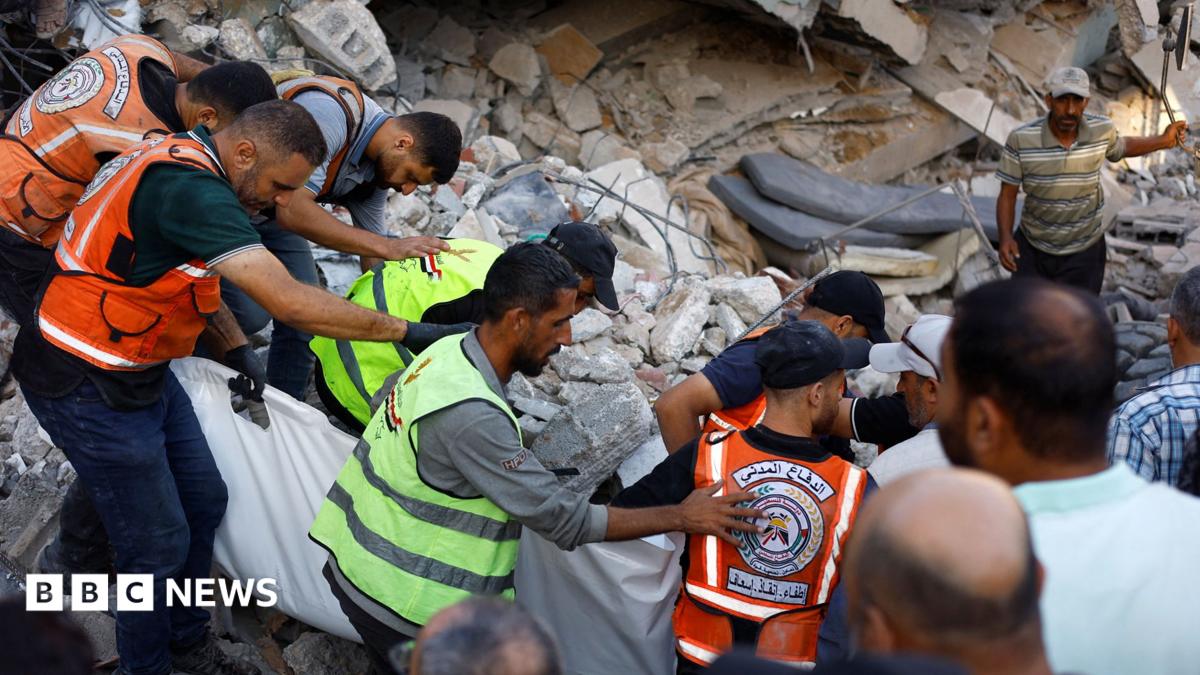
At least 21 people, among them eight children, have lost their lives following the overnight collapse of a heavily bomb-damaged residential building in Gaza City, according to reports from local emergency responders and medical personnel. The catastrophic structural failure took place in the Tal al-Hawa neighbourhood, crushing displaced residents who had sought shelter in the compromised site.
First responders from the Civil Defence agency confirmed that search and rescue efforts concluded on Wednesday afternoon after crews successfully retrieved and transported 45 injured survivors to nearby medical facilities. The operation was protracted and arduous, requiring rescuers to sift through massive slabs of concrete and twisted metal in search of trapped civilians.
Eyewitnesses reported that the six-storey edifice had been left leaning precariously to one side following an Israeli strike carried out more than a year earlier. Despite knowing the severe hazards, around ten families had taken refuge in the crumbling apartments because they had exhausted all other possibilities for finding basic shelter amidst the ongoing humanitarian emergency.
Family members of the deceased spoke of the utter desperation that pushed residents into such dangerous living conditions. A local resident named Sherif, whose sister was among those killed in the disaster, explained that relatives were fully conscious of the impending peril but simply could not secure a tent or alternative accommodation. He noted that an absolute shortage of resources left them with no choice, ultimately driving them toward a foreseeable tragedy.
Neighbours living in adjacent makeshift accommodations described the suddenness and violence of the structural failure. Umm Mohammed Bakrun, who resides in a neighbouring tent, recounted that the collapse occurred during the early hours of Wednesday with a violent tremor reminiscent of an earthquake. She described hearing a deafening roar followed by falling debris and blinding clouds of dust, which were swiftly replaced by the screams of trapped inhabitants.
Another local resident, Mansour Abu Mohammed, observed that the entire multi-storey structure gave way within mere seconds. He noted that pieces of masonry had been detaching and falling from the tilting facade on a daily basis prior to the disaster, yet the displaced occupants remained inside because alternative housing options across the devastated enclave were entirely non-existent.
Historical satellite documentation confirms that the surrounding area in Tal al-Hawa was heavily bombarded during the initial stages of the conflict, with visible structural damage to this specific building becoming clearly identifiable in imagery by 2024. Over time, the continuous exposure to the elements and structural fatigue progressively weakened what remained of the building's load-bearing integrity.
The initial phase of the rescue mission saw local responders attempting to dig through the pulverized concrete with their bare hands due to a critical lack of appropriate heavy machinery. While specialized personnel from the United Nations and Egyptian teams eventually joined the search effort, the operation remained severely constrained by the absence of specialized mechanical apparatus.
Alessandro Mrakic, the head of the United Nations Development Programme (UNDP) office in Gaza, visited the scene on Wednesday morning and described the situation as deeply tragic. He pointed out that local response teams lack fundamental supplies, including engine oil, replacement parts, and the necessary heavy machinery required to sustain emergency operations and clear dangerous rubble safely.
Mrakic further sounded the alarm regarding the broader structural crisis across the Gaza Strip, warning that roughly 400 other war-damaged buildings are currently teetering on the verge of imminent collapse. He stressed that these compromised structures pose a massive threat to human life, particularly with the impending arrival of harsh winter weather and seasonal rains that will further destabilize weakened foundations.
The United Nations humanitarian relief coordinator, Ramiz Alakbarov, expressed deep sorrow over the deadly incident, emphasizing that displaced civilians should never be forced to risk their lives merely to secure a place to sleep. Alakbarov issued an urgent plea to Israeli authorities to authorize the entry of heavy rescue machinery into the enclave, alongside essential non-food humanitarian items, such as tents, tarpaulins, and winterization supplies.
Israeli authorities have maintained strict controls and limitations on the import of heavy machinery and related equipment into the enclave, stating that such restrictions are designed to prevent dual-use materials from being repurposed by Palestinian armed groups for military applications.
The collapse highlights the catastrophic destruction of civilian infrastructure across the territory, where the United Nations estimates that approximately 80 percent of all buildings have been either destroyed or heavily damaged. Consequently, more than 1.9 million people—representing about 90 percent of Gaza's entire population—have been displaced from their homes, with roughly 1.2 million individuals enduring precarious conditions inside tents or temporary shelters.
Despite a ceasefire reached in October, the United Nations has underscored that the overall humanitarian environment remains acutely dangerous. Ongoing military strikes continue to impact populated districts, resulting in fresh casualties, further destruction of property, and recurrent displacement across the territory.
On Tuesday, Israeli air raids resulted in the deaths of at least five Palestinians, including two children and a Hamas commander, according to medical officials and Hamas sources. The Israeli military confirmed conducting targeted operations against a commander in the south and an operative in the north, acknowledging that a child was killed alongside the target in both separate instances.
In another development, the British medical charity Medical Aid for Palestinians reported that an Israeli drone strike killed a patient at a healthcare facility supported by the organization in northern Gaza's Jabalia area. An Israeli military spokesperson subsequently told reporters that the army had no record of the reported event.
The wider conflict began following the Hamas-led assault on southern Israel on 7 October 2023, which resulted in the deaths of approximately 1,200 people and the capture of 251 hostages. Since the start of the ensuing military campaign, the death toll in Gaza has exceeded 73,790 people, according to data from the territory's health ministry, figures that international agencies and the United Nations continue to cite as reliable.








Comments (0)