 irwan-setiawan
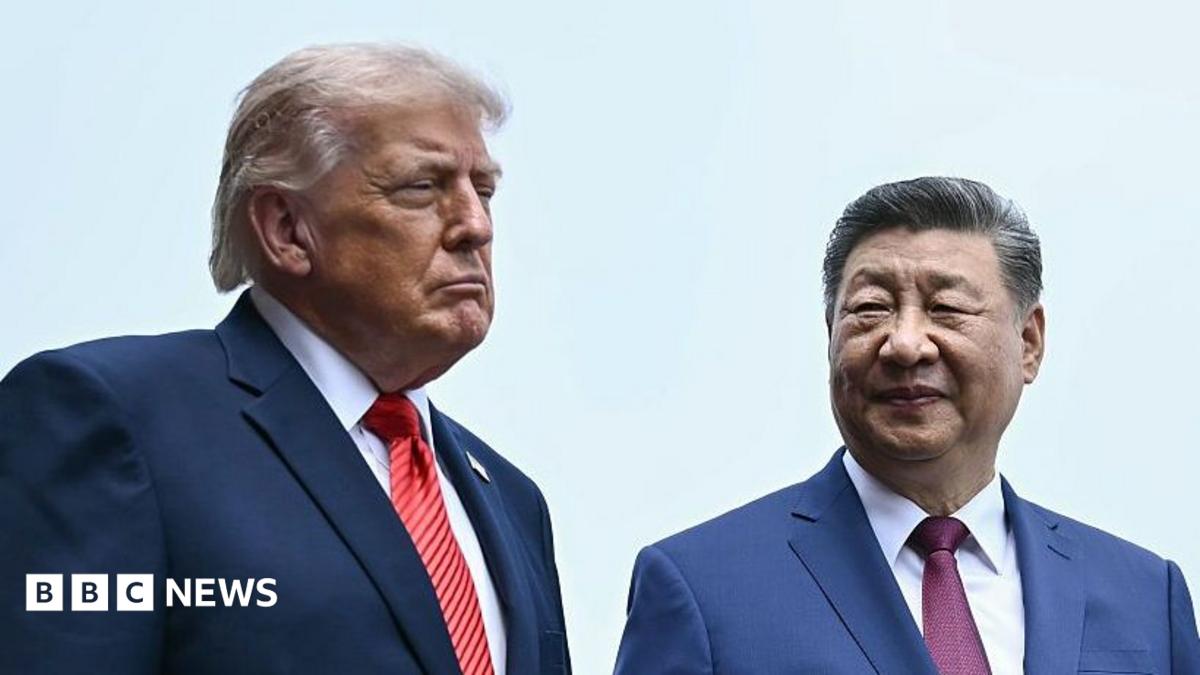
The spouse of an American academic who is currently incarcerated in China on allegations of espionage has called on President Donald Trump to intervene directly and secure his freedom during high-stakes diplomatic talks with Chinese President Xi Jinping at the White House next week.
Sylvia Zin presented an emotional appeal on Capitol Hill on Wednesday, expressing profound hope that the American president will raise her husband’s plight when the two world leaders convene. Her testimony came as several families of individuals detained abroad gathered in Washington to urge senior administration officials to prioritize the recovery of their loved ones during the upcoming summit.
Her husband, U Min Zin, is a prominent scholar who serves as the director of the Myanmar Institute for Strategic and Policy Studies, also known as ISP-Myanmar. His organization focuses on analyzing regional geopolitics, with particular emphasis on China’s strategic relations, interests, and growing influence across Myanmar. His background also includes significant political advocacy, having participated as a student activist in Myanmar’s 1988 pro-democracy uprising.
The scholar was taken into custody on June 3 shortly after arriving in the southwestern Chinese city of Kunming to participate in an academic conference. Authorities in Beijing subsequently accused him of espionage and actions that allegedly endangered China's national security, charges that led to his formal detention.
Appearing before the House Foreign Affairs Committee’s East Asia and Pacific Subcommittee, Sylvia Zin detailed the harrowing conditions her husband faced following his arrest. She testified that American diplomats informed her that Chinese interrogators subjected him to questioning sessions lasting up to six hours each day during the initial phase of his imprisonment.
Zin, who currently resides in Thailand alongside the couple’s daughter, explained the immense emotional strain caused by the total absence of direct communication with her husband. She told lawmakers that the family is forced to rely entirely on monthly consular visits conducted by US officials simply to confirm that he remains alive and endure the agonizing wait between updates.
During the hearing, titled "Lives, Not Leverage: The Long Arm of China and North Korea's Repression," lawmakers voiced strong bipartisan outrage over Beijing’s detention practices. Subcommittee Chairwoman Young Kim opened the proceedings with a direct warning to American citizens traveling abroad, cautioning that visitors to China face the genuine risk of being taken hostage to serve as diplomatic leverage.
Congresswoman Kim further argued that Min Zin’s detention was a calculated maneuver by Chinese authorities designed to intimidate researchers whose critical analysis proves inconvenient to Beijing. She contended that the timing of his apprehension, coming just months ahead of high-level bilateral summits, was intentionally planned to send a chilling message to independent analysts.
The anticipated meeting between Trump and Xi marks a major moment in bilateral relations, with the Chinese leader scheduled to arrive in Washington on Wednesday for an official state visit. The summit follows a prior engagement in May, during which Xi hosted Trump for diplomatic discussions in Beijing.
Beyond her husband’s case, Sylvia Zin expressed confidence that Trump’s diplomatic engagement could help deliver freedom for other Americans held in Chinese prisons, highlighting the case of Chen Youlin. Chen is a US seismologist who specializes in monitoring nuclear testing activities and has been detained in China for the past two years under similar circumstances.
Both Min Zin and Chen Youlin were officially designated by the US State Department last month as "wrongfully detained." This official classification is a crucial procedural milestone that formally shifts administrative oversight of their files to the Office of the Special Envoy for Hostage Affairs, significantly elevating their profiles and unlocking specialized federal resources dedicated to negotiating their release.
The hearing also featured testimony from the son of Jimmy Lai, the imprisoned Hong Kong media mogul, who similarly urged the administration to use its leverage to secure his father’s release. Trump had previously raised Lai’s case directly with the Chinese leader, later recalling to reporters that Xi had characterized the situation as particularly challenging.
Advocates for the detainees point to past diplomatic precedents as a source of optimism, noting that Trump’s previous interventions have yielded tangible results. Following a prior formal bilateral meeting, the US president pressed Xi regarding the imprisonment of Jin Mingri, a prominent leader of an underground Christian church, leading to the pastor’s release roughly two months later.
Responding to inquiries regarding the upcoming bilateral summit, a senior White House official, speaking on condition of anonymity, affirmed that resolving the wrongful detention of American nationals remains a top priority for the president as he prepares to host the Chinese delegation next week.








Comments (0)