 yoga-mahendra
A campaign rally remark by President Donald Trump suggesting Iran could "take out" Los Angeles and San Diego has triggered a sharp political confrontation, with California's top officials denouncing the comments and the White House insisting they were being deliberately misread.
Speaking in Nebraska during an election campaign event, Trump discussed the US conflict with Iran and framed the military action as a necessary cost. "It's a small price to pay for keeping the world safe, keeping our country safe," he said, before adding that Iran "can take out a city" and naming the two California cities. Portions of the crowd reportedly cheered as he made the remarks.
The comments drew immediate condemnation from California Governor Gavin Newsom, who called them "deranged and dangerous." Los Angeles Mayor Karen Bass went further, describing the remarks as threats and accusing the president of effectively encouraging attacks on American lives. San Diego Mayor Todd Gloria posted on X that his city was not collateral damage, urging Trump to keep it out of what he called reckless war talk. Newsom later shared a Los Angeles Times article about the episode on his official governor account, labeling the comments "disgusting and disqualifying."
The White House pushed back firmly. Communications Director Stephen Cheung dismissed what he called a media freakout over the remarks, saying the reaction was not rooted in reality. According to Cheung, Trump was making the point that US cities would have faced danger had a nuclear-armed Iran not been stopped. "America is safer because of the President," he wrote, adding that Iran now has no nuclear capability, no navy, no air force and no money. A separate post from the White House rapid response account on X attacked journalists at the Los Angeles Times who covered the story, calling them buffoons, and repeated that Trump was describing the threat the US is fighting to prevent rather than inviting an attack.
That interpretation is consistent with a broader pattern: the president and senior administration officials have repeatedly argued that disrupting Iran's nuclear program was essential to US national security, and that any fallout from the conflict was a price worth paying. The dispute, however, is as much about tone as substance, since the president's phrasing at a rally left room for the interpretation his critics seized upon.
The two cities at the center of the controversy are far from symbolic targets. San Diego, located about 17 miles from the Mexican border and the eighth-largest city in the United States, hosts Naval Base San Diego, the home port of the US Navy's Pacific Fleet, and Naval Amphibious Base Coronado, the principal West Coast training center for Navy SEALs. Marine Corps Base Camp Pendleton, where roughly 70,000 service members and civilians work, is also in the area. Los Angeles, roughly 120 miles to the north and the second-most populous US city, houses the headquarters of the US Space Force's space systems command and Los Angeles Air Force Base. Any threat to these locations carries obvious military as well as civilian implications.
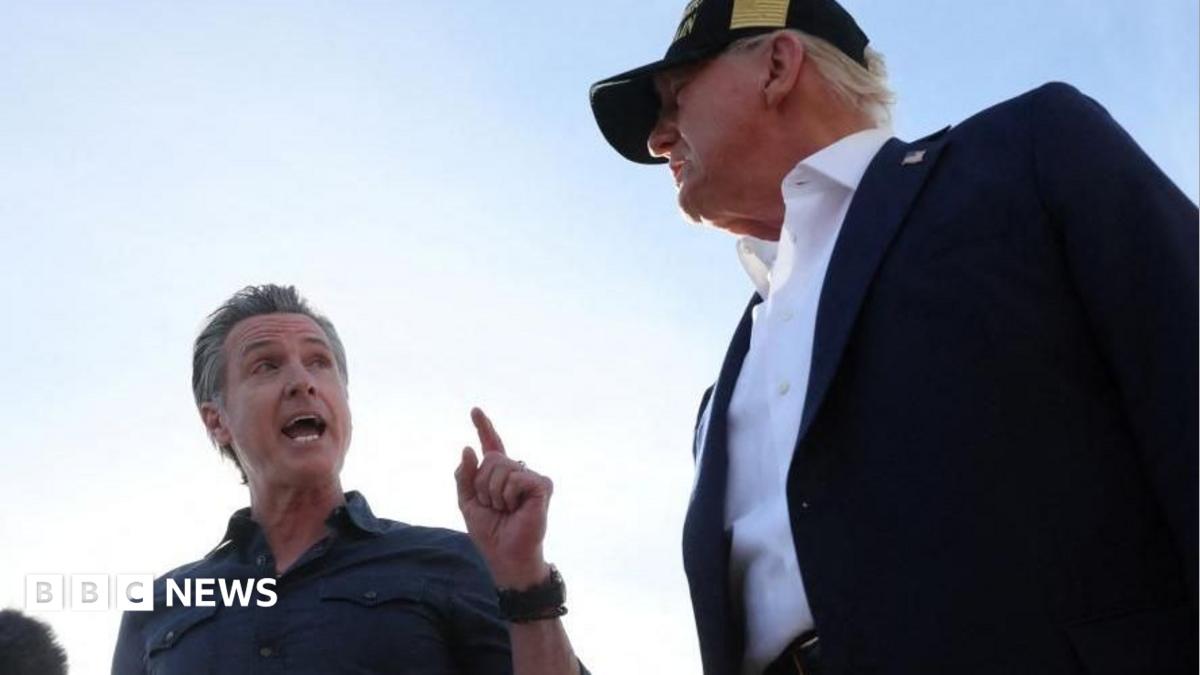
The exchange also fits a long-running feud between Trump and Newsom, who is widely seen as a possible Democratic presidential contender in 2028. Last year, Trump called the governor incompetent over his handling of unrest that followed anti-immigration enforcement protests in Los Angeles. Newsom responded by accusing the president of a brazen abuse of power after military personnel were deployed to secure federal buildings during the demonstrations. Earlier this year, Trump mocked Newsom's dyslexia, prompting criticism from dyslexia advocacy organizations. The two men met in January when the president visited California after wildfires struck the state, a moment that briefly suggested a more functional relationship.
Trump has not yet responded directly to the statements from California's leaders. The absence of a personal reply has left the White House's communications team to shape the administration's position, which has centered on reframing the remark as a national security argument rather than a literal threat.
The episode lands during a heated midterm election season, when campaign rhetoric is under intense scrutiny and every presidential phrase is quickly converted into attack advertising. For California Democrats, the comment offers a ready-made argument that the president is careless about the safety of American communities. For the White House, it is an opportunity to return to a familiar message: that its Iran policy made the country safer and that critics are distorting the president's words for political gain.
What remains unresolved is whether the clarification will quiet the backlash. Mayors of two of the largest cities in the country have now publicly accused the president of treating their residents as acceptable losses, and that charge is likely to echo well beyond the rally hall in Nebraska.








Comments (0)