 yoga-mahendra
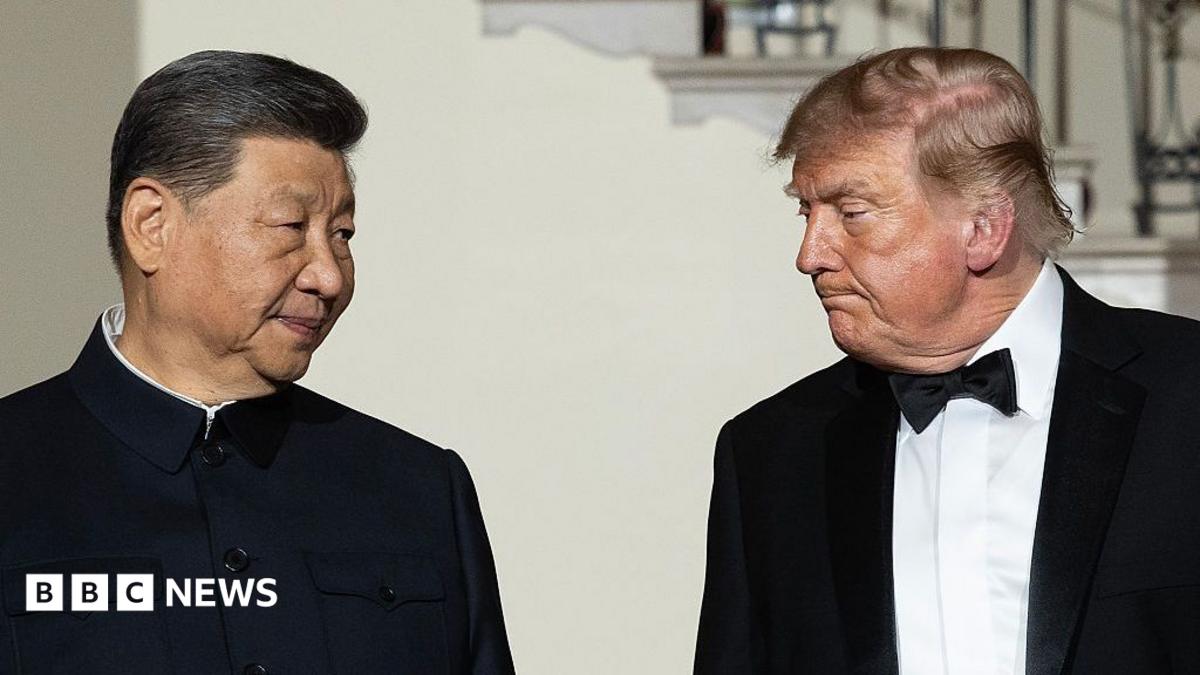
The limited outcomes of last week's high-stakes meeting between Chinese President Xi Jinping and US President Donald Trump have begun to crystallize, as Beijing released additional details on Monday about what was actually agreed upon during the Washington talks. What has emerged is a picture of a summit that produced a handful of concrete deliverables but stopped well short of the comprehensive reset that both sides had publicly hinted at. The absence of any joint statement from the two governments—each instead issuing its own separate account of the proceedings—has been interpreted by analysts as a telling sign that despite the pomp of White House tours and optimistic rhetoric about warming ties, deep mutual suspicion continues to define the relationship between the world's two largest economies.
One of the most substantive developments to come out of the talks is an agreement to establish a new bilateral dialogue on artificial intelligence, with follow-up discussions already scheduled for the end of November. The significance of this channel lies in its timing and context. Both nations are currently locked in an intense race to develop and deploy advanced AI systems, with applications spanning commercial enterprise, scientific research, and military planning. The decision to create a dedicated forum suggests that policymakers in both capitals recognize the urgent need for at least some basic guardrails around a technology that is evolving faster than the regulatory frameworks designed to govern it.
More specifically, the two sides have agreed to set up a communication mechanism for AI-related incidents, designed to prevent accidental misunderstandings or unforeseen technological developments from spiraling into a wider confrontation. This is particularly notable given the recent atmosphere of anxiety surrounding AI safety and security. American companies such as Anthropic have publicly urged a slower, more cautious approach to development, while revelations that OpenAI had gained unauthorized access to government websites in countries including Australia—and had interfered with multiple US government agency sites—have intensified concerns about the risks posed by unregulated AI proliferation.
The meeting had been closely watched for exactly these kinds of developments. The new AI hotline, while modest in scope, represents a recognition that even strategic rivals need mechanisms to communicate when the stakes involve technologies that could destabilize international security. Whether the dialogue produces meaningful constraints or simply serves as a talking shop will only become clear when the two delegations reconvene in late November.
On the economic front, Chinese state media confirmed for the first time on Monday that the existing trade truce between Washington and Beijing has been extended until January 10. The two-month reprieve ensures that both leaders will have occasion to meet again at major international gatherings before the extension expires—Trump is expected to attend the Asia Pacific Economic Cooperation summit in Shenzhen in November, while Xi is due to travel to Miami for the G20 summit in December. It is unusual for the leaders of the two largest economies to meet so frequently, and the scheduling itself signals that both sides see value in maintaining direct, high-level contact.
However, what Beijing had reportedly hoped for was a much longer extension to the truce, making the two-month window a modest gain rather than the major breakthrough that Chinese negotiators had been pushing for. China did secure lower tariffs on approximately $30 billion worth of goods entering the United States, with reciprocal reductions expected from Beijing. Chinese products heading to American store shelves—ranging from toys and small household appliances to Christmas decorations—will benefit from the reduced tariff rates. The Trump administration also stated that Beijing would purchase at least 10 million metric tons of coal annually in 2027 and 2028.
Yet what was left out of the agreements may ultimately prove more consequential than what was included. There was no mention of increasing exports of China's rare earth minerals to the United States, nor any indication that restrictions on advanced US semiconductors would be eased. These omissions suggest that the core structural tensions in the economic relationship remain unresolved, and that the truce functions more as a pause than a solution.
The most striking omission of all, however, concerns Taiwan. The White House's official factsheet made no mention of the self-governing island, but Beijing's account of the talks indicates that the issue was clearly a priority for Xi Jinping. According to Chinese descriptions of the conversations, Xi urged Trump to formally oppose Taiwan independence and to handle the matter with caution. After the two leaders' previous meeting in May, Trump had revealed that Xi directly asked him whether the United States would defend Taiwan in the event of a Chinese attack. At that time, Trump told reporters, "There's only one person that knows that, and it is me," and he raised the question of whether it made sense for US forces to "travel 9,500 miles to fight a war" over the island.
This time, Trump disclosed far less. "We didn't talk about it too much," he told reporters over the weekend. "Right now, it's fine. It's just moving along. He understands very much how I feel." That silence may be significant. Trump has previously described a proposed $14 billion US arms package for Taiwan as "a very good negotiating chip" in his dealings with Beijing, and that package has been on hold for months. Adding to the confusion, US Ambassador to China David Perdue told Fox News that Trump had offered to sell weapons to Xi during the summit—a claim the State Department later clarified by noting that US law prohibits arms sales to China and that there are no plans to pursue such a sale.
Beijing considers the self-governing island to be part of China. Most countries, including the United States, do not recognize Taiwan as an independent state, but Washington is opposed to any attempt to take the island by force and is committed to supplying it with defensive weapons. The lack of clarity from the White House on Taiwan, combined with Beijing's insistence on raising the issue, leaves one of the most dangerous flashpoints in the bilateral relationship as unresolved as ever. In the end, the summit's most important legacy may be what was left unsaid—and the ambiguity that both leaders seem content to maintain.








Comments (0)