 yoga-mahendra
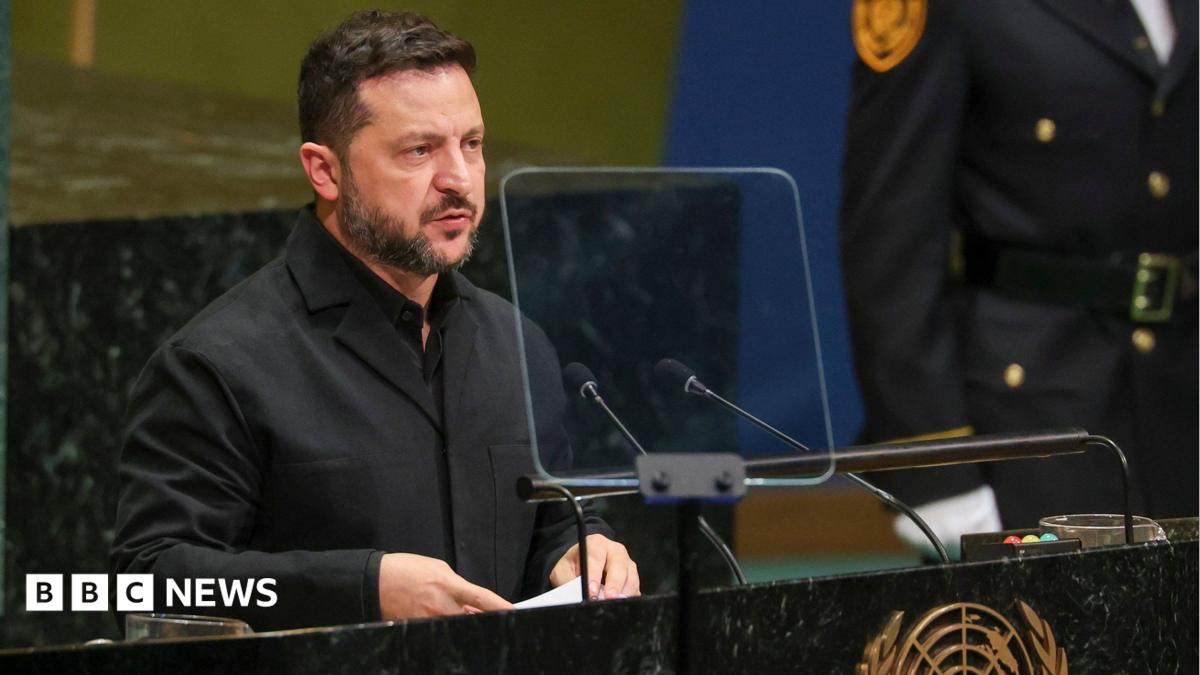
South Korea has formally summoned Ukraine's acting ambassador in Seoul, lodging a sharp diplomatic protest after President Volodymyr Zelensky publicly disclosed that two captured North Korean soldiers had been handed over to South Korean custody. The disclosure, made during Zelensky's address to the United Nations General Assembly last Wednesday, has triggered an unusually public rift between two countries that have otherwise maintained friendly relations since Russia's full-scale invasion of Ukraine in 2022.
Vice Foreign Minister Park Yoon-joo conveyed the South Korean government's position directly to acting ambassador Andrii Vieshkin, expressing what Seoul described as "strong regret" that Zelensky had revealed the transfer. According to South Korean officials, the handover had been arranged under an understanding that it would remain confidential, and the president's decision to announce it from the UN podium caught Seoul off guard.
The two North Korean soldiers at the centre of the dispute were captured by Ukrainian forces in Russia's Kursk Oblast in early 2025. At the time, Ukraine publicised the captures, releasing images of the injured men and presenting them as evidence that Pyongyang had dispatched troops to fight alongside Russian forces. The soldiers later told South Korean media outlets that they wished to be resettled in the South, a request that set in motion more than a year of quiet negotiations between Seoul and Kyiv.
President Lee Jae Myung's office described the disclosure as "greatly disappointing," characterising the prisoner transfer as a "highly sensitive issue" with direct implications for South Korea's national security. Officials in Seoul explained that confidentiality had been sought for two distinct reasons. The first was humanitarian: keeping the arrangement quiet was intended to shield the soldiers' families in North Korea from potential reprisals by the regime. The second was strategic, with Kyiv reportedly wanting to avoid domestic criticism that it had forfeited a valuable bargaining chip by handing over prisoners who might otherwise have been exchanged for Ukrainian captives held by Russia.
Zelensky's office pushed back firmly against Seoul's account, stating that the two countries had never signed a non-disclosure agreement governing the transfer. That response prompted South Korea to escalate its protest further, demanding that Ukraine apologise for what Seoul called "announcing a falsehood." South Korean officials said the episode had seriously damaged trust between the two governments, a notable statement given the considerable goodwill that has existed between them.
The political fallout has been particularly uncomfortable for President Lee. Following Zelensky's UN announcement, South Korean opposition parties accused the president of concealing the transfer in order to avoid antagonising Pyongyang. Lee, whose party advocates a more conciliatory approach toward North Korea, has spent much of his time in office attempting to revive inter-Korean dialogue and reopen peace talks, so far without success. Critics at home argue that his government's emphasis on engagement with the North may have led it to prioritise secrecy over transparency.
Seoul has consistently expressed sympathy for Ukraine since Russia's invasion and has joined international sanctions efforts, but it has also maintained a longstanding policy of refusing to supply lethal weapons to any country engaged in an active war. That policy has kept South Korea out of direct military involvement in the conflict, even as its Western allies have ramped up arms deliveries to Kyiv.
The presence of North Korean troops on the battlefield has tested that stance. After Pyongyang deployed soldiers to support Russia in 2024, Ukrainian officials intensified pressure on Seoul to reconsider its position and supply advanced anti-aircraft missiles capable of defending Ukraine's energy infrastructure against Russian drone and missile strikes. Mykhailo Podolyak, a senior adviser to Zelensky, argued publicly that South Korea can no longer afford to remain on the sidelines. "When North Korea actively participates in a war in Europe, South Korea cannot remain a distant observer," he said, adding that the transfer of defence technologies from Seoul to Kyiv would serve South Korea's own long-term security interests by containing what he described as an aggressive totalitarian axis.
Seoul has taken some steps to support Ukraine without crossing its lethal-arms red line. In July, the South Korean government announced a $100 million assistance package, which Lee's office said would expand earlier contributions consisting of non-lethal items such as helmets, personal armour, and medical equipment. The package represents a significant financial commitment but falls well short of the military hardware Kyiv has requested.
Moscow has meanwhile issued its own warning. Russia's foreign ministry said it would have "no choice but to retaliate" if South Korea were to provide weapons to Ukraine, though it did not specify what form such measures might take. The threat underscores the delicate position Seoul occupies, balancing its alignment with the United States and its support for Ukraine against its desire to preserve working relationships with Russia and China.
South Korea has long pursued cordial ties with neighbours that may be at odds with its principal ally, the United States. Since the collapse of the Soviet Union, Seoul has worked to deepen trade and diplomatic relations with Russia, which shares a border with North Korea, and regards both Moscow and Beijing as essential partners in any effort to influence Pyongyang's behaviour. That diplomatic calculus helps explain why Seoul reacted so strongly to a disclosure it believes jeopardised a carefully managed arrangement.
Ukraine's foreign ministry declined to comment when approached by the BBC, leaving the dispute unresolved for now. With both sides publicly insisting on their version of events, the incident risks becoming a lasting irritant in a relationship that has quietly become one of Ukraine's more valuable non-Western partnerships, even as North Korean troops continue to fight on European soil.






Comments (0)