 irwan-setiawan
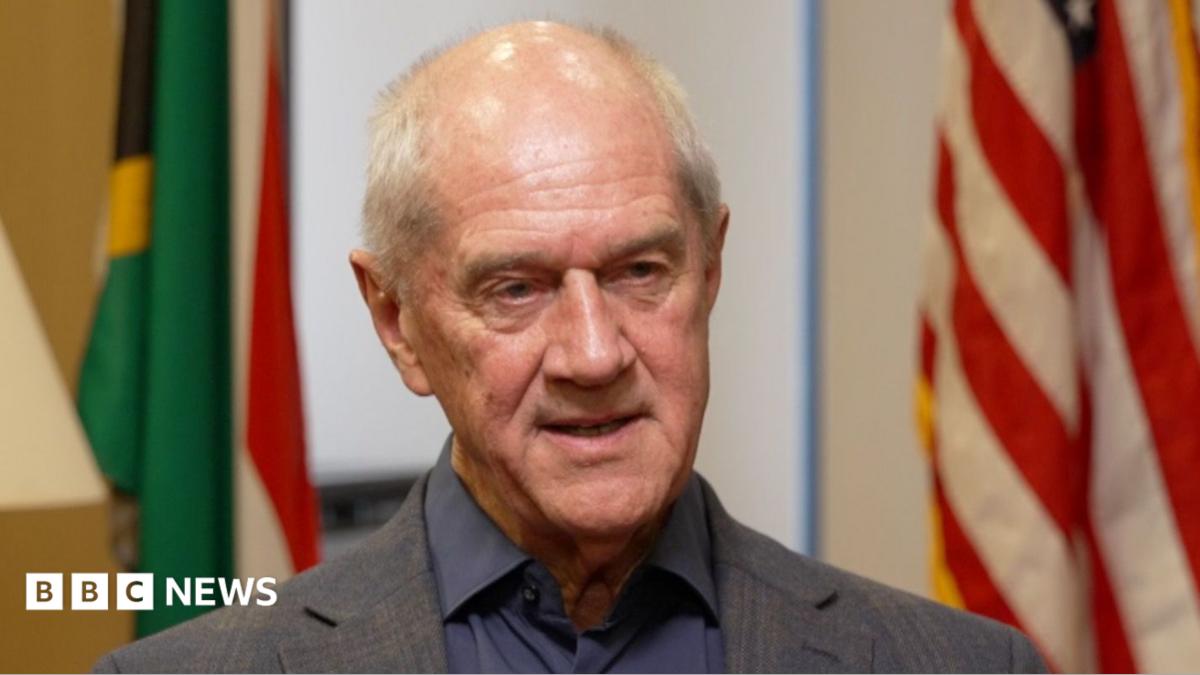
South Africa's newly appointed ambassador to Washington has directly challenged President Donald Trump's assertion that white Afrikaners are facing genocide in the country, saying the claim does not reflect reality and that his own identity as a born Afrikaner gives him the standing to say so. Roelf Meyer, who took up the post in April, told the BBC that the idea of a systematic campaign against the white minority simply does not exist, and that he had never received a satisfactory explanation for the origin of what he described as a misrepresentation of the facts about violence in South Africa.
Meyer's comments carry unusual weight because of his background. He was one of the chief negotiators who helped bring an end to apartheid, the system of white-minority rule that governed South Africa for decades. He represented the National Party, the political force that had implemented and sustained apartheid, during the talks that ultimately transitioned the country to democracy. On the other side of that negotiation was Cyril Ramaphosa, now South Africa's president, who served as a key negotiator for the African National Congress. That shared history, Meyer said, is part of why Ramaphosa trusted him to help repair relations between Pretoria and Washington.
When Trump first made the genocide claim, Meyer recalled wondering whether the US president was referring to people like him. "Is he talking about us?" he remembered thinking. His answer, delivered bluntly to the BBC, is that there is no mass attack on the white Afrikaner minority. He said he has never experienced anything of that kind himself and that the narrative has been built on a distortion of the country's crime statistics.
The dispute traces back to a White House meeting last year, when Trump confronted Ramaphosa over the widely discredited genocide allegations. Following that encounter, the US administration launched a refugee pathway specifically for Afrikaners. In the time since, nearly 13,000 refugees have been admitted to the United States, and all but three of them were South African. The Trump administration now plans to admit as many as 17,500 additional white Afrikaners as refugees over the next 12 months, according to a notice sent to Congress this week.
The White House has defended the programme in forceful terms. A spokeswoman told the BBC that Trump had provided a lifeline for Afrikaners who she said are being raped, maimed, killed and driven off their property across South Africa. She accused the South African government and much of the media of dismissing the lived experiences of that community, and said the administration would keep processing refugee applications because the president has a humanitarian heart. The statement signals that Washington has no intention of softening its position despite the ambassador's objections.
Meyer pushed back on that framing, arguing that the facts about violent crime in South Africa have been misrepresented. He said he had never been given a clear answer about where what he called the misdirection of information was coming from. South Africa's police data shows that the majority of victims of crime in the country are Black, a point that undercuts the suggestion that white South Africans are uniquely targeted. Claims of genocide against white South Africans have been rejected by every political party in the country, including parties that represent Afrikaner interests.
Not everyone in the Afrikaner community shares that view. SJ Du Venage, who lives on South Africa's west coast, has been trying to move to the United States under the new scheme. He serves as a council member of the Freedom Front Plus, a right-wing Afrikaner party, and argues that there is a political drive toward killing white people and farmers. "There's absolutely an agenda to wipe us out here," he said. His perspective reflects a segment of the Afrikaner population that believes the government and majority-Black society pose an existential threat to their community.
The refugee pathway has also drawn individuals whose accounts describe fear rather than direct violence. One woman, who uses the name Lielie publicly, moved with her family from South Africa to Texas. They had lived on her stepfather's farm, growing macadamia nuts and bananas. Despite security measures that included walls around the house, an electric fence and eight bull terriers, she said she lived in constant fear and that on three occasions she saw people entering the property. Nothing was stolen and no one was harmed, she acknowledged, but she said friends of her husband and people who lived nearby were brutally attacked. Since arriving in the US, she said her life has changed, she feels safer walking around, and her children can finally play outside.
An Afrikaner lobby group is planning a vigil on Saturday on Washington's National Mall, where thousands of white crosses will be laid out to commemorate what the group describes as victims of farm attacks. The event is designed to keep the issue in the public eye and to press the case that rural white South Africans face a distinct and deadly threat. Critics view such displays as an attempt to lend emotional weight to a claim that has been discredited by researchers and political parties alike.
The diplomatic backdrop to the dispute has been deteriorating for some time. Relations between Washington and Pretoria soured over a range of issues, and Meyer was appointed in April with a mandate to help mend them. Last week, the Trump administration announced visa restrictions targeting South Africans it said were responsible for race-based discrimination against white people, and it warned of further punitive measures if South African leaders did not address the issue. The move marked another escalation in a relationship that has grown increasingly strained.
Meyer said he would welcome the chance to speak with Trump about the reality of the situation on the ground. He argued that as a born Afrikaner he has the legitimacy to address the subject, and he stressed that his role is not limited to representing Afrikaners alone. He acknowledged the trust between himself and Ramaphosa as a key reason for his appointment, along with the president's recognition of the value of sending an Afrikaner to Washington. His challenge now is to translate that personal credibility into a diplomatic breakthrough with an administration that has staked considerable political capital on the genocide narrative.
At stake is not only the tone of US-South Africa relations but also the fate of thousands of people who have already resettled in the United States and the many more who may follow under the expanded refugee programme. The programme's continuation rests on a premise that South Africa's government and its new ambassador reject outright. For Meyer, the task is to close a gap between two governments that appear to be operating from fundamentally different sets of facts, and to do so while representing a country whose crime challenges are real but, in his telling, widely misunderstood.








Comments (0)