 fitri-handayani
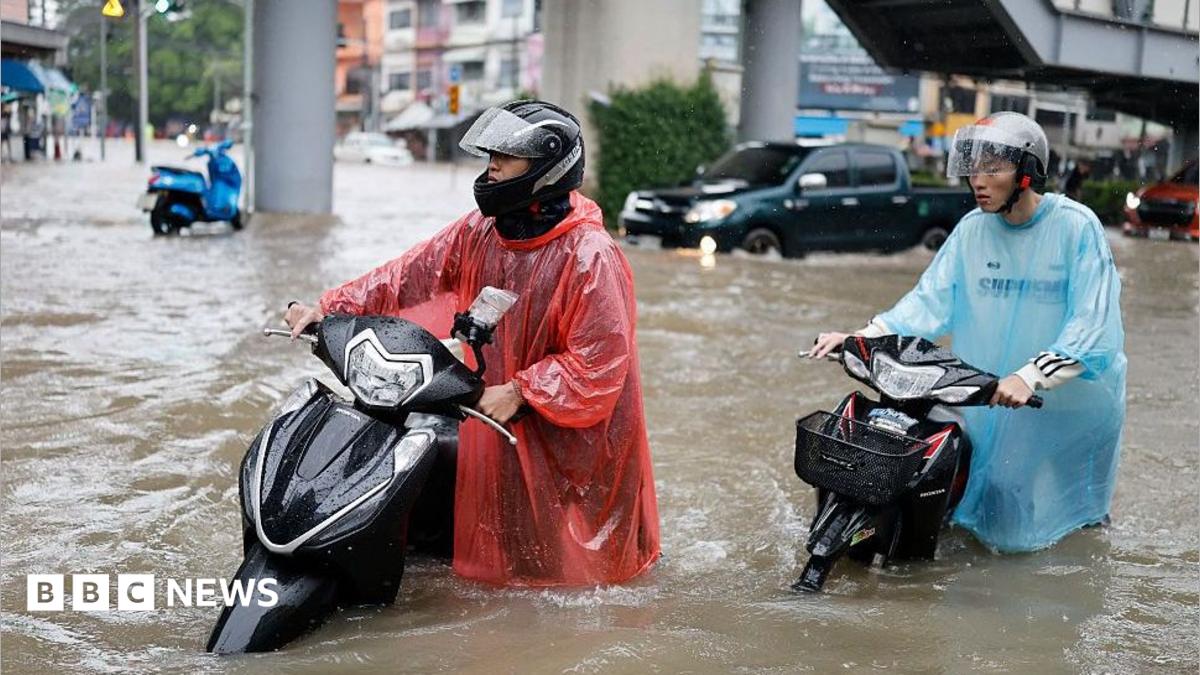
Authorities in Thailand have declared a flood emergency disaster across Bangkok after two days of unrelenting heavy rain left large parts of the capital's road network under water, prompting officials to urge residents to remain indoors and take precautions against further inundation.
The downpours, which have persisted for roughly 48 hours, overwhelmed Bangkok's drainage infrastructure and triggered chaos on streets that are already among the most congested in the world. Emergency declarations now cover all 50 of the city's districts, according to the BBC.
Residents living near Bangkok's extensive network of canals have been advised to move their belongings to upper floors, as water levels continue to rise in waterways that crisscross the low-lying metropolis. Thunderstorms are a familiar feature of Thailand's climate at this time of year, but the intensity and duration of the recent weather have pushed the city's flood defences beyond their normal capacity.
The Thai Meteorological Service has warned that more heavy rain is expected through the coming week, heightening concerns that additional canals could overflow their banks and spread flooding into further neighbourhoods. Forecasters note, however, that the low-pressure system responsible for the recent downpours is expected to shift towards central Thailand, which could eventually bring some relief to the capital.
Bangkok Governor Chadchart Sittipunt said the eastern section of the city had borne the brunt of the flooding. Speaking to the AFP news agency, he described the difficulties facing response teams: "The rain keeps falling and we are doing our best. We are trying to pump the water out, but the water in canals are full." He added that residents living close to the waterways face the greatest risk, noting that "every canal is now filled."
The human impact of the flooding was captured in testimony from Somkid Pheuk-ngam, a 67-year-old resident who lives near a canal just north of central Bangkok. She told AFP that water had risen to around her waist, making it nearly impossible to leave her home. "The water keeps coming in. It's hard to go out now," she said, adding that she had been forced to close her shop for two days.
Somkid said conditions in the city appeared worse than during the devastating nationwide floods of 2011, when Bangkok was severely affected by an extreme weather event that lasted roughly three months and claimed hundreds of lives across Thailand. In contrast, no casualties have been reported in Bangkok as a result of the current flooding, offering a measure of reassurance amid the disruption.
The 2011 disaster remains a painful reference point for many in the Thai capital, having exposed the vulnerability of a city built on soft ground and intersected by numerous canals, known locally as khlongs. That event prompted significant investment in flood defences, pumping stations and water-management systems, though the scale of the present rainfall has again tested those improvements.
Bangkok's geography makes it particularly susceptible to flooding. The city sits on a flat, low-lying plain close to the mouth of the Chao Phraya River, and its rapid urbanisation has reduced the amount of natural ground capable of absorbing rainwater. Combined with land subsidence in some areas, these factors mean that intense rainfall can quickly translate into surface flooding when drainage systems reach their limits.
Traffic chaos has compounded the difficulties for residents, with submerged roads making travel hazardous or impossible in many parts of the capital. The flooding has disrupted daily routines, forced businesses to close and left commuters stranded, underscoring how quickly extreme weather can paralyse a densely populated megacity.
Authorities have continued to deploy pumping equipment and personnel in an effort to clear standing water, but officials acknowledge that the sheer volume of rain has stretched resources. With canals already at capacity, the scope for moving water away from flooded streets remains limited until rainfall eases.
The governor's assessment that eastern Bangkok was hardest hit reflects the uneven distribution of the downpours, with some districts experiencing deeper and more persistent flooding than others. Emergency zones declared across all 50 districts give local authorities expanded powers to coordinate relief efforts and direct resources where they are most needed.
Meteorological forecasts suggest the coming days will remain unsettled, and residents have been encouraged to monitor official updates and follow safety guidance. Those in low-lying areas and near canals are regarded as the most exposed, and contingency plans may need to be expanded if conditions deteriorate further.
The flooding has also raised broader questions about how prepared Bangkok and other Southeast Asian cities are for increasingly erratic weather patterns. While the immediate focus remains on pumping water and protecting vulnerable communities, the event is likely to intensify debate about long-term investment in drainage, urban planning and climate resilience.
For now, the priority for officials is safeguarding residents and limiting damage as the rain continues. With the low-pressure system expected to drift towards central Thailand, attention may soon shift to other provinces, but Bangkok's residents face an anxious wait to see whether the waters recede or rise further in the days ahead.






Comments (0)