 yoga-mahendra
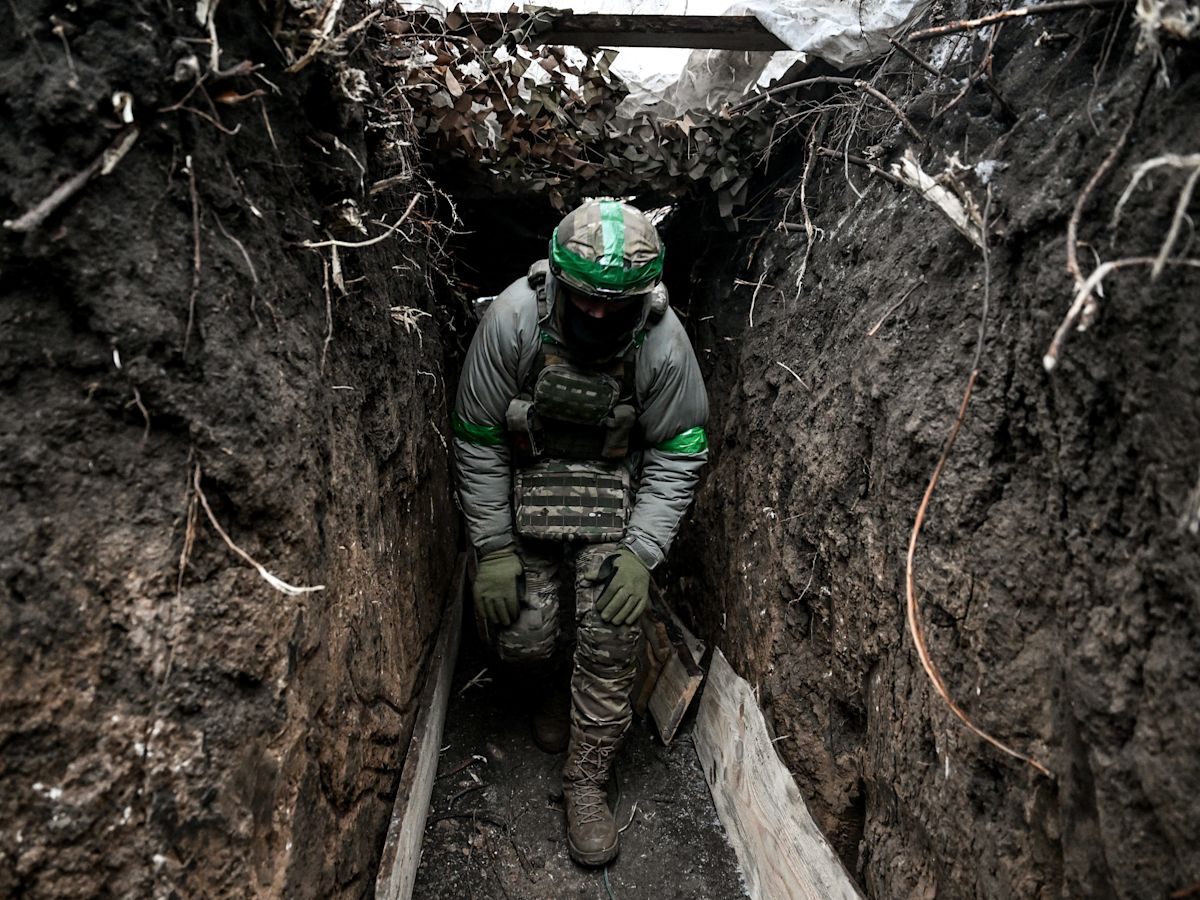
OSLO — As Norwegian officers train Ukrainian soldiers on Polish soil, they are absorbing a sobering conclusion about modern combat: a small nation like theirs cannot survive the kind of slow, punishing war of attrition now playing out across Ukraine, and everything must be done to prevent such a conflict from taking shape.
The insight comes from Operation Legio, a multinational training program led by Norway and hosted at Camp Jomsborg, a purpose-built facility in NATO ally Poland. Officers running the effort told Business Insider that the central takeaway is not simply how to fight like Ukraine — but how to avoid ever fighting that way at all.
Maj. John, the S3 Operations Officer responsible for synchronizing the training operation, said Norway's priority is ensuring any future war never hardens into the static, positional struggle he sees unfolding in Ukraine. For a country of roughly five million people, he argued, the mathematics of attrition are unforgiving. Russia is likely losing around 35,000 personnel a month in Ukraine — losses Moscow may struggle to repeat — yet Norway could not endure such depletion and continue to function as a state.
"The most important thing for Norway as a small nation is to avoid getting into that situation," John said, describing his goal of keeping the country's armed forces mobile and adaptable rather than pinned in place. "So we are looking for solutions for how to maintain maneuverability."
Brigadier Atle Molde, who commands Task Force Legio, framed the warning even more starkly. The overriding lesson, he said, is to avoid ending up where Ukraine finds itself — battling for national survival year after year while absorbing enormous casualties. Being ready for that possibility, he added, requires preparation across all of society, and in his assessment Western nations are nowhere near ready today.
That readiness, Molde said, spans an enormous range: from national-level resilience down to teaching an individual soldier how to bring down a drone with a shotgun, "and everything in between."
Norway's approach involves filtering what it learns from the battlefield. Ukrainian troops have pioneered world-class capabilities — particularly in air defense, counter-drone systems and electronic warfare — that allies are studying closely, and Norway wants its mechanized units to adopt those tools so tanks and armored formations can keep moving under fire rather than digging in.
But officers acknowledge a complication: much of Ukraine's most advanced battlefield technology emerged only after the front lines had already congealed into a brutal stalemate. Some Ukrainian practices reflect ingenuity born of necessity, and Norway intends to pass along only those lessons that fit its own circumstances, discarding workarounds adopted out of desperation.
Why the front froze in the first place matters for planners. Both Russian and Ukrainian forces have constructed elaborate, layered defenses, while constant clouds of surveillance drones watch every movement. That combination makes it extremely difficult to concentrate troops and equipment for large-scale offensives without being detected and struck, and the terrain near the line of contact has become what analysts routinely call a "kill zone."
NATO's own thinking is evolving along similar lines. The alliance's Future Force Study, published in June, concluded that militaries must be able to maneuver even under intense observation — precisely the condition that currently paralyzes movement in Ukraine.
Yet NATO officials also caution against drawing the wrong conclusion. Heavy attrition may prove unavoidable in a major war, they warn, so armed forces still need the toughness to endure a prolonged, Ukraine-style fight even as they train to escape one.
For Norway, a NATO member shielded by collective defense commitments, the calculation is ultimately about deterrence through readiness. If the country can field forces that stay dynamic under drone observation and deny an adversary the chance to lock them into static positions, its officers believe they will have absorbed Ukraine's hardest-won and most painful lesson.






Comments (0)