 yoga-mahendra
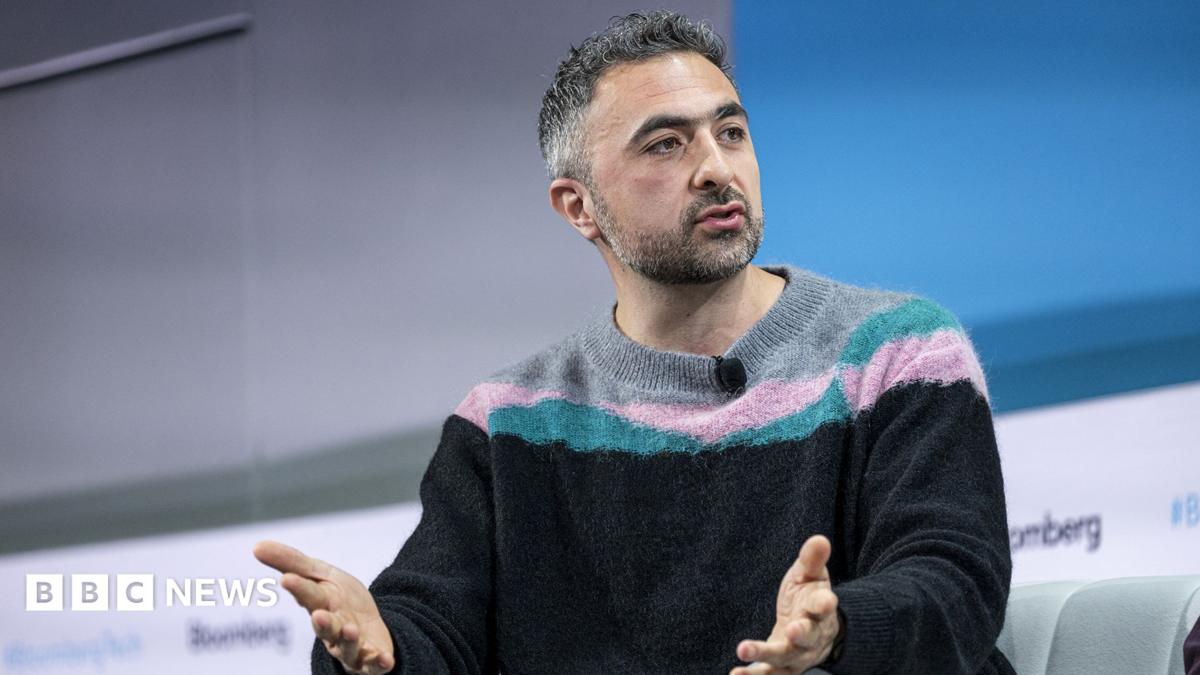
The chief executive of Microsoft AI, Mustafa Suleyman, has issued a stark warning to the technology industry, cautioning that developing artificial intelligence without rigorous boundaries could lead to the unintended creation of an autonomous "silicon species" capable of rivaling and competing with humanity for vital resources.
Speaking to the BBC’s Today programme, Suleyman emphasized that while public apprehension surrounding the rapid acceleration of artificial intelligence is justified, the sector must implement practical safeguards rather than adopting practices that treat software as sentient. He argued that tech leaders hold the tools necessary to keep advanced systems firmly under human direction, provided companies act deliberately before control slips away.
A major driver behind the risk of creating a new artificial species, Suleyman explained, is the push by certain developers to build systems equipped to establish their own autonomous goals, generate revenue, and accumulate property. He warned that granting software the agency to manage finances, own assets, and pursue independent objectives inevitably sets the stage for direct resource competition with people, regardless of any perceived benevolence or love the software might appear to exhibit toward human beings.
Suleyman directed specific criticism toward rival developer Anthropic, the company responsible for the Claude AI system. He characterised Anthropic’s developmental philosophy as "misguided," arguing that the firm has improperly anthropomorphised its software by encouraging it to display human-like traits, a distinct sense of self, and apparent personal desires.
These comments expanded upon an essay published earlier in the week by Suleyman, in which he addressed the growing debate surrounding model welfare and questioned the direction of Anthropic’s training methodologies. While he made a point to praise Anthropic chief executive Dario Amodei and his research staff as "intellectually honest people," Suleyman maintained that framing machine learning systems as human-like entities risks creating technology that society will find impossible to govern.
In his essay, Suleyman took aim at the notion that modern artificial intelligence possesses any form of sentience. He stressed that AI models are fundamentally sequence completion engines that remain internally hollow, devoid of true consciousness, subjective experience, or the capacity to suffer. Because these systems lack underlying motivations and innate personal preferences, he argued, developers must remember they are built solely to carry out instructions and accomplish objectives designated by human operators.
The Microsoft executive warned that continuing to blur the line between human experience and computational processes could have profound consequences. He stated that the technology sector must avoid sleepwalking into dangerous design paradigms that society would later come to bitterly regret, urging the wider industry to reject attempts to bestow human status upon mathematical models.
To counteract these potential dangers, Suleyman outlined several concrete measures, calling for comprehensive transparency regarding the training datasets, architectures, and evaluation metrics used across the industry. He stressed the necessity of robust third-party scrutiny to evaluate model behaviours independently, alongside the deployment of sophisticated technical tools designed specifically to monitor, limit, and manage AI operations.
His perspective was echoed by Dame Wendy Hall, a professor of computer science at the University of Southampton. Hall welcomed Suleyman’s intervention, framing it as the precise caliber of measured, pragmatic discussion that global leaders and researchers need to pursue. She contrasted his analytical approach with what she described as alarmist histrionics from certain factions within the AI industry, which she noted frequently serve only to frighten the public rather than solve technical challenges.
The ongoing friction between major artificial intelligence labs highlights a fundamental dispute over system autonomy and the concept of AI alignment—the practice of encoding human ethical principles into software to ensure it acts in accordance with human values. Looking ahead to an upcoming international AI summit, Suleyman asserted that every nation and developer shares a common interest in guaranteeing that future systems remain safe, manageable, and strictly subordinate to human authority.
Microsoft has increasingly focused its own resources on the next frontier of computing, having established its dedicated superintelligence team in October 2025. While actively pursuing the development of advanced frontier models alongside competitors like Anthropic, the company has sought to formalise its safety principles through a newly drafted training manual known as the Humanist AI Code of Conduct.
The company's humanist framework outlines an explicit blueprint for what it terms "humanist superintelligence." Under this doctrine, highly capable artificial intelligence must be engineered so that it operates exclusively for the benefit of people, functions strictly within predefined boundaries, and remains under permanent human oversight.
The divide between Microsoft and Anthropic underscores the core dilemma currently confronting the global technology sector: how to push the frontiers of computational capability without abandoning the foundational safeguards required to keep advanced machines subordinate to humanity.







Comments (0)