 fitri-handayani
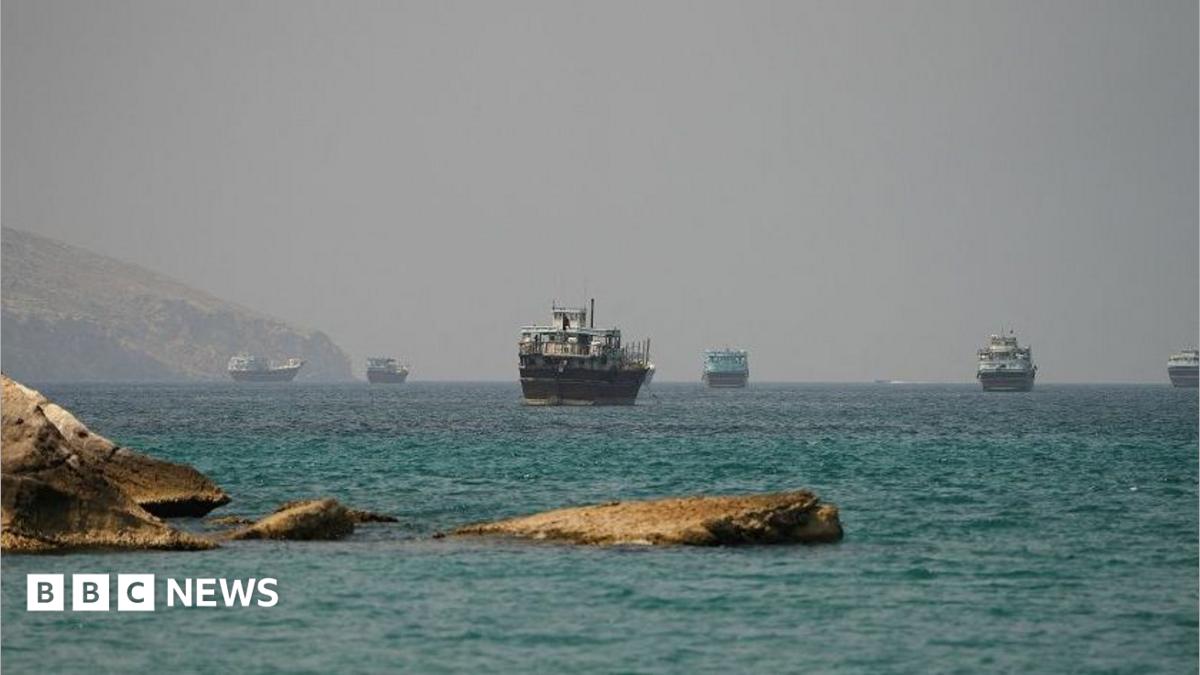
Iran has signaled it is prepared to reopen the Strait of Hormuz within a week, but only if Washington accepts conditions already laid out in a memorandum of understanding signed earlier this year. Foreign Minister Abbas Araghchi announced the proposal during a press appearance at the United Nations in New York, framing the offer as a test of American willingness to de-escalate a conflict that has disrupted global energy markets for months.
Araghchi said the normal maritime passage through the strait could be restored within seven days provided that the necessary conditions are met, and he identified those conditions as the terms contained in the MOU signed in June. He stressed that the decision now belongs to the United States and confirmed that the plan had been relayed to American officials through Qatar, which has served as a mediator in the standoff.
Washington has not yet issued a formal reply to the Iranian proposal. A US official told the BBC that positive discussions were underway through intermediaries, including conversations touching on nuclear issues. The official also pushed back on any suggestion of American urgency, saying the United States holds a very strong position with control of the Strait of Hormuz and therefore is not in a rush to conclude an arrangement.
The Wall Street Journal, citing US officials, reported that President Donald Trump had rejected the deal. According to that account, Trump was privately skeptical that Iran would fulfill his demands and had told his staff he viewed a renewed bombing campaign as likely. The divergent signals from Tehran and Washington suggest that despite the diplomatic channel opened via Qatar, the two sides remain far apart on the terms that would end the closure.
The broader conflict began on 28 February, when the United States and Israel launched air strikes on Iran. Iran retaliated by attacking Israel, US bases in the Gulf and Arab allies of Washington, and by blocking the Strait of Hormuz. Before the war, roughly one fifth of the world's oil and liquefied natural gas passed through the waterway, and its closure has triggered sharp swings in energy prices while intensifying pressure on Trump to find an exit from the conflict, particularly with US Congressional elections approaching in November.
Speaking to CBS News, the BBC's US partner, Iranian President Masoud Pezeshkian said the ceasefire process would begin on the very day the United States accepts the proposal. He referenced the earlier agreement based on the MOU signed in Pakistan and said that if Washington agreed to proceed along those lines, everything would return to the way it was before. Pezeshkian also indicated that Iran would now permit United Nations nuclear inspectors into the country, and he rejected allegations that Tehran is pursuing a nuclear weapon, saying that if inspectors wished to come and conduct inspections, accords could be reached on that specific topic within negotiations.
The memorandum between the US and Iran, signed on 18 June, was intended to deliver a ceasefire and at least partially reopen the strait. Its fourteen points stated that Iran would never obtain a nuclear weapon and stipulated that the US, Iran and their allies would halt military operations on all fronts. The agreement also included provisions for ending a US naval blockade and for sanctions relief, and it committed Iran to make its best efforts to arrange safe passage for commercial vessels through the strait while holding talks with Oman on future shipping arrangements. The arrangement collapsed shortly afterward when both sides resumed strikes.
Since the breakdown, Iran has targeted vessels it says attempted to cross the strait without authorization. The United States has struck Iranian sites in the strait as well as Iranian tankers off the country's coast, and it has maintained a blockade of Iranian ports that has caused severe disruption to the Iranian economy. Trump has claimed that the US has succeeded in getting oil out through the strait, though shipping data cited by Reuters from the commodities analytics firm Kpler shows a recent ten-day average of about eighteen transits per day, with daily figures falling as low as nine vessels.
Complicating the picture further, Yemen's Houthis, who are allied with Iran, have recently stepped up attacks aimed at disrupting oil exports from Saudi Arabia via the Red Sea on the other side of the Arabian peninsula. The group seized large and strategically important stretches of the Red Sea coast this month in a rapid offensive, including the port of Mokha, which overlooks the Bab al-Mandab Strait, another chokepoint for global shipping. US media has reported that Saudi Crown Prince Mohammed bin Salman has requested military support in response to the Houthi advances and strikes on Saudi oil installations.
The combination of the Hormuz closure and the Houthi campaign presents the White House with two simultaneous maritime crises. Hormuz sits between Iran and the UAE and Oman, while Bab al-Mandab lies between Yemen and the Horn of Africa, and together they form the twin gateways for much of the Gulf's energy exports. Any prolonged disruption at either point raises the risk of sustained higher prices for crude and liquefied natural gas, with knock-on effects for inflation and consumer costs in import-dependent economies.
Tehran's offer appears designed to shift the diplomatic burden onto Washington by presenting a concrete timeline for reopening the strait in exchange for compliance with a document the Americans already signed. By tying the proposal to the June MOU rather than introducing new demands, Iranian officials can argue that they are not asking for fresh concessions, only the implementation of commitments already made. That framing may appeal to international mediators and to governments anxious about energy supplies, even if it does not move the White House.
For the Trump administration, accepting the offer would mean revisiting an agreement that collapsed and could be portrayed by critics as a concession to a regime that has attacked US forces and partners. Rejecting it, however, leaves the president managing an open-ended military commitment and volatile fuel prices in the run-up to November's elections. The reported private expectation of renewed bombing suggests the administration may be preparing the public for a longer campaign rather than a negotiated settlement.
With the official US response still pending, the immediate trajectory of the conflict remains uncertain. The diplomatic track through Qatar and the nuclear inspection offer from Pezeshkian provide potential openings, but neither has been matched by a corresponding American commitment. Until one side moves, the Strait of Hormuz is likely to remain restricted, shipping volumes subdued, and the risk of a wider regional confrontation elevated.







Comments (0)