 yoga-mahendra
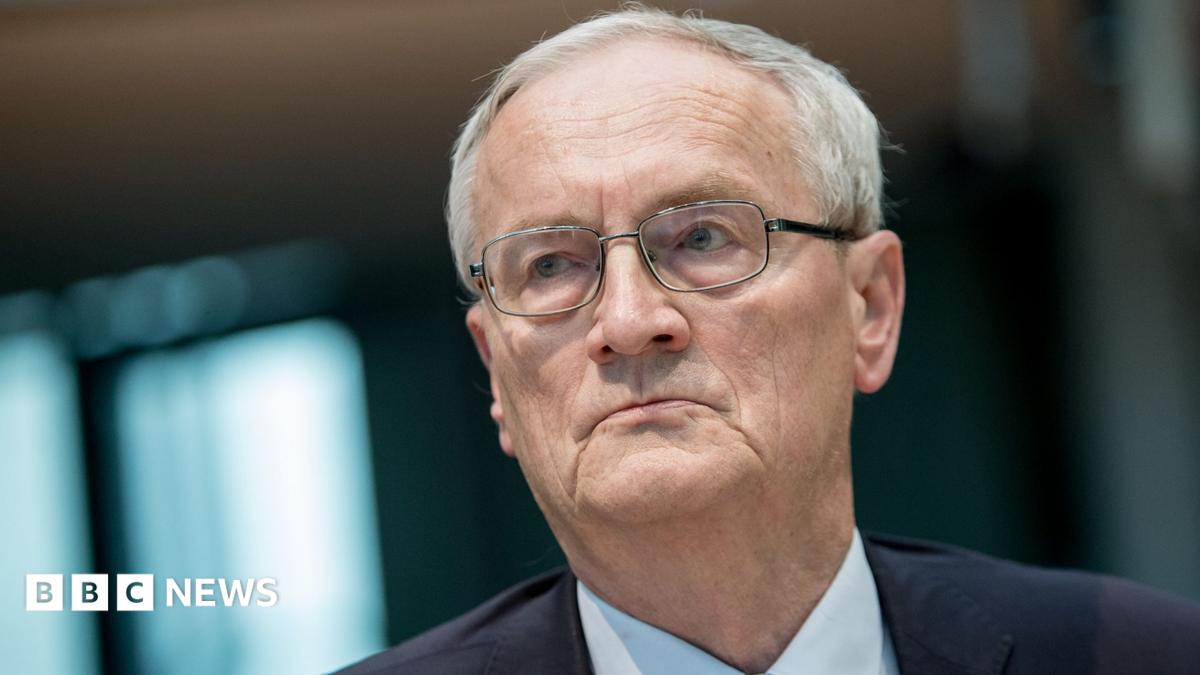
German authorities have arrested August Hanning, the former head of the country's foreign intelligence service, on suspicion of espionage, treason, and obtaining classified information on behalf of a foreign power, the German Federal Prosecutor's Office announced this week.
Hanning, who led the Federal Intelligence Service (known by its German acronym BND) from 1998 to 2005, was taken into custody at his home in Nordwalde, a town near Münster in western Germany, according to local media reports. The arrest marks a stunning fall from grace for a man who once sat at the pinnacle of Germany's intelligence apparatus.
The allegations against Hanning are serious and multifaceted. Prosecutors claim he used classified intelligence material to draft an analysis for one foreign intelligence service while simultaneously maintaining contact with a second foreign spying agency. Investigators have not publicly identified which foreign powers are involved, leaving significant questions about the nature and direction of the alleged espionage.
In a parallel development, police also arrested a former BND employee identified only as Manfred D, accusing him of passing approximately 2,000 classified documents to Hanning in exchange for money. The sheer volume of documents involved suggests a long-running and systematic transfer of sensitive material, potentially spanning years.
Manfred D occupied a particularly sensitive position within the BND. He served as Hanning's bureau chief and remained with the agency until this year. Prosecutors further allege that between 2012 and 2026, he also served as chief of staff for Hanning's successors — a role that would have given him access to some of Germany's most closely guarded intelligence secrets across multiple leadership tenures.
According to the Federal Prosecutor's Office, Manfred D exploited his position to gain access to highly confidential information, which he then passed to Hanning "in exchange for remuneration." The statement noted that the current findings suggest that over the years, Manfred D provided Hanning with roughly 2,000 documents, many containing classified information intended exclusively for the BND's internal use.
The prosecutors' statement also detailed specific instances of alleged espionage. On one occasion, Hanning allegedly used classified intelligence to draft an analysis for an officer of a foreign intelligence service. Prosecutors acknowledged, however, that it remains unclear whether the material actually reached its intended recipient — a detail that could prove significant in any future trial.
Beyond that single documented instance, Hanning is accused of maintaining close contact with a representative of a different foreign intelligence service over a period of several years. During this time, he allegedly passed on political information, some of which was based on material provided by Manfred D.
The arrests occurred on Tuesday, with Hanning taken into custody in Nordwalde and Manfred D apprehended in Bavaria, according to local media. Hanning is scheduled to appear in court on Wednesday, while Manfred D was due to appear on Tuesday. The timing of these appearances suggests that German judicial authorities are moving swiftly in the early stages of what promises to be a complex and closely watched legal proceeding.
The case reportedly came to light indirectly, through a separate investigation unrelated to espionage. Local media report that Hanning's alleged possession of intelligence documents was discovered during an inquiry connected to Christina Block, a German steakhouse heiress. Hamburg prosecutors had accused Block of orchestrating the kidnapping of her two youngest children in 2023 amid a custody dispute.
Investigators allege that Hanning was involved in an earlier attempted kidnapping of the same children — an accusation he denies. During the course of that investigation, state criminal police officers reportedly discovered an electronic data storage device containing sensitive information, including recent BND documents. That discovery appears to have triggered the espionage investigation that culminated in this week's arrests.
The case represents a significant embarrassment for the BND, which has faced similar controversies in recent years. In 2023, a high-ranking German intelligence officer identified as Carsten L was charged with treason for allegedly passing state secrets to Russia. Prosecutors in that case alleged that Carsten L shared intelligence about the war in Ukraine and the Wagner mercenary group, receiving approximately €400,000 (around $450,000 or £340,000) in return. His trial is ongoing.
The recurrence of such cases raises uncomfortable questions about the BND's internal security protocols and vetting procedures. The fact that a former agency chief — someone who once oversaw the entire organization — now stands accused of betraying the very secrets he was entrusted to protect represents an extraordinary breach of trust that is likely to prompt calls for reform.
The arrest of August Hanning also carries broader implications for Germany's intelligence relationships with its allies. If sensitive BND material was passed to foreign services, questions may arise about whether shared intelligence with partner nations was compromised. Though prosecutors have not identified the foreign powers involved, the mere possibility of compromised data could strain cooperative arrangements with allied intelligence agencies.
For now, Hanning and Manfred D remain in custody as the investigation proceeds. The coming weeks and months will likely bring further details about the specific nature of the classified documents, the identity of the foreign services involved, and whether the alleged espionage resulted in any actual intelligence losses. What is already clear, however, is that this case has delivered a severe blow to the reputation of Germany's intelligence community and raised troubling questions about accountability at the highest levels of national security.










Comments (0)