 yoga-mahendra
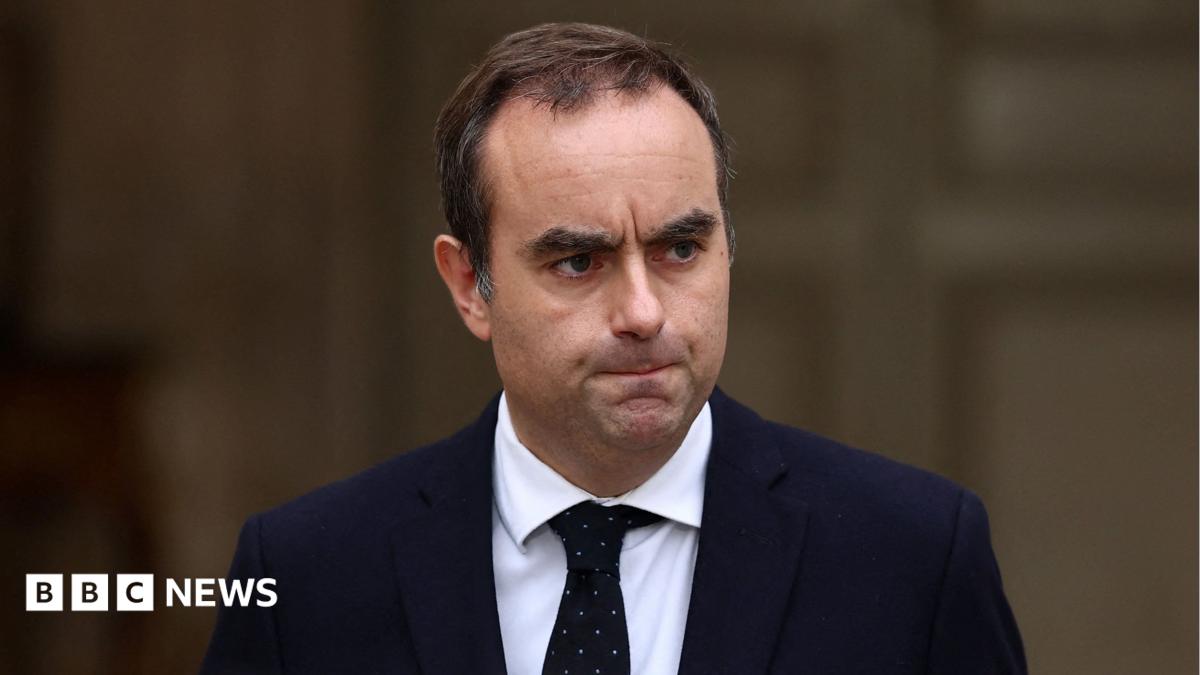
French Prime Minister Sébastien Lecornu has issued a stark warning against any further escalation of the country's growing wave of student protests, describing such a development as "irresponsible" after 164 people were arrested on Monday. The demonstrations, which began in the Paris region and have spread to other parts of France, have seen teenagers blockading their schools for days in protest against overcrowded classrooms and teacher shortages.
In a post on X, Lecornu referenced reported incidents at the protests, stating that fireworks, fires and violence near high schools could not be justified under any circumstances. He emphasised that nothing could excuse endangering the safety of students, staff or police officers, drawing a clear line between legitimate grievances and unlawful conduct.
The prime minister's comments came as Interior Minister Laurent Nuñez provided a detailed account of Monday's disturbances. According to Nuñez, 12 members of the security forces, 12 students and three school staff members sustained injuries during the day's events, while a total of 180 schools across the country were affected by the protests. He did not offer additional information about the circumstances surrounding those who had been taken into custody.
The movement at French lycées — equivalent to sixth form colleges in the United Kingdom or high schools in the United States — first emerged last week in the Île-de-France region surrounding the capital. What began as a localised action has since expanded significantly, with protests now reported in multiple regions across the country. According to the AFP news agency, four high schools were blockaded in the southern regions of Alpes-Maritimes and Var, while demonstrations have also been reported in Marseille, the northern Lille area and Sedan in the north-eastern Ardennes.
The Union Syndicale Lycéenne, a French union that defends the interests of high school students, has defended the protests as a "legitimate response" to the conditions students face. In a social media post, the organisation cited a lack of teachers and staff, dilapidated school buildings, overcrowded schedules and classes, and stress caused by Parcoursup — the web platform used in France for students to apply to the first year of higher education — as the driving forces behind the movement.
The union argued that these issues are by no means inevitable, but rather the result of ten years of President Emmanuel Macron's policies and a lack of resources in the national education system. It called on students to blockade schools on Tuesday in defence of "their rights and against budget austerity," signalling that the movement intends to continue despite government warnings.
The unrest has not been confined to students alone. On the same day, unions representing teachers, hospital staff and civil servants also called for a day of walkouts to protest against issues including low wages and poor working conditions. This convergence of grievances suggests a broader discontent with the government's approach to public services and education funding, extending beyond the specific concerns of high school students.
Lecornu acknowledged that "the difficulties of high schools must be heard and addressed," striking a more conciliatory tone on the underlying issues raised by protesters. However, he simultaneously insisted that "violence must be condemned unequivocally, and its perpetrators must answer for their actions," seeking to distinguish between the legitimacy of the grievances and the unacceptable nature of violent protest.
The prime minister also accused the far-left France Unbowed (LFI) party of encouraging students to expand the movement. This accusation reflects the politically charged atmosphere surrounding the protests, with the government seeking to attribute some of the unrest to opposition political forces rather than purely grassroots student activism.
Jean-Luc Mélenchon, the leader of LFI, responded by blaming the Lecornu government for having "ordered the crackdown" on the protest. He characterised the high school students taking part as "harmless," directly contradicting the government's portrayal of the demonstrations as violent and threatening.
Interior Minister Nuñez offered a markedly different assessment of the protests, describing them as "not very typical protest movements." He argued that the events resembled "urban violence" more than traditional demonstrations, citing the presence of masked individuals equipped with fireworks in tubes and projectiles who appeared intent on confronting internal security forces. "It wasn't about making demands; it was really violence in its purest form," Nuñez stated, reinforcing the government's narrative that criminal elements had hijacked the student movement.
Since the protests began, several incidents involving violence between students and police officers have been reported. In one particularly serious incident, a police officer reportedly fired a round from a grenade launcher used for crowd control, injuring a high school student, according to France's BFMTV. Investigations have been launched into these incidents, the broadcaster added, suggesting that the actions of law enforcement during the protests will themselves come under scrutiny.
The situation presents a significant challenge for Lecornu's government, which must balance addressing legitimate concerns about the state of French education with maintaining public order and preventing further escalation. The involvement of multiple unions and the spread of protests beyond Paris indicate that the discontent is not isolated but forms part of a wider pattern of social unrest over public service funding and working conditions.
With the Union Syndicale Lycéenne calling for continued blockades and other unions planning walkouts, the coming days will test the government's ability to manage the crisis. The contrasting narratives — legitimate student protest versus orchestrated urban violence — reflect deeper political divisions in France, where debates over education funding, austerity measures and the legacy of Macron's policies continue to polarise public opinion.






Comments (0)