 yoga-mahendra
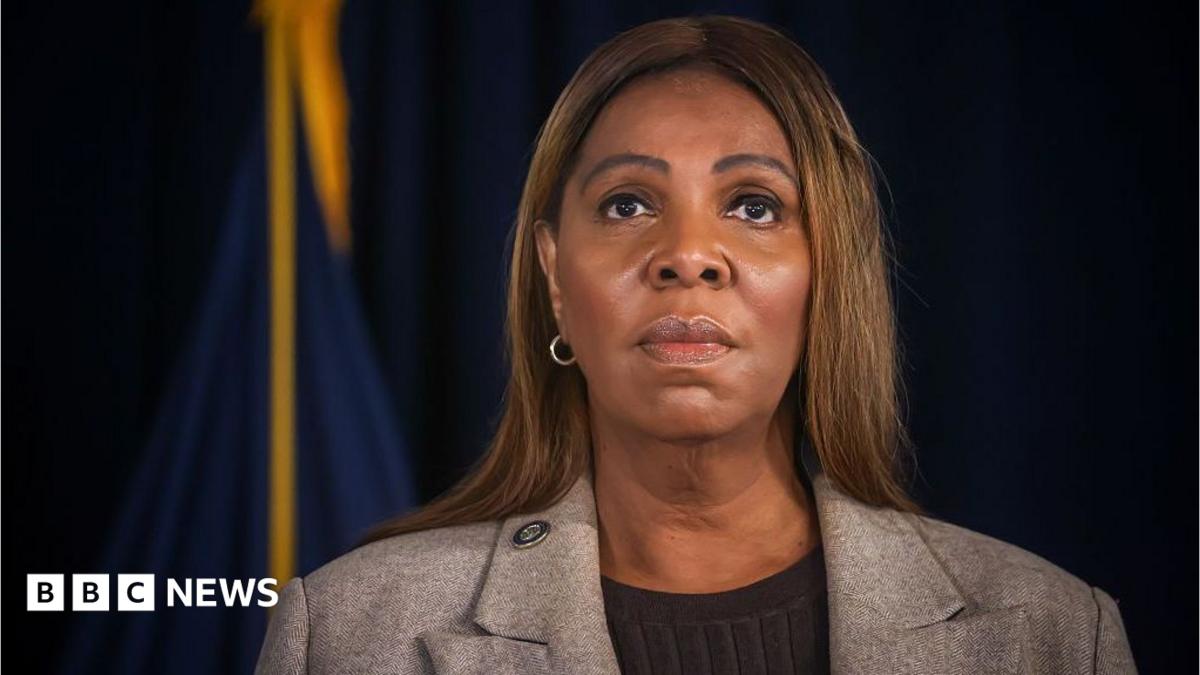
A defense attorney representing one of the seven men accused in a high-profile Cornell University gang rape case has formally requested that New York Attorney General Letitia James step aside from her role as special prosecutor, citing past public statements that the lawyer argues compromise the investigation's impartiality.
The request centers on a social media post James published on 28 September, just days before Governor Kathy Hochul appointed her to lead the investigation. In that post, James expressed strong sympathy for the alleged victim, writing that what the young woman had been forced to endure was horrific and unacceptable, and offering words of solidarity to survivors of sexual violence.
According to a statement provided to CBS News, the BBC's US media partner, the attorney for one of the accused argued that these remarks raise serious questions about the investigation's integrity and independence. The lawyer emphasized that the request for recusal was not an accusation of corruption or bad faith on James's part, nor a claim that any court had determined she was legally disqualified from serving.
Instead, the attorney framed the issue as a narrower concern: that an avoidable cloud of doubt now hangs over the proceedings, and that a voluntary recusal by James would eliminate that uncertainty. The defense's position rests on the principle that a prosecutor tasked with independently evaluating evidence should not have previously made public statements that appear to prejudge the facts of the case.
The case itself stems from an October 2024 incident at a fraternity party, during which a woman identified in a lawsuit only as Jane Doe alleges she was drugged and raped by multiple men over the course of several hours. Jane Doe has filed a lawsuit against the seven accused men as well as Cornell University itself, accusing the Ivy League institution of failing to protect her and mishandling the aftermath of the alleged assault.
The allegations have ignited widespread outrage, both on the campus in Ithaca, New York, and across the country. On Monday, hundreds of students and faculty members gathered in protest, carrying signs that expressed anger at the university's response and demanded accountability from administrators. The demonstrations reflected a broader reckoning with how colleges handle reports of sexual violence.
Cornell's administration has come under intense scrutiny for its alleged mishandling of the incident. According to US media reports, the university's Faculty Senate — a governing body composed of professors and other academic staff — is preparing to vote next week on a resolution of no confidence in the university's leadership. A majority vote in favor of such a resolution would be largely symbolic, but it would signal deep discontent among the faculty and increase pressure on Cornell's leaders to take decisive action.
The BBC has reached out to Cornell University for comment on the matter, though no response has yet been publicly reported. The university's president has already acknowledged that the institution "must do better" in the wake of the allegations, a statement that followed earlier protests and mounting criticism from students and faculty alike.
Governor Hochul appointed James as special prosecutor last week to investigate not only the alleged assault itself but also how law enforcement and the university initially responded to Jane Doe's allegations. The appointment was intended to bring independent oversight to a case that had already drawn significant public attention and raised questions about institutional failures at multiple levels.
During a news conference, both Hochul and James were asked about concerns regarding impartiality. The governor defended her choice, stating that James would follow the facts wherever they lead and would examine the evidence thoroughly. Hochul added that if the evidence supports charges, James would pursue them, expressing confidence in the attorney general's ability to conduct a fair and thorough investigation.
The defense attorney's recusal request highlights a tension that often arises in emotionally charged cases: the need for prosecutors to demonstrate sensitivity toward victims while simultaneously maintaining the appearance of neutrality. James's comments, while widely praised by victim advocacy groups, have now become a point of contention for the defense, which argues that even the appearance of bias could undermine the legitimacy of any charges that may follow.
Legal experts note that recusal motions are rarely granted solely on the basis of public statements, but they can nonetheless shape public perception and create procedural complications. In high-profile cases, the standard for disqualification typically requires a showing of actual bias or a conflict of interest, not merely sympathetic remarks. However, defense attorneys often raise such issues to preserve arguments for appeal should a conviction occur.
The broader implications of this case extend beyond the courtroom. It has become a flashpoint in the national conversation about campus sexual assault, institutional accountability, and the treatment of survivors within the justice system. The Faculty Senate's impending no-confidence vote at Cornell signals that the repercussions are being felt not just legally but also within the academic community, where questions about leadership and responsibility continue to mount.
For now, the investigation proceeds under James's leadership, even as the defense seeks to remove her from the role. Whether she chooses to recuse herself voluntarily remains an open question, and her decision could have significant consequences for how the case unfolds in the weeks and months ahead. The eyes of the nation remain fixed on Ithaca as this deeply divisive case continues to develop.





Comments (0)