 yoga-mahendra
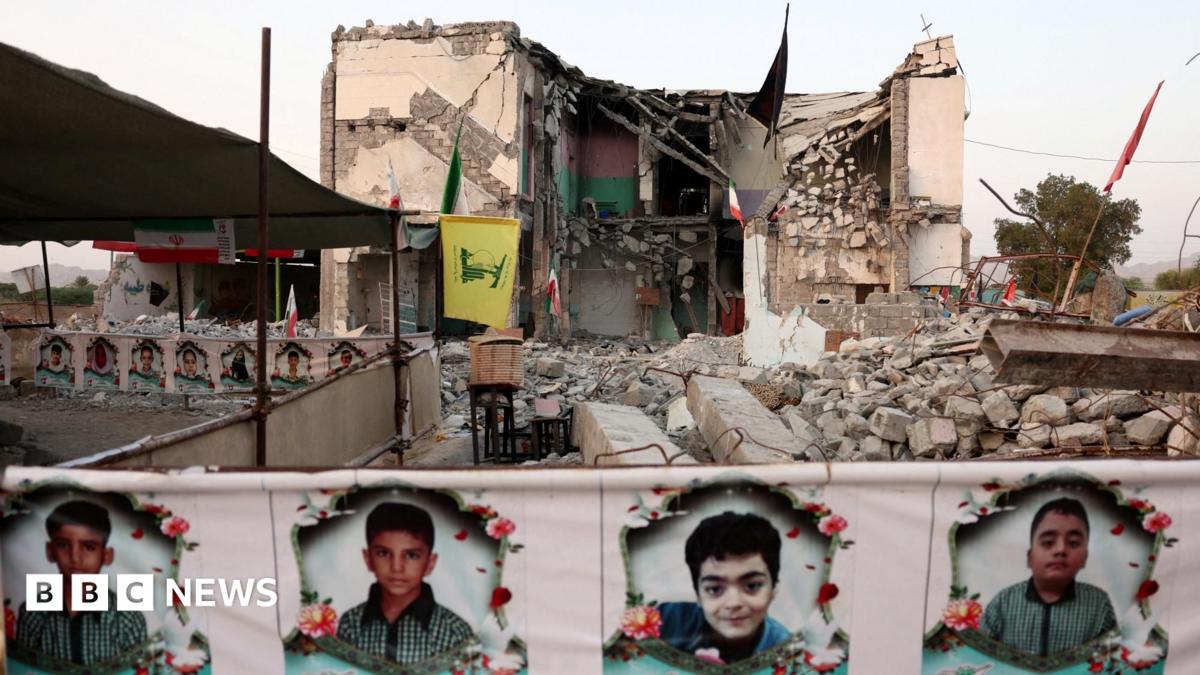
United Nations human rights investigators have concluded that there are reasonable grounds to believe the United States military committed war crimes during missile operations inside Iran earlier this year. The findings, detailed in an official report presented to the UN Human Rights Council, focus on two separate military strikes in late February that resulted in the deaths of at least 177 non-combatants, including a high proportion of children.
According to the Independent International Fact-Finding Mission on Iran, the deadly incidents took place during the broader conflict launched by the United States and Israel on February 28. The panel of three independent experts determined that the attacks targeted clearly identifiable civilian infrastructure, constituting indiscriminate strikes that caused severe loss of life and catastrophic structural destruction without valid military justification.
The panel's report highlighted the precarious situation facing the civilian population, emphasizing that Iranian citizens are effectively caught between the gross human rights abuses perpetrated by their own ruling authorities and the devastating impacts of foreign military bombardment from US and Israeli forces.
The most lethal incident investigated by the UN mission occurred in the southern Iranian community of Minab on February 28. In that attack, Tomahawk cruise missiles struck the Shajareh Tayyebeh Primary School, resulting in the deaths of at least 156 individuals. Local authorities confirmed that 120 of the deceased were schoolchildren who were inside the educational facility when the munitions detonated.
While the primary school was situated adjacent to an Islamic Revolutionary Guard Corps naval compound that was targeted during the same operational wave, the panel found that the school building itself was distinctly recognizable and bore no indications of being utilized for armed operations. Survivor testimony indicated that the facility sustained two separate missile impacts, leading the experts to assess that the school was the intended point of impact rather than the victim of an errant strike or unintended collateral damage.
In establishing accountability for the Minab bombardment, the UN experts highlighted that the United States is the sole belligerent in the hostilities possessing Tomahawk cruise missiles. Furthermore, the report referenced media documentation revealing that a preliminary US military review had already determined American responsibility for the incident, although the Pentagon has yet to publicly release the final conclusions of its formal investigation.
The United States administration has maintained that its forces adhere to strict targeting protocols. While Washington has not issued a direct response to the latest UN report, US Defense Secretary Pete Hegseth previously insisted that American military personnel would never deliberately strike civilian targets.
The second operation scrutinized by the fact-finding mission occurred on the same day in the town of Lamerd. During this engagement, Precision Strike Missiles deployed clouds of high-velocity tungsten pellets across a local sports complex and adjacent residential neighborhoods, claiming the lives of at least 21 civilians, including seven children.
Similar to the findings in Minab, the UN investigators determined that the Lamerd sports facility was completely distinct, clearly identifiable as civilian property, and devoid of any armed forces or military activity. The specialized munitions dispersed lethal shrapnel across the area, leaving numerous residents with severe fragmentation wounds and inflicting heavy damage on nearby residential structures.
The mission attributed the Lamerd attack to US forces on the basis that the United States is the only party participating in the conflict equipped with Precision Strike Missiles. The US military had previously denied carrying out any operations in Lamerd on February 28 and rejected assessments identifying the munition fragments as components of a Precision Strike Missile system.
Based on the cumulative evidence, the UN fact-finding panel formally concluded that both the Minab and Lamerd bombardments met the legal threshold for war crimes, specifically the launching of indiscriminate attacks that cause predictable loss of civilian life, severe physical injury, and extensive damage to non-military objects.
In addition to evaluating foreign military strikes, the UN mission’s extensive report documented severe domestic atrocities carried out by Iranian authorities against their own population. The investigators concluded that the Iranian government committed crimes against humanity while violently suppressing widespread anti-government demonstrations that erupted across the country throughout December 2025 and January 2026.
The panel described the internal state crackdown as an unprecedented escalation in violence, observing that security forces deployed lethal force on a staggering scale across all 31 Iranian provinces. The response was characterized by widespread unlawful killings, severe physical trauma, and mass arrests aimed at crushing civil dissent.
Testimonies collected from eyewitnesses, medical personnel, and victims' families revealed that Iranian state security units systematically took up positions on rooftops and other elevated vantage points to fire assault rifles directly into crowds of demonstrators, inflicting catastrophic gunshot wounds on peaceful protesters.
Neither the United States government nor the Iranian administration issued immediate responses to the UN mission's latest publication. However, Iranian officials have consistently denied committing systematic human rights violations during domestic unrest, just as US officials have previously disputed allegations of unlawful military conduct in the ongoing conflict.








Comments (0)