 yoga-mahendra
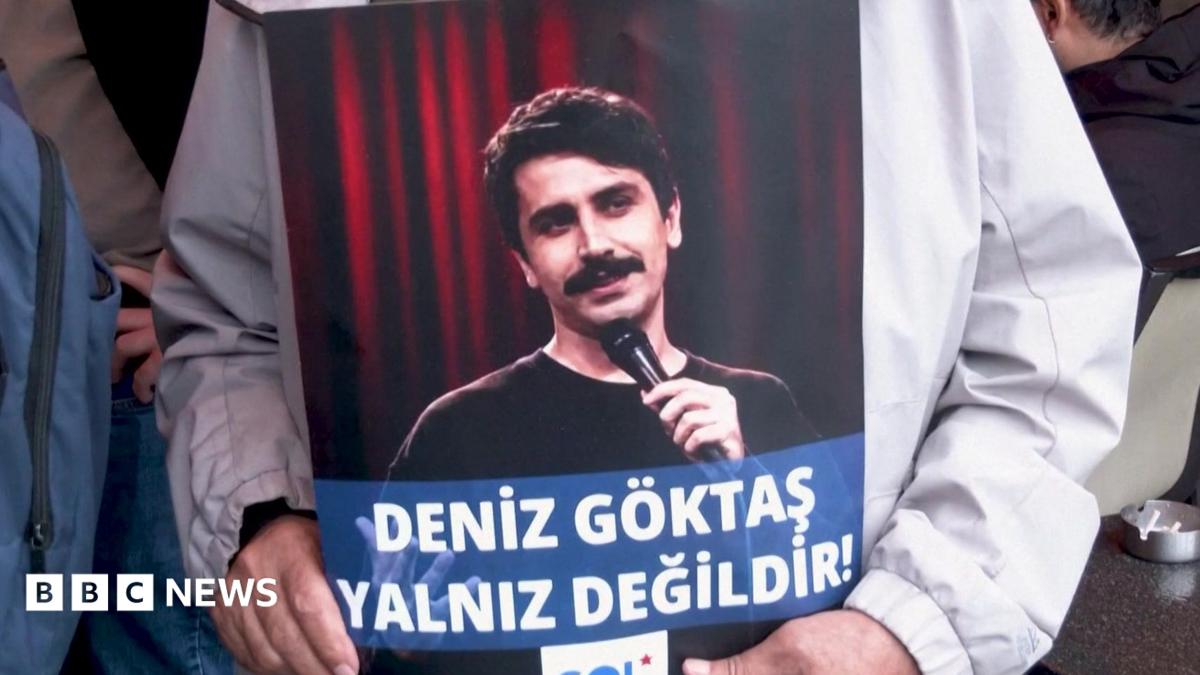
An Istanbul court on Monday found popular stand-up comedian Deniz Göktaş guilty of insulting President Recep Tayyip Erdoğan, handing down a sentence of nearly 19 months in prison. However, the court immediately ordered his release, crediting the roughly 90 days he had already spent behind bars — 88 of them in solitary confinement — toward the sentence. The ruling also imposed a travel ban, barring Göktaş from leaving Turkey while the case remains under review.
The verdict does not represent a final resolution. A court of appeals will now consider the case, and its decision will determine whether the conviction stands or is overturned. Until then, Göktaş remains a convicted felon in the eyes of Turkish law, albeit one free to walk the streets — though not to leave the country.
The charges stemmed from a stand-up routine that Göktaş performed and later uploaded to YouTube, where it went viral and amassed more than 15 million views. Prosecutors zeroed in on a single line in which the comedian described Erdoğan as a "shy dictator." That phrase, they argued, constituted a criminal insult against the head of state. Göktaş flatly rejected the accusation. "Dictator is not an insult," he insisted during the proceedings. "It is a political characterisation." He maintained throughout that there was "no criminal element" in his remarks.
The case unfolded against a broader backdrop of widespread arrests in Turkey that human rights organizations have characterized as a concerted effort to silence dissent. The government has not commented specifically on Göktaş's case, but the pattern is difficult to ignore: journalists, human rights campaigners, student protesters, LGBTQ activists, and even the elected Mayor of Istanbul, Ekrem Imamoglu, are among those currently detained. Prisons across the country, observers note, are increasingly full.
Göktaş's arrest in July was as dramatic as it was sudden. He was taken into custody and handcuffed at Istanbul airport upon returning from a holiday, a moment that supporters say underscored the severity of the state's response to a few words delivered on stage. Prosecutors had initially sought up to 12 years in prison — a demand that, had it been granted, would have effectively ended his career and kept him away from his family for more than a decade.
During Monday's court appearance, Göktaş demonstrated that nearly three months in solitary confinement had not dulled his comedic instincts. "Three months have been taken away from my life," he told the courtroom from the stand. "But I quit smoking, so I'll add another three months to my life." The remark drew laughter and loud applause from those present, a rare moment of levity in an otherwise tense legal proceeding.
Outside the courthouse, supporters gathered with signs bearing a simple message: "Deniz Göktaş is not alone." Among them was fellow comedian Firat Aksal, who expressed astonishment at the outcome. "We hardly know what to do with our happiness," he said. "We are thrilled." Aksal admitted that he and others had not expected a fair trial, making the court's decision to order Göktaş's release all the more surprising.
According to Aksal, Göktaş plans to spend a few days resting and reconnecting with his family before returning to the stage — a return that will be watched closely both in Turkey and abroad. The comedian's ordeal has turned him into a symbol of the country's shrinking space for free expression, and his first post-release performance is likely to draw significant attention.
The conviction itself raises difficult questions about the state of justice in Turkey. Under Turkish law, insulting the president is a criminal offense, and prosecutions under this statute have increased markedly in recent years. Critics argue that the law is applied selectively and disproportionately, often targeting artists, journalists, and activists whose work touches on politics or power. The European Court of Human Rights has previously ruled that similar prosecutions violate freedom of expression, but Turkish courts have continued to pursue such cases.
Legal experts note that the court's decision to release Göktaş based on time served does not equate to an acquittal. The conviction remains on his record, and the travel ban signals that authorities are not prepared to let the matter rest entirely. The appeals process could take months, during which Göktaş will remain in legal limbo — free, but not fully exonerated.
For many in Turkey's creative and journalistic communities, the Göktaş case is a cautionary tale. The line between satire and criminal insult has become dangerously blurred, and the consequences of crossing it can be severe. Comedians who once felt safe skewering politicians on stage now weigh every joke against the possibility of prosecution. The chill on free expression extends beyond comedy, affecting the broader cultural and intellectual life of the nation.
The government maintains that such prosecutions are necessary to protect the dignity of the presidency and to uphold public order. Supporters of Erdoğan argue that the law applies equally to all citizens and that insults against the head of state undermine respect for democratic institutions. Critics counter that the law is wielded as a weapon against opponents, and that the volume of cases involving government critics speaks for itself.
For now, Göktaş walks free, his release greeted with relief by his supporters and a measure of surprise even among those who know him best. But the broader crackdown continues, with many others still behind bars. As Firat Aksal put it, the happiness felt outside the courthouse on Monday was real, but it was also tempered by the knowledge that Göktaş's case is one among hundreds — and that the fight over Turkey's commitment to free speech is far from over.








Comments (0)