 yoga-mahendra
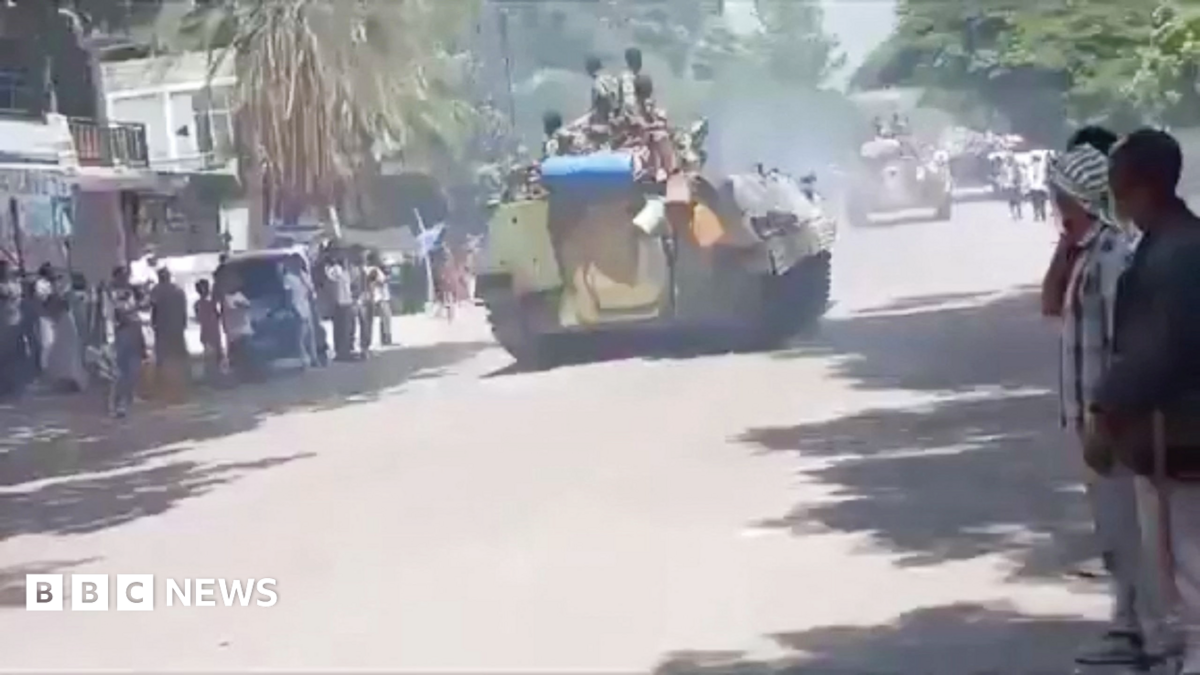
At least 52 civilians have been killed in three days of intense combat around Alamata, a town in Ethiopia's northern Tigray region, according to hospital sources who spoke with the BBC. The reported death toll underscores the severity of a conflict that has reignited after months of mounting tensions between Ethiopia's federal government and the political party that administers Tigray.
The fighting, which erupted last week, appears to have shifted the balance of control in Alamata. Government troops have taken the town from regional fighters and are reportedly preparing to advance north toward Mekelle, Tigray's principal city. Social media footage circulating online shows army tanks moving through Alamata's streets, though the BBC has not independently verified these clips. The reported civilian casualties include children as young as three days old, mothers, and cattle herders caught in the crossfire, according to a doctor at Alamata General Hospital who requested anonymity for safety reasons. The medic said twelve people died in a single strike on the town's marketplace, and that heavy explosives and artillery, some landing on residential homes, were used during the fighting between Saturday and Monday.
The renewed hostilities mark a troubling turn for a region still recovering from a devastating two-year civil war that ended with a peace agreement in 2022. That deal, which many hoped would lay the groundwork for lasting stability, now appears increasingly fragile, with both sides accusing each other of violating its terms. The Tigray People's Liberation Front (TPLF), which governs Tigray, claims it was responding to a federal offensive that included drone strikes. The federal government, meanwhile, says Tigrayan forces attacked first after seizing control of airports in the region.
Fighting has not been confined to Tigray alone. In the neighboring Amhara region, clashes near Lalibela, a UNESCO World Heritage site famous for its 13th-century rock-hewn churches, have created a separate humanitarian emergency. A British tourist, who asked not to be named, told the BBC's Newsday program that the situation had been harrowing, with fighting, gunfire, and artillery cannons audible throughout the week. He described a substantial military presence in Lalibela and confirmed that the town's airport closed to commercial flights last Wednesday, leaving most visitors unable to leave.
Some tourists have managed to escape, however. Fourteen Israeli nationals were evacuated by military helicopter on Monday, while another five departed the previous day via a convoy organized by a non-governmental organization, despite official advice against road travel. According to the British tourist, 53 visitors were in Lalibela when the airport first closed. The remaining stranded tourists include the largest group of Americans, alongside Israelis, Britons, South Koreans, South Africans, an Ethiopian-New Zealander, and a Mexican. The tourist noted that the situation around Lalibela had calmed in the last two days and that there were signs the airport, still being used by the military, might reopen on Thursday.
The broader conflict dynamic has grown more complex in recent weeks. In early September, an Amhara militia allied with Tigrayan fighters joined forces with other Ethiopian armed movements to form a seven-member alliance. This coalition has stated its intention to remove the government in Addis Ababa, the capital. The fighting around Lalibela has involved the army and this Amhara militia, according to the source article. The emergence of this alliance signals a widening of the conflict beyond Tigray's borders and raises the specter of a broader regional war.
Regional and international dimensions are also intensifying. There is growing concern that neighboring Eritrea could be drawn into the conflict. The Ethiopian government accuses Asmara, Eritrea's capital, of supporting the armed groups, an allegation Eritrea denies. Eritrea fought alongside Ethiopian forces during the previous Tigray war, but relations between the two countries have since deteriorated, adding another layer of uncertainty to an already volatile situation.
The humanitarian toll extends well beyond direct casualties. Since the fighting erupted, the Ethiopian government has suspended banking services in Tigray, and internet access has been cut, though it remains unclear who ordered the shutdown. A source in Alamata told the BBC that the town is experiencing a worsening humanitarian crisis as people flee surrounding areas, many walking for as long as an hour in hopes of finding safety. However, the source said, "everything is blocked—no banking service, no money transfer, no power, no internet, no phone. Hence people are in crisis, simply suffering, everyone is desperate and frustrated."
Medical charity Médecins Sans Frontières (MSF) reported that more than 700 wounded individuals have been admitted to hospitals it supports in Tigray over the past few days. The scale of injuries suggests that the fighting has been intense and that medical facilities are struggling to cope. The Alamata hospital doctor's account of civilian deaths, including the marketplace strike, highlights the dangers facing non-combatants in a conflict where front lines are fluid and densely populated areas have come under fire.
Tigrayan forces are also engaged in the Afar region, a strategically vital area that connects landlocked Ethiopia to Djibouti and its ports. Control over this corridor could have significant economic and military implications, potentially disrupting supply chains and access to international trade. The opening of a second front in Afar suggests that the conflict could spread further, complicating any prospects for a swift de-escalation.
Information flow from Tigray and surrounding areas remains severely constrained. The BBC is unable to report from the region, and communications have been cut, making it difficult to verify claims or assess the full extent of the violence. This information vacuum has been compounded by the telecoms shutdown, which has left families unable to contact loved ones. In response, the Tigray Broadcasting Service (TBS), based in Addis Ababa, has launched an initiative to help reconnect families. The broadcaster plans to collect video messages via its Telegram channel from people outside the region and air them via satellite TV, though the effort is limited to brief greetings, according to the source article.
The competing narratives over who initiated the latest round of fighting reflect a deeper distrust between the federal government and Tigray's leadership. The 2022 peace deal, brokered by the African Union, was meant to end one of the deadliest conflicts of the decade, a war that killed hundreds of thousands and displaced millions. Its collapse into renewed violence threatens to undo years of fragile progress and plunge the region back into a full-scale humanitarian catastrophe. As government troops push toward Mekelle and alliances shift, the coming days will be critical in determining whether Ethiopia can pull back from the brink of another prolonged war.








Comments (0)