 yoga-mahendra
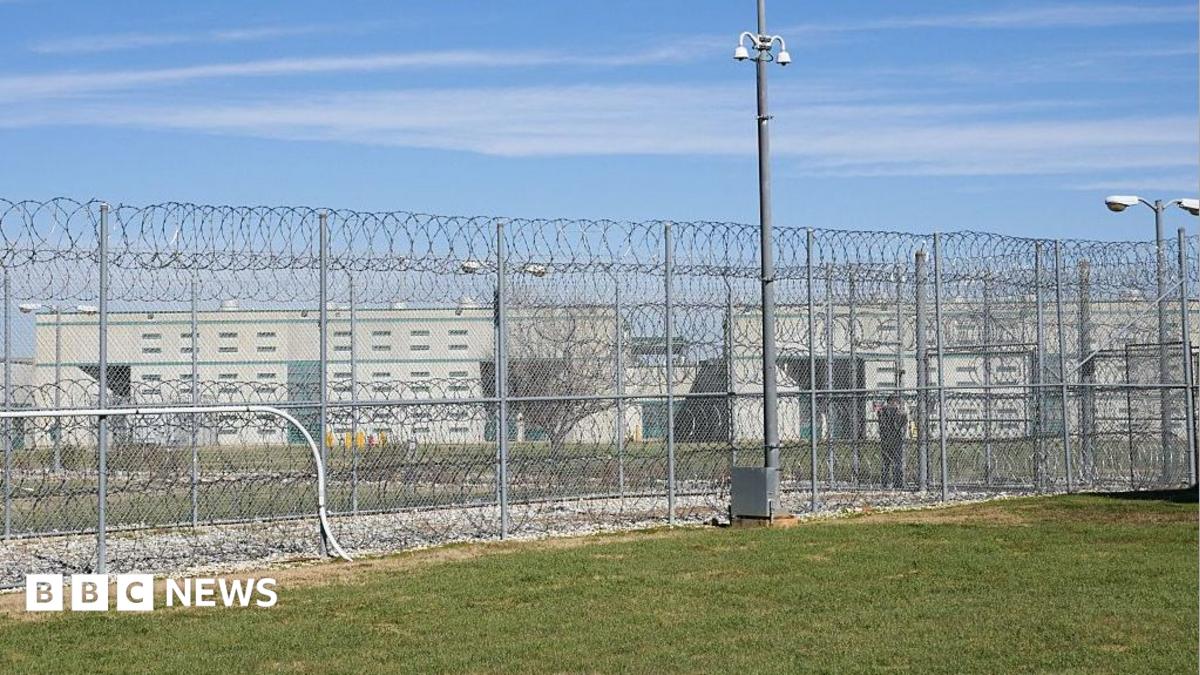
Texas carried out its first execution since a high-profile lethal injection in Tennessee went badly wrong last week, putting Jamaal Howard to death on Wednesday evening at a state prison in Huntsville. The 46-year-old received a fatal dose of pentobarbital and was pronounced dead at 20:03 local time, according to authorities. His execution marked the first in the United States since the failed attempt to execute Christa Pike, a case that has intensified scrutiny of capital punishment protocols across the country.
Howard's legal team had mounted an eleventh-hour effort to halt the proceedings, filing appeals in multiple courts and petitioning Texas Governor Greg Abbott for a 30-day reprieve. The lawyers argued that because Texas planned to use the same drug — pentobarbital — that was administered to Pike, Howard faced comparable risks of a prolonged or painful death. They further alleged that Texas' supply of the drug had degraded over time, echoing concerns raised by Pike's attorneys in Tennessee.
Courts twice rejected Howard's appeals, and the US Supreme Court declined to intervene late Wednesday. Governor Abbott, a Republican, did not grant the requested delay. With all legal avenues exhausted, the execution proceeded as scheduled. Howard's attorneys had warned that Texas risked repeating the problems seen in Tennessee, telling CBS News, the BBC's US partner, that a stay would prevent the state from "following in Tennessee's footsteps."
The Pike case has become a rallying point for death penalty opponents and a source of anxiety for corrections officials in states that actively carry out executions. Pike, who was convicted in a notorious 1995 murder, survived a lethal injection attempt last week when prison staff reportedly struggled to establish intravenous access, leaving her "conscious" and "angry and confused," according to her lawyers. The incident drew widespread media attention and raised fresh questions about the reliability of execution procedures and the quality of drugs used by states.
At the centre of the latest execution was Howard's 2000 conviction for the murder of Vickie Swartout, a 42-year-old convenience store clerk. Howard, who was 20 at the time of the crime, shot Swartout during a robbery in which he stole a carton of cigarettes and $114 from the register. He was subsequently sentenced to death. The case has been cited by prosecutors as a straightforward capital matter, though Howard's legal team focused their final appeals not on guilt but on the method of execution.
In his final statement, Howard addressed Swartout's family, who watched from a witness room. According to US media reports, he apologised for the killing and expressed a wish for forgiveness. "I wish that you accept my apology, and I wish for your forgiveness," he said. "I'm sorry for what happened. I wish you can learn to forgive me one of these days." The statement offered a rare moment of personal accountability in a process that has otherwise been dominated by legal and procedural battles.
The execution has renewed a broader debate about the death penalty in the United States, particularly the reliance on pentobarbital, a barbiturate that has become the drug of choice for lethal injections as pharmaceutical companies have restricted the supply of other chemicals. Critics argue that the secrecy surrounding drug sourcing and the potential for degradation make it impossible to guarantee that executions will be carried out humanely. Supporters of capital punishment, including many Texas officials, maintain that the state's protocols are lawful and that executions provide justice for victims and their families.
Texas has long been the most active execution state in the country, carrying out more lethal injections than any other jurisdiction since the death penalty was reinstated in 1976. The state's willingness to proceed despite the Pike debacle underscores a significant divide between jurisdictions that have paused executions amid legal challenges or drug shortages and those that continue to move forward. Tennessee, where Pike remains on death row, has effectively halted executions in the wake of the failed attempt, pending a review of its procedures.
Legal experts say the US Supreme Court's refusal to intervene in Howard's case signals a continued reluctance by the highest court to impose a nationwide moratorium based on method-of-execution claims. In recent years, the court has generally allowed states to proceed with executions even when questions have been raised about the drugs involved, leaving the matter largely to lower courts and state officials. That pattern appears unlikely to change in the immediate aftermath of the Pike episode.
For death penalty opponents, the Howard execution represents a missed opportunity to pause a system they describe as broken and inhumane. They point to the Pike case as evidence that lethal injection protocols are not foolproof and that the risk of a botched execution is real. For supporters, however, the Howard case highlights the importance of finality and the need to uphold sentences imposed by juries. The competing narratives reflect a national conversation that has only intensified as the number of executions has declined overall but continues in a handful of states.
Howard's execution is likely to remain a focal point in the ongoing debate over capital punishment, particularly as states grapple with drug shortages, legal challenges, and public scrutiny. The Pike case will continue to unfold in Tennessee, where her lawyers are seeking further information about what went wrong. Meanwhile, Texas has demonstrated that it intends to continue carrying out death sentences, at least for now, regardless of the controversy surrounding the methods used.
The broader implications extend beyond individual cases. At least a dozen states have either paused executions or are reviewing their protocols in light of recent failures and supply issues. Some have turned to alternative methods, including firing squads and nitrogen hypoxia, though these approaches carry their own legal and ethical complications. The Howard execution, coming just days after the Pike incident, serves as a reminder that the death penalty in America remains a patchwork of state-level practices, each with its own risks and controversies.
For Swartout's family, the execution brings a measure of closure after more than two decades. They did not speak publicly following the execution, but their presence in the witness room underscored the personal toll that such cases exact on victims' relatives. Howard's final words were directed at them, and whatever their response, the legal process that began with a robbery and a killing in 2000 has now concluded in the execution chamber in Huntsville.
As the sun rose on Thursday, the national debate over capital punishment showed no signs of resolution. Texas has scheduled additional executions in the coming months, and other states are watching closely to see whether the Pike incident prompts any lasting changes. For now, the execution of Jamaal Howard stands as the first carried out since that failed attempt — a fact that ensures the case will be cited by both sides in the argument over whether the death penalty can be administered fairly and effectively in the modern era.








Comments (0)