 yoga-mahendra
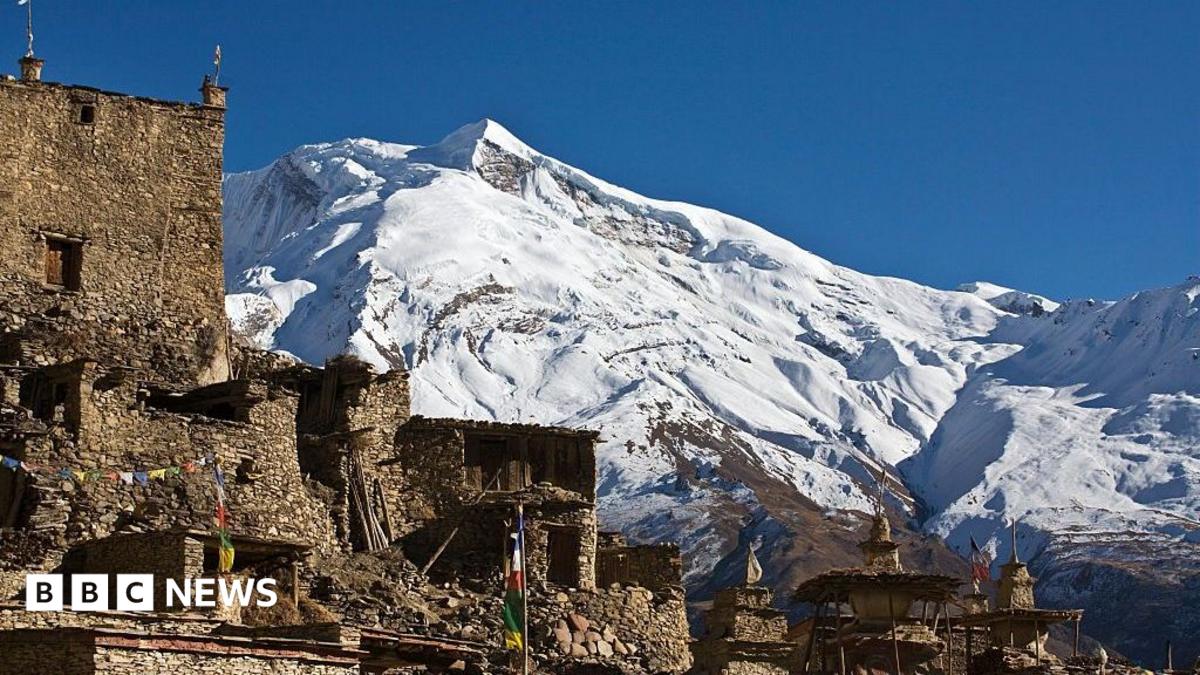
At least ten Nepali climbers are unaccounted for after a powerful avalanche swept through a staging camp beneath Himlung Himal in Nepal's Manang district early on Sunday morning, according to the expedition company that organised the climb.
The missing men were all local guides who had been dispatched ahead of their foreign clients to set up infrastructure on the mountain, a task that involves preparing campsites, establishing the climbing route, and installing fixed ropes for the paying customers who would follow later. Officials described the group as an advance team of experienced Sherpa and Nepali climbing staff.
Bibhuti Chand Thakur, a representative of Himalaya Holidays Trekking, told the AFP news agency that eight members of his company's expedition team were missing, along with two others from a separate trekking operator. The total of ten unaccounted-for climbers reflects the combined personnel of the two companies working in the same area.
The avalanche struck close to the 7,126-metre (23,380-foot) summit of Himlung Himal, a peak that sits in the Annapurna region near Nepal's northern frontier with Tibet. The mountain has gained popularity in recent years among overseas climbers seeking a technically demanding but less crowded alternative to Everest and other better-known Himalayan giants.
Weather data indicated that heavy snowfall had blanketed the area around the peak in the days leading up to the disaster, loading the slopes with unstable snow. That accumulation is widely regarded by mountaineering experts as one of the primary triggers for large avalanches in the high Himalayas during the post-monsoon and pre-winter climbing seasons.
Rescue operations have been severely constrained by the same poor conditions. Helicopters have been unable to land at or even closely approach the site, and ground rescue teams have likewise been blocked from reaching the camp. The difficulty of accessing remote high-altitude locations is a recurring challenge in Nepal's mountain rescue efforts, where thin air, unpredictable weather, and rugged terrain routinely delay emergency responses.
The timing of the avalanche coincides with an unusually hazardous stretch of weather across Nepal's mountain districts, where persistent rain and snow have been reported for several days. Those conditions have created treacherous terrain not only for climbers but also for the broader climbing tourism industry, which represents a significant pillar of the country's economy and employs thousands of guides, porters, and support staff.
The danger was already evident earlier in the week, when climbing teams were forced to abandon Mount Manaslu, the eighth-highest peak in the world, because of a growing risk of avalanches. That decision underscored how unstable snowpack conditions have spread across multiple high-altitude regions of the country in a short span of time.
The incident also carries a painful resonance for Nepal's climbing community. Less than two months ago, six climbers lost their lives on Broad Peak in Pakistan, among them the renowned British-Nepali mountaineer Nirmal Purja, whose death was widely mourned across the international mountaineering world. The repeated loss of accomplished Nepali guides has renewed attention on the risks borne by local professionals who often face the most dangerous tasks on any expedition.
Nepali guides are frequently the first to ascend, the last to descend, and the ones responsible for fixing ropes, carrying supplies, and securing routes through icefalls and avalanche-prone slopes. While foreign clients pay substantial sums for guided ascents, the burden of exposure to objective hazards falls disproportionately on the local workforce. Sunday's missing group, sent ahead specifically to prepare the way for others, exemplifies that arrangement.
Meanwhile, extreme weather has caused devastation far beyond the high mountains. Officials in the neighbouring Indian state of Uttar Pradesh reported that more than 50 people have died as a result of severe conditions further south. The combined picture across the region suggests a period of unusually destructive weather affecting both highland and lowland communities.
In Nepal, authorities are still engaged in recovering bodies along the Nepal-Tibet border following a catastrophic flood and landslide in August. More than 6,000 people remain missing from that disaster, which was triggered by a glacial collapse in the Himalayas that sent enormous volumes of water and debris surging down the Trishuli River valley, destroying settlements in its path. More than 1,400 deaths have been confirmed in connection with that event.
That August catastrophe and the current avalanche both highlight the vulnerability of Nepal's mountainous terrain to natural hazards, which scientists have linked in part to changing climate patterns affecting snow accumulation, glacier stability, and precipitation intensity. The economic stakes are considerable, as climbing and trekking draw visitors from around the world and sustain livelihoods across remote districts.
For now, attention remains focused on the missing guides and the prospect of a rescue window opening if conditions improve. Families and colleagues of the ten men are awaiting word, while expedition operators and local authorities monitor the weather closely. The outcome will depend largely on whether helicopters and search teams can safely reach a camp that, for the moment, remains cut off by the very forces that made it a target.
The incident serves as another reminder of the inherent unpredictability of the world's highest mountains, where even seasoned professionals operating with careful planning can be overtaken by sudden shifts in snow and weather. As Nepal's climbing industry continues to recover from recent tragedies, the disappearance of ten guides at Himlung Himal adds fresh urgency to long-standing questions about safety standards, insurance, and support for the local workers who make high-altitude expeditions possible.






Comments (0)