 yoga-mahendra
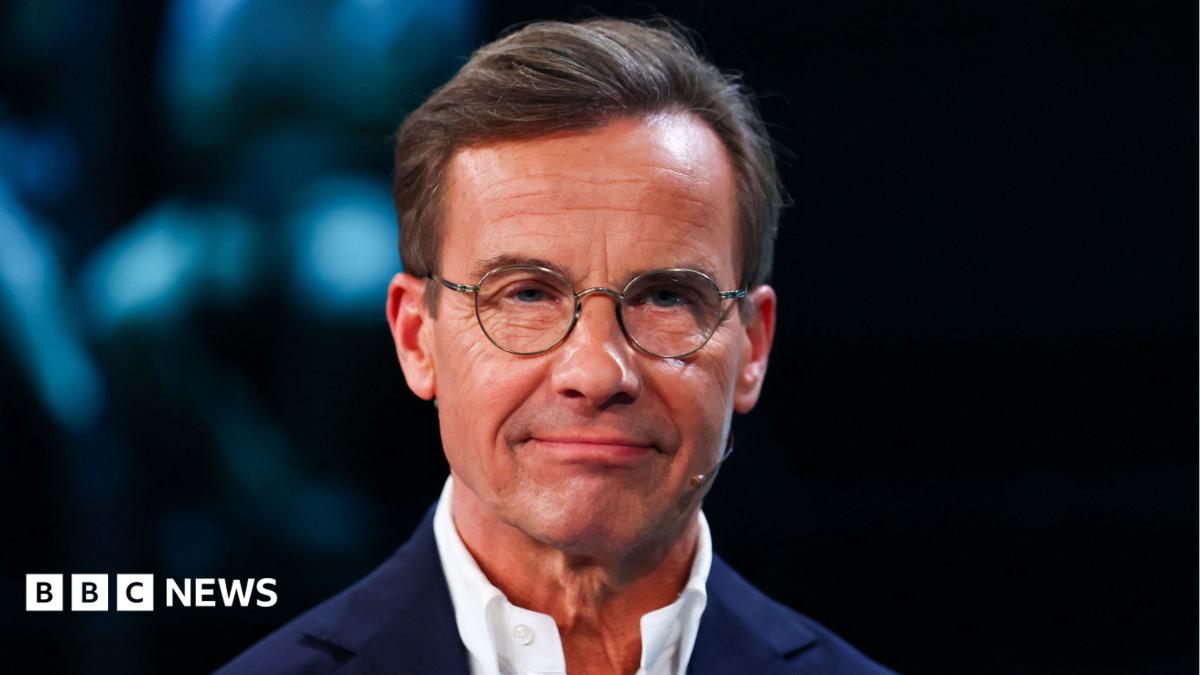
Sweden’s Prime Minister Ulf Kristersson has announced his resignation after his governing right-wing coalition suffered a narrow defeat to the centre-left opposition in the country’s general election. The conservative leader’s departure follows a tightly contested campaign that reshuffles the balance of power in Stockholm and opens the door for a new political administration.
Kristersson made his decision public on Thursday afternoon in a statement published on the social media platform X. He explained that stepping down immediately was necessary so that the parliamentary speaker could begin the formal constitutional process of organizing cross-party consultations to establish the country's next government without delay.
Preliminary results published by the Swedish Election Authority revealed an exceptionally tight race across the nation of approximately 10 million people. Only around 50,000 votes separated the two competing political blocs, with the centre-left coalition securing 176 seats in the 349-seat Riksdag, while Kristersson’s incumbent right-wing alliance secured 173 seats.
The election results clear the path for Magdalena Andersson, the leader of the Social Democrats, to return to the prime minister's office after spending four years heading the parliamentary opposition. In a video address shared on Instagram, Andersson welcomed the outcome, declaring that the Swedish electorate had delivered a clear verdict in favor of a new political direction for the country.
The finalization of the election results followed days of meticulous counting after balloting concluded on Sunday evening. Electoral officials began processing early ballots that arrived late as well as postal votes submitted from abroad on Wednesday, with the official certification of all parliamentary seats expected to be concluded over the weekend.
The victory reinforces the central role played by the Social Democratic Party throughout modern Swedish political history. Having been the country's dominant political movement for much of the twentieth century and having regularly led governments since the conclusion of World War Two, the party is once again preparing to assume executive authority.
Sweden's political landscape is traditionally divided into two distinct four-party blocs representing the right and the left. Because no single party holds an absolute majority on its own, the Scandinavian country is well accustomed to minority administrations and negotiated multi-party coalitions.
Under Sweden’s constitutional framework, the Speaker of the Riksdag will now lead discussions with the leaders of every represented party to identify a viable candidate for prime minister. Once the Speaker puts forward a formal nominee, members of parliament will convene to vote on whether to approve the designated leader.
Andersson has already initiated formal consultations with the three other parties within the centre-left alliance: the Left Party, the Centre Party, and the Green Party. However, assembling a durable coalition could prove challenging, as substantial policy divisions persist among these groups, particularly regarding taxation and economic management.
In his resignation statement, Kristersson warned that the incoming opposition faces a difficult path toward forming a cohesive executive. The outgoing prime minister pointed out that contradictory campaign pledges and conflicting pre-election statements made by individual left-leaning party leaders could present major hurdles during the negotiation phase.
Prolonged coalition negotiations are a well-established feature of recent Swedish politics. Following the 2022 national election, party leaders required 37 days to finalize a governing pact, whereas the fragmented parliamentary results of the 2018 election led to negotiations that dragged on for 134 days before a government was successfully formed.
Kristersson’s outgoing administration was anchored by his own Moderate Party alongside the Christian Democrats and the Liberals. While those three parties formed the official cabinet, their governing majority relied upon the outside parliamentary backing of the hard-right, anti-immigration Sweden Democrats. During the recent campaign, Kristersson had promised to integrate the Sweden Democrats directly into cabinet posts if his bloc prevailed.
The Sweden Democrats have experienced a notable political trajectory over recent decades. The party was established in the 1980s by figures associated with Nazi sympathies and was largely ostracized by mainstream parties for years, before undergoing a sustained rebranding effort beginning in the mid-2000s.
That long-term shift yielded a major breakthrough in 2022, when the Sweden Democrats capitalized on voter concerns over immigration and violent crime to become the country's second-largest parliamentary force. In exchange for supporting Kristersson’s minority coalition, the party successfully pushed for a significant tightening of national migration rules.
However, Sunday's vote brought an unexpected setback for the Sweden Democrats, who saw their support decline by three percentage points compared to 2022. The drop marked the party's first electoral loss since it first entered the Riksdag in 2010, ultimately tipping the parliamentary arithmetic away from the right-wing bloc and prompting Kristersson's resignation.





Comments (0)