 yoga-mahendra
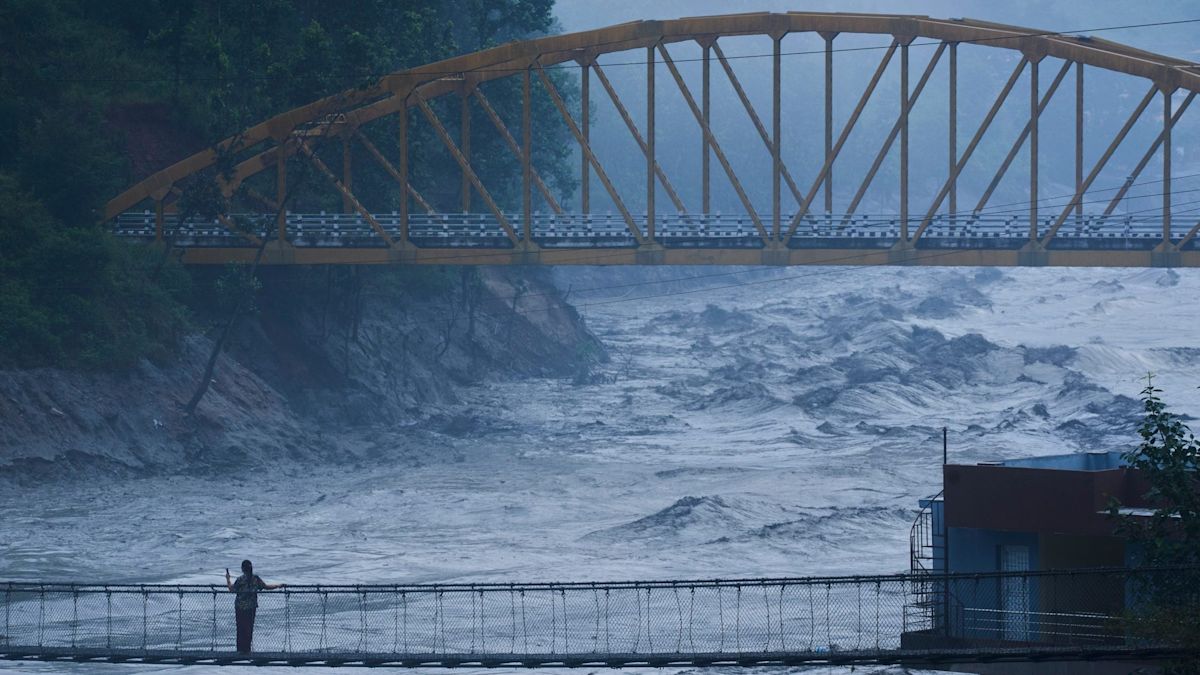
DHADING, Nepal – Authorities in Nepal have issued a fresh warning of potential flooding in the aftermath of the catastrophic deluge that struck the country last week, with the death toll now reaching 788, according to the Associated Press. The latest alert comes as the Bhotekoshi River, which has been the epicenter of the disaster, continues to rise, prompting authorities to send flood warning notices to residents' phones.
The disaster began on Wednesday when a glacial collapse in the Himalayas triggered a massive flood, leaving at least 800 dead and over 3,000 missing in Nepal and neighboring Tibet. The situation has been further complicated by the formation of a new lake in the mountains, which has now largely drained, but still poses a risk due to a crater upstream containing an estimated 1.4 million cubic meters of water.
Chinese authorities have informed their Nepalese counterparts of the increased water flow upstream, which has raised concerns about a potential new wave of flooding. The Chinese state news agency Xinhua reported that the lake formed after the initial floods has largely drained, but warned that the crater upstream remains a concern.
In Dhading, one of the worst-hit regions in Nepal, residents are returning to their homes to assess the damage. Many find their homes washed away, with little to nothing left to save. Sharmila Tamang, a resident of Dhading, expressed the despair of many: "Everything is finished. Nothing is left. Not even our home."
The destruction is not limited to homes; key infrastructure, such as a power plant that serves over 20,000 people, has been severely damaged. Workers are now inspecting the facilities to determine the extent of the damage and the time required for repairs.
The flood warnings have become a constant presence in the lives of those affected. Govind Shreshta, a resident of a flood-hit village, described the struggle: "Sometimes they say a flood is coming, then we have to run again to higher ground, even at night. There is also rain. It's really difficult for me. I have a 72-year-old father and 70-year-old mom. I must carry them and I am exhausted."
The flooding has also had a devastating impact on the local economy. Large concrete and suspension bridges have been destroyed, cutting off communities on the other side of the river. Sattan Singh Tamang, who was working near a bridge when the floods struck, said, "Those who are there are now stuck there. Those who are here are stuck here. It's going to be very difficult."
Nepal's foreign minister has called for a global response to the climate change crisis, which he says has made the country a victim. The flash floods that began with the glacial collapse in the Himalayas are a stark reminder of the severe consequences of climate change on vulnerable regions.
As the situation in Nepal continues to worsen, the international community is being called upon to provide aid and support. The missing include hundreds of people from over a dozen countries who were in the region to work, visit the mountains, or make a pilgrimage to sacred peaks like Mount Kailash.
The disaster has underscored the need for better disaster preparedness and response in the face of increasingly severe weather events. As Nepal grapples with the aftermath of the floods, the world watches and hopes for a swift and effective response to this humanitarian crisis.






Comments (0)