 yoga-mahendra
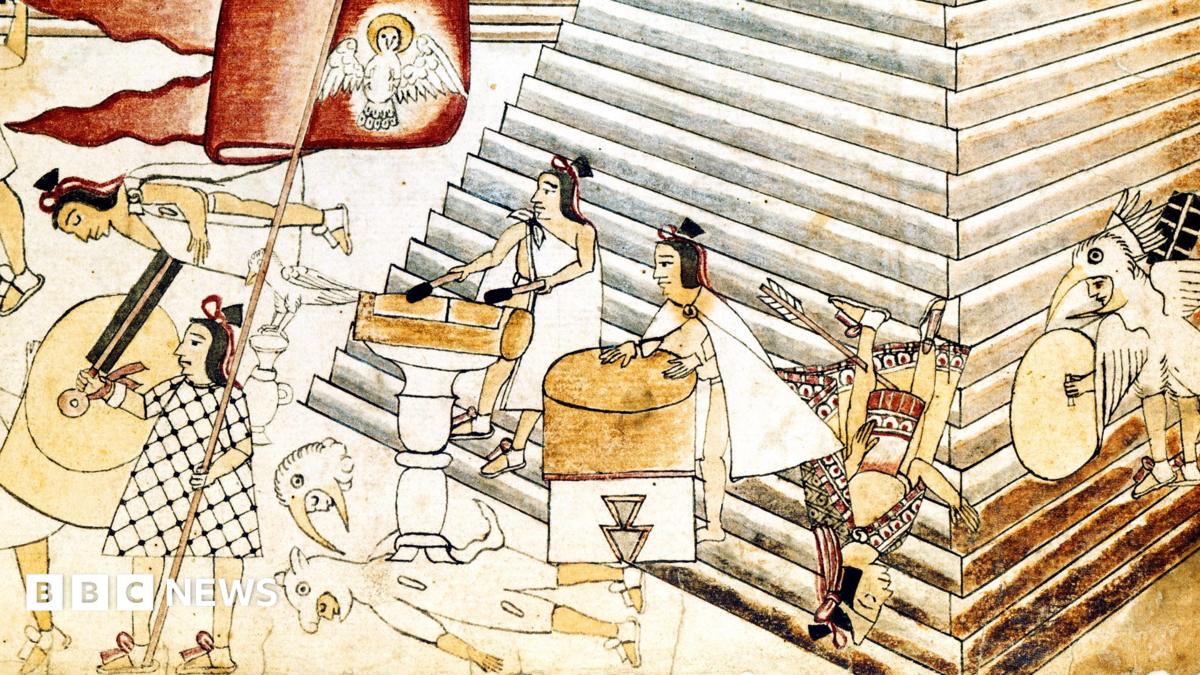
A rare and deeply significant 16th-century pictorial manuscript chronicling the history and eventual downfall of the Aztec empire has returned to Mexico, going on public display for the first time in nearly two centuries. The ancient document, preserved through intricate pictograms, arrives back in its native land after spending 186 years housed in collections abroad.
Known formally as the Codex Azcatitlán, the treasured manuscript is scheduled to be exhibited to the public starting this Thursday. Visitors will be able to view the historic work at the National Museum of Anthropology, located in the heart of Mexico City, where it represents a central showcase of pre-Hispanic and colonial-era heritage.
The manuscript itself is believed by historians to have been crafted during the 16th century, produced only a few years following the initial arrival of the Spanish conquistadors in the territory that forms modern-day Mexico. It has long been celebrated by scholars as one of the most insightful and valuable surviving visual narratives detailing the lived experiences and history of the Aztec people.
Through its detailed pictographic folios, the Codex Azcatitlán offers a comprehensive overview of the Aztec civilisation, encompassing both its cultural milestones and the traumatic period of European conquest. The illustrations capture key historical moments, providing modern viewers with a unique perspective on the dramatic transformation of the region during early colonial contact.
Among the striking scenes featured in the pages of the manuscript is the intense military struggle to defend the Aztec capital of Tenochtitlán against the advancing Spanish forces. One notable folio depicts Aztec warriors mounted atop the city’s great pyramid, locked in fierce resistance against the conquistadors. Within the artwork, an Aztec defender disguised in the form of a bird carries a combat shield, while another fighter falls down the monumental pyramid steps after being struck in the leg by an arrow as musicians play drums nearby.
Other sections of the codex illustrate the fateful arrival of the Spanish expedition led by Hernán Cortés. In these illustrations, Cortés is accompanied by heavily armed soldiers clad in metal armour carrying weapons and protective shields. The Spanish contingent is shown bearing a decorative banner adorned with the image of an angel, while indigenous porters follow behind them transporting heavy cargo on their backs.
Prior to its current return, the Codex Azcatitlán had been outside Mexican borders for almost two centuries. It spent decades circulating in foreign collections before being acquired by the Bibliothèque Nationale in France in 1898, where it has remained preserved as part of the French national library's extensive institutional archives.
The temporary return of the historic document was made possible through a major bilateral cultural exchange coordinated between the governments of France and Mexico. The loan of the Codex Azcatitlán was specifically arranged to commemorate the bicentenary marking 200 years of established diplomatic relations between the two nations.
As part of the reciprocal cultural agreement, the Mexican government has agreed to lend another invaluable indigenous manuscript to France for public presentation. Under the accord, Mexico’s famed Codex Boturini will travel across the Atlantic to be put on temporary display for French audiences.
The Codex Boturini is renowned for its own series of historic pictograms that record the ancestral journey of the Aztec people, who are also referred to as the Mexica. The document illustrates their legendary migration from their ancestral territory toward the shores of Lake Texcoco, the strategic inland basin where they would eventually establish the majestic island capital of Tenochtitlán.
The framework for this dual-manuscript exchange was established directly at the highest level of government. The loan was agreed upon during bilateral discussions between Mexican President Claudia Sheinbaum and French President Emmanuel Macron, following the French leader’s official state visit to Mexico last year.
The arrival of the codex coincides with broader, persistent efforts by the Mexican government to seek the restitution and recovery of cultural treasures and archaeological relics that were removed from the country in earlier centuries. Mexican cultural and foreign affairs authorities have maintained an active diplomatic campaign to track and retrieve such items from private collections and foreign institutions worldwide.
These repatriation initiatives have gained notable momentum in recent years. According to official statistics provided by Mexico's Ministry of Foreign Relations, the nation successfully secured the return of more than 2,000 historical objects and cultural pieces from overseas over the course of the previous year alone.
The exhibition of the Codex Azcatitlán at the National Museum of Anthropology provides an uncommon opportunity for the Mexican public to view a foundational piece of their national narrative. By bridging centuries of separation, the display of the manuscript in Mexico City highlights the enduring historical importance of indigenous documentation in illuminating the country’s pre-colonial and early conquest history.







Comments (0)