 yoga-mahendra
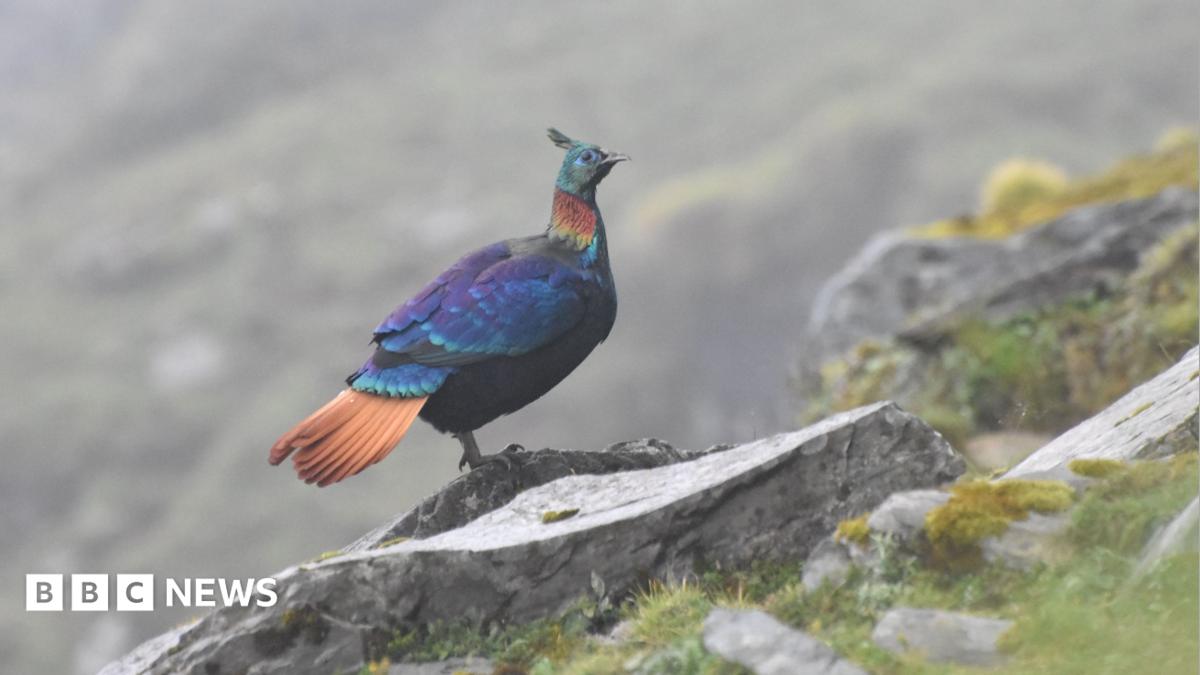
Two new studies by Indian researchers have found that the Himalayan monal, one of the region's most striking birds, is being forced to alter both its calling behaviour and its range in response to growing human pressure. The research, carried out over a five-year period in the Indian state of Uttarakhand, points to infrastructure development, tourism and rising noise levels as the main drivers of change in the bird's life and communication.
The monal is a pheasant native to Himalayan mountain forests and carries deep cultural weight across the region. Its image is woven into local folklore and identity, and the male's iridescent green, blue and copper plumage makes it one of the most recognisable birds in the mountains. It serves as the state bird of Uttarakhand in India and as the national bird of Nepal, a status that reflects its symbolic importance throughout the Himalayas.
The first of the two studies examined how climate change could reshape the bird's habitat. Researchers modelled how suitable conditions for the monal might shift across the Indian Himalayan region, focusing on Uttarakhand and Himachal Pradesh. Their projections indicate that the bird's habitat will continue to shrink and become destabilised through the year 2100 under a range of climate scenarios. The work drew on global climate models and emissions pathways of the kind used by the Intergovernmental Panel on Climate Change, the United Nations' climate science body.
The monal moves seasonally between the lower montane zone on the mountain slopes and high-elevation alpine meadows above the tree line. Those meadows rank among the Himalayas' most important seasonal grazing areas and are rich in biodiversity. According to the research, the birds are gradually ascending the mountains as snow melts and vegetation spreads, opening up new ground. At the same time, their natural meadow habitat is increasingly being encroached upon by human settlement and activity.
Dr Rajeev Lochan, who led both studies, explained that the monal was chosen as a subject precisely because of its narrow habitat range. That limited range, he said, makes the bird a key indicator of ecosystem health in the north-western Himalayas. If the species is struggling in this particular landscape, he noted, there is a real possibility that broader ecological disturbances are affecting other birds as well.
The second study concentrated on the monal's behaviour, documenting how it is changing its pitch to be heard above human noise in a busy valley. Fieldwork took place in two valleys within the Kedarnath Musk Deer Sanctuary in Uttarakhand, including Chopta, a well-known tourist destination. The researchers found that the bird adjusts its calls in an effort to communicate through the ambient sound generated by human traffic and activity.
These adaptations matter because the monal relies on vocal communication for courtship and for interactions with rivals. Males perform elaborate displays of their metallic plumage to attract females, and sound plays a central role in those encounters. Polluted soundscapes can disrupt mating and competition, with potential consequences for breeding success and population stability.
Taken together, the two studies suggest the monal is being forced to change both its voice and its address. Vishal Singh, an environmental practitioner who works on ecology and climate issues in the Himalayas, described the findings as a warning. He said that if the monal is compelled to shift both how it communicates and where it lives, the more sensitive species in the region are likely to be under even greater strain.
The research also raises concerns about the bird's seasonal migration. As the climate shifts, the monal may be pushed to ever-higher elevations and into smaller, fragmented patches of suitable land. That could scatter the population into disconnected pockets, reducing opportunities for different groups to breed with one another. Over time, the study warns, this isolation heightens the risk of long-term decline or local extinction, a threat the species already faces.
Both studies were conducted by Lochan alongside Dinesh Kumar Sharma and Anand Kumar of Hemvati Nand Bahuguna Garhwal University. Their results highlight how rapid infrastructure expansion over the past decade has opened up previously remote areas, increasing footfall and disturbing wildlife. The region has long attracted tourists, trekkers and researchers because of its scenery and biodiversity, but the pace of development has changed the balance between access and conservation.
Singh framed the underlying problem as one of mismatched priorities, arguing that economic development in the region is not aligned with its ecological integrity. Climate change is compounding these pressures, emerging as another major threat to biodiversity that is already vulnerable. The Himalayas are warming at an alarming rate, a trend that adds urgency to the challenges facing species such as the monal.
The researchers acknowledge that their modelling rests on a reasonable but not certain assumption: that the bird will continue to require the climate conditions currently found in alpine meadows. Even so, the direction of travel is clear. Climate projections suggest the monal's habitat will keep contracting across the Indian Himalayas through the end of the century, placing further stress on a bird whose fortunes are closely tied to the health of a fragile mountain ecosystem.
For the scientists involved, the monal functions as a stand-in for the wider Himalayan environment, which is being pushed towards a tipping point by unregulated tourism, urbanisation and a changing climate. The fate of this colourful pheasant, they suggest, may offer an early indication of how many other species will fare in a landscape undergoing rapid and profound transformation.









Comments (0)