 fitri-handayani
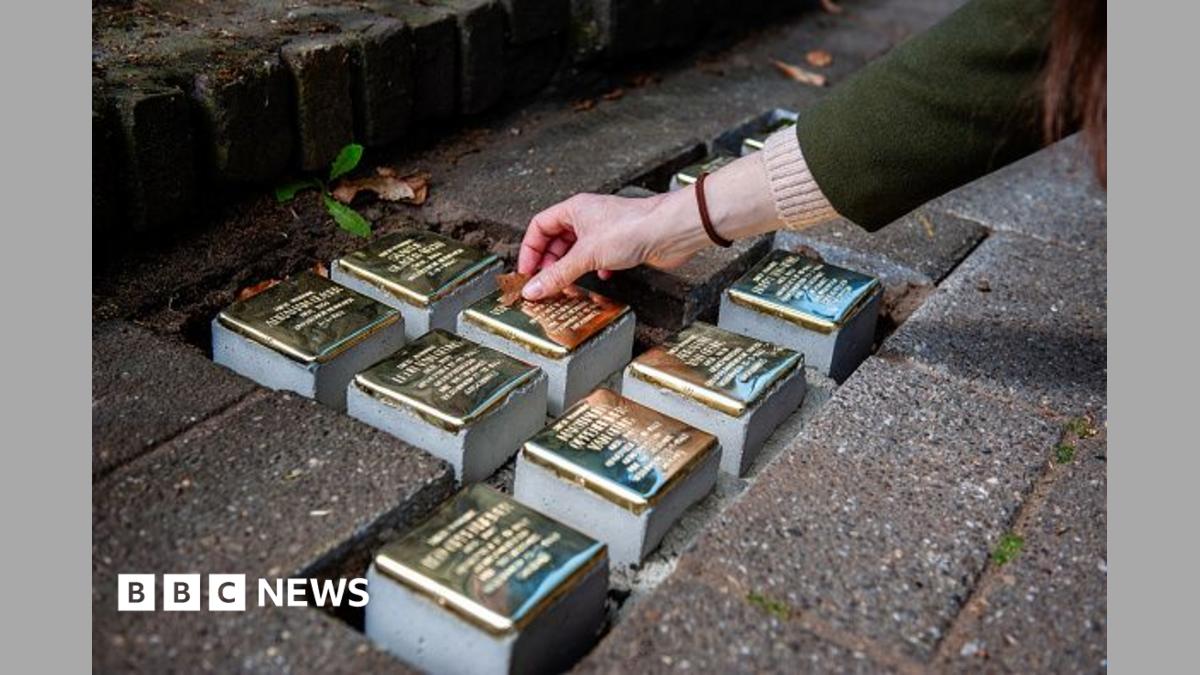
A town council in Heidenau, near Dresden in the German state of Saxony, has voted to prohibit "stumbling stone" memorials embedded in the pavement in memory of Jews and other victims of Nazi atrocities, triggering a wave of condemnation from politicians and Jewish community leaders. The decision, taken by councillors from the far-right Alternative für Deutschland (AfD) and the mainstream conservative Christian Democratic Union (CDU), is the most significant local attempt yet to roll back one of the best-known symbols of Germany's memorial culture.
Stolpersteine, the German word for the memorials, are small brass plaques set into the ground outside the houses where victims of Nazi persecution once lived or worked. Since the 1990s they have spread across towns and cities throughout Europe, including in Germany and Austria, and are typically paid for by individual donations rather than public funds. Their defining feature is their location: they sit at eye and foot level in ordinary pavements, forcing passers-by to read a name, a date and a fate before continuing on their way. Photographs of similar stones in Nijmegen in the Netherlands and near the Reichstag in Berlin illustrate how extensively the format has been adopted.
The Heidenau motion said that many local residents regarded this kind of commemoration as inappropriate, and that future memorials should be relocated to the town's Nordfriedhof cemetery. The stated rationale was that the new arrangement would make it "impossible to step directly onto the memorial elements" — an argument presented as a matter of sensitivity but criticised by observers as a way of moving remembrance out of everyday public life. The vote means stones already installed in Heidenau will, in effect, be removed from the streets.
The AfD has been classified as extreme-right by German intelligence services, a designation the party firmly rejects, and some of its regional branches are monitored as right-wing extremist. Its involvement in the vote therefore drew particular criticism, with campaigners and commentators describing it as an attempt to erase the visible traces of a crime committed by the Nazi state decades ago — an irony not lost on those who remember that eastern Germany is where the regime's machinery was built and where its victims' names remain inscribed in hundreds of streets.
Germany's Education Minister Karin Prien, herself a member of the CDU, called the ban a "scandal" in an interview with the Bild newspaper. She argued that moving memorials from public squares to a cemetery prioritises death over life and renders Jewish people invisible once again. Significantly, she also acknowledged that responsibility for the decision extends beyond the AfD: her own party in Saxony, she said, shared culpability for voting the measure through. Her comments underline the discomfort within mainstream conservative ranks about aligning with the far right on questions of national memory.
Among the loudest rebukes came from Charlotte Knobloch, a Holocaust survivor who is president of the Jewish Community in Munich. Speaking to the Funke Media Group, she said removing memorials from the townscape was "completely the wrong approach" and that she was appalled a democratic party would stoop to supporting what she described as a transparent manoeuvre by AfD extremists. Knobloch added a significant qualification to her criticism: she is not personally a supporter of stumbling stones. Her objection, she explained, was to the suppression of decentralised remembrance — the principle of marking lives at the places where they were lived, rather than confining such acts of memory to a single distant site.
That distinction matters because Germany is already familiar with compromise arrangements on the stones. In Munich there are no Stolpersteine on municipal land at all; instead, the city permits memorial plaques on public buildings, on the basis that memorials should not be anchored in the pavement at public expense. The debate now unfolding in Heidenau is therefore less about the merits of one artistic format than about a deeper question: whether a city has the right to decide that the most visible reminders of its own history do not belong in everyday public space.
Gunter Demnig, the artist who initiated the Stolperstein project, said the decision was hardly surprising in the current political climate. Given the AfD's recent run of electoral successes, he said, "it was certainly to be expected that something like this would happen." The artist was referring to major AfD victories in recent state elections in Saxony-Anhalt and Mecklenburg-Vorpommern, results that have given the party a much stronger platform in eastern Germany.
The party has capitalised on an anti-immigration agenda, a "Germany first" posture and a willingness to cultivate friendly relations with Russia, all of which have found receptive audiences in the country's former communist east, where economic insecurity and resentments about immigration run deep. Its growing strength has repeatedly translated into local political action, and the Heidenau vote is one of the clearest cases yet of a national ideological trend reshaping a specific municipal landscape.
The episode reopens an argument that has run through German public life for decades: how, where, and by whom the Holocaust should be remembered. Supporters of Stolpersteine argue that memory embedded in the pavement resists abstraction, placing individual names in the daily routes of ordinary citizens and making it impossible to treat the past as distant history. Critics of the memorials, ranging from far-right campaigners to some who simply find them intrusive, have argued instead for dignified, purpose-built memorial sites.
For now, the decision stands as a local rule with national implications. Critics of Heidenau's council can point to the reaction from a federal minister and a Holocaust survivor, both of whom warned that pushing memorials into a cemetery does not protect anyone's sensitivities — it simply makes Jewish lives harder to see. Whether the ban prompts wider resistance from other towns, or becomes a precedent for further removals, will depend on what happens in the weeks and months after the vote, in a country where the far right is winning elections and rewriting local politics as it goes.










Comments (0)