 yoga-mahendra
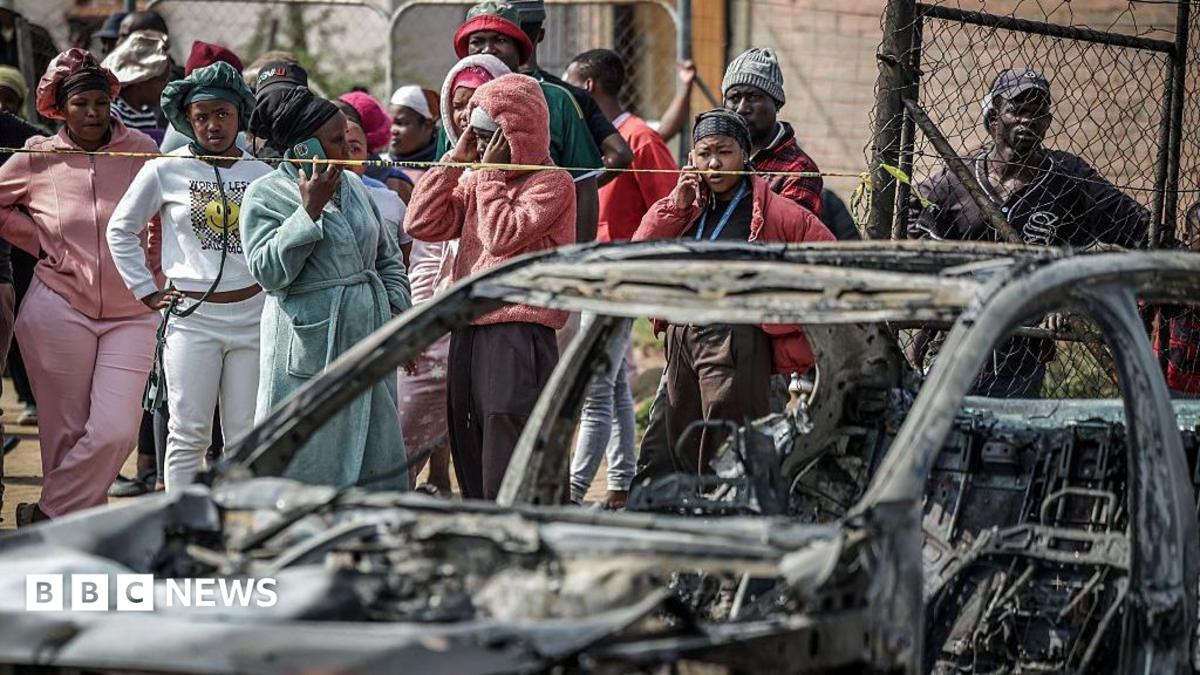
Twenty-seven people are dead following two mass shootings that took place only hours apart in South Africa, according to police, in an attack that has again prompted calls for stronger action against the country's entrenched gun-crime networks.
The first attack unfolded on Saturday evening at a bar close to Johannesburg, where eight gunmen reportedly opened fire on patrons gathered outside before pushing their way inside and continuing to shoot. As the attackers fled, they set fire to two vehicles, sending a crowd of onlookers scrambling back from the burning wreckage. Fifteen people were taken to hospital with injuries.
Police said the victims were thirteen men and four women, and that the circumstances of the attack remained unclear. Detectives have not indicated what triggered the violence or whether those responsible were known to one another, and no arrests had been made by Sunday morning.
The second shooting occurred in the early hours of Sunday, outside an entertainment venue in a township near Cape Town. Ten people were killed in that attack, with a further 11 injured. Authorities said five of the victims died at the scene, while five others succumbed to their wounds in hospital. Armed security personnel were deployed to the area as police began their investigation.
The two attacks come days after gunmen stormed a house in the KwaMakhutha township in Durban, killing 11 people. That attack, in which a home was reportedly invaded and shot at from close range, is one of several mass killings to have struck the country in recent weeks, and has fuelled growing concern that the violence is escalating rather than plateauing.
South Africa has long ranked among the countries with the highest murder rates anywhere in the world. Official figures put daily killings at roughly 60 in a nation of about 62 million people, a level of violence that analysts say has been driven by powerful criminal networks and the easy availability of firearms.
Much of the recent bloodshed has been linked to turf wars between gangs operating in drug trafficking and illegal mining, disputes that are frequently settled with automatic weapons rather than courts. Police and researchers warn that these clashes tend to spill over into public spaces — bars, shebeens, taverns and entertainment venues — where civilians are caught in crossfire or targeted directly.
Illegal firearms remain readily available across the country, and investigators have repeatedly highlighted how criminal syndicates stockpile weapons smuggled across borders or sourced illicitly from within South Africa. The proliferation of such weapons is one of the factors most often cited by police officials in public assessments of the country's security situation.
President Cyril Ramaphosa has acknowledged the scale of the problem. In February, he described organised crime as "the most immediate threat to our democracy, our society and our economic development", framing the battle against gangs not simply as a policing challenge but as a matter of national economic survival.
The government has responded with a visible security presence in some of the worst-affected areas. Earlier this year, the military was deployed alongside police in districts recording some of the country's highest murder rates, a measure intended to reassure residents and support police efforts to curb armed violence.
Police are also continuing to investigate other serious killings. Separate investigations into further deaths, including the recovery of additional bodies connected to earlier cases, are said to be under way, adding to the caseload facing detectives already stretched by the pace of recent violence.
South African authorities have faced mounting criticism for what campaigners describe as a slow and piecemeal response to mass shootings, many of which have occurred at social gathering places where people had no opportunity to escape. Advocacy groups have repeatedly pressed for intelligence-led operations against gang strongholds, tougher sentencing for firearm offences and better coordination between national and local police units.
No motive has yet been established for either the Johannesburg or the Cape Town attack, and the apparent randomness of the venues — an evening bar and a late-night entertainment spot — has raised fresh anxieties among residents about the absence of any obvious warning sign before such violence erupts.
Investigators are expected to continue canvassing for witnesses and forensic evidence, while the burnt-out vehicles left at the Johannesburg scene are likely to remain central to efforts to trace those responsible. Police have urged anyone with information about either attack to come forward.
For now, the country faces a grim reckoning: three mass shootings in a matter of days, a combined death toll of 38 people, and no sign that the forces driving the violence are loosening their grip on the communities that bear the brunt of it.










Comments (0)