 yoga-mahendra
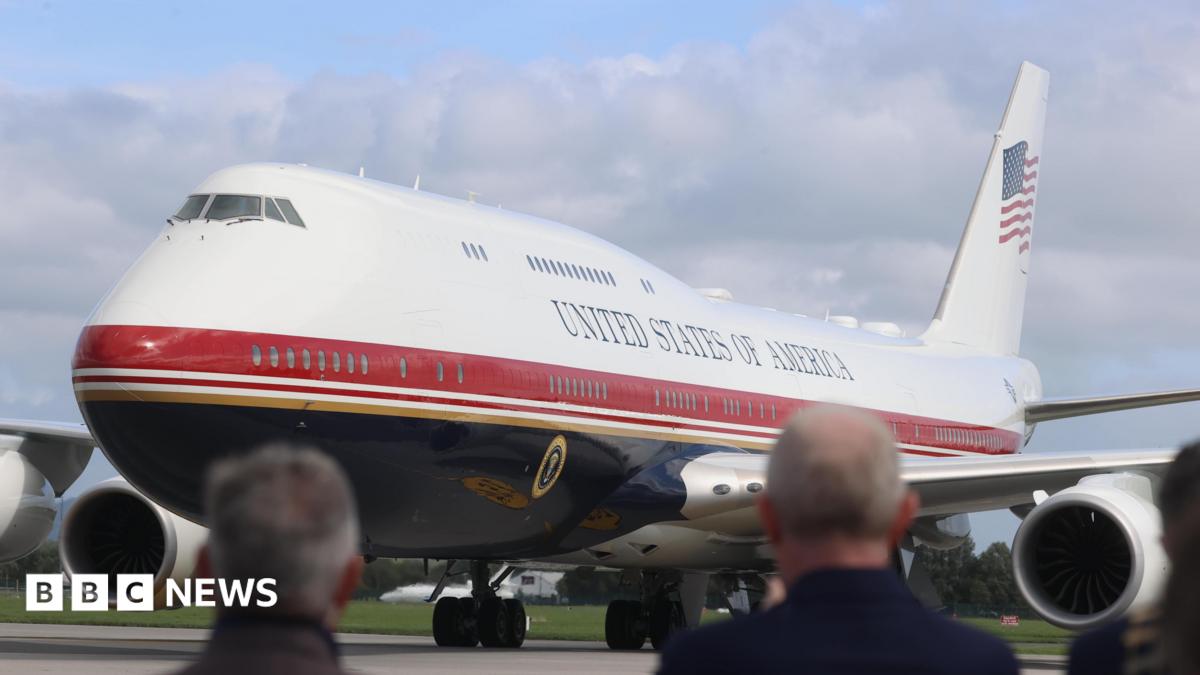
The White House has barred CNN from travelling aboard Air Force One with President Donald Trump during a weekend trip to Tennessee, according to the BBC, in a move that appears to reopen a dispute the administration had temporarily stepped back from.
CNN had been scheduled to fly with the president to cover a college American football game, only to find its name missing from a media schedule released by the White House late on Friday night. The broadcaster, which has correspondents assigned to cover the administration, is now facing the prospect of covering the trip from the ground.
The president's schedule, described as tentative, listed no replacement outlet in CNN's place. That detail has prompted speculation that the exclusion was deliberate rather than a simple administrative oversight — a distinction that matters, because a genuine mistake would be expected to be corrected quickly once raised.
The BBC has requested comment from the White House about the exclusion. As of publication, no explanation had been provided.
The trip is not a routine assignment. Trump is due to attend a game between the University of Tennessee and the University of Texas College at Neyland Stadium in Knoxville, with the president expected on site from midday local time on Saturday. College football weekends in the US are among the few occasions when a sitting president's travel is treated as a media event in its own right, with a large press contingent travelling and filing from the stadium and the surrounding area.
Access to Air Force One has long been regarded as a symbol of presidential accountability, and its restriction carries weight beyond the loss of a single trip. Pool arrangements on presidential travel have developed over decades on the assumption that the press is an eyewitness rather than a party to the story, and any attempt to select who may observe the president in transit tends to be read as an attempt to manage the visual narrative as well as the words.
The exclusion comes at a sensitive moment. The move is the latest in a running battle between the White House and news organisations that had briefly appeared to settle after a federal judge intervened.
Last week, Trump banned journalists from CNN, Politico and MS NOW from the White House, accusing the outlets of writing "fiction or lies" about his administration. All three said they were pursuing legal action, and each argued that the blanket exclusion violated their constitutional rights to freedom of speech and freedom of the press.
The backlash was immediate and unusual. Four television networks that share a daily rotation of White House coverage alongside CNN — ABC, CBS, Fox News and NBC — paused their broadcasts of the president in solidarity with the banned outlets. The coordinated action briefly reshaped prime-time television in the US, with broadcasters refusing to deliver a president's words unchallenged while rival newsrooms were locked out.
The administration responded by launching its own streaming channel, Trump TV, which began airing ahead of the UN General Assembly in New York. Critics saw the move less as a service to the public than as an attempt to offer a version of the presidency unmediated by independent questioning.
A federal judge subsequently ruled that barring news outlets from the White House was likely unconstitutional, and that the administration had to let them back in — at least for the time being. Regular US television coverage resumed on Friday after White House officials permitted reporters entry.
But the ruling did not end the friction. The White House continued to deny entry to some CNN and MS NOW reporters assigned to cover arrivals at a state dinner for the Chinese leader, Xi Jinping, on Thursday — the same week the ban was lifted in court. A White House communications account posted on X that "contrary to what the Fake News wants you to believe, they don't just get to have free rein into every part of the White House, every event and every press call."
That distinction — between the building and the aircraft, between access in principle and access in practice — is at the heart of the current confrontation. Legal victories on the White House grounds have not translated into unrestricted access on presidential travel, and agencies and courts are likely to be asked again to separate the two.
For now, the practical consequence is modest: CNN will not be aboard Air Force One for the Tennessee game, and no other broadcaster is listed to take its place. The larger significance is that an administration which agreed, under judicial pressure, to allow barred reporters back into the White House continues to draw lines about where those reporters may go. Presenting a unified, frictionless picture of the president is a priority that appears to outrank the transparency the first amendment is designed to protect, and every selective invitation — and every exclusion — reinforces the argument that access is being managed as a message rather than maintained as a routine.
Whether the Tennessee exclusion was a deliberate snub or a clerical slip is the question the White House has yet to answer. The flight to Knoxville will take place either way, and the cameras that would have documented it will, for the first time in a while, travel without CNN.








Comments (0)