 yoga-mahendra
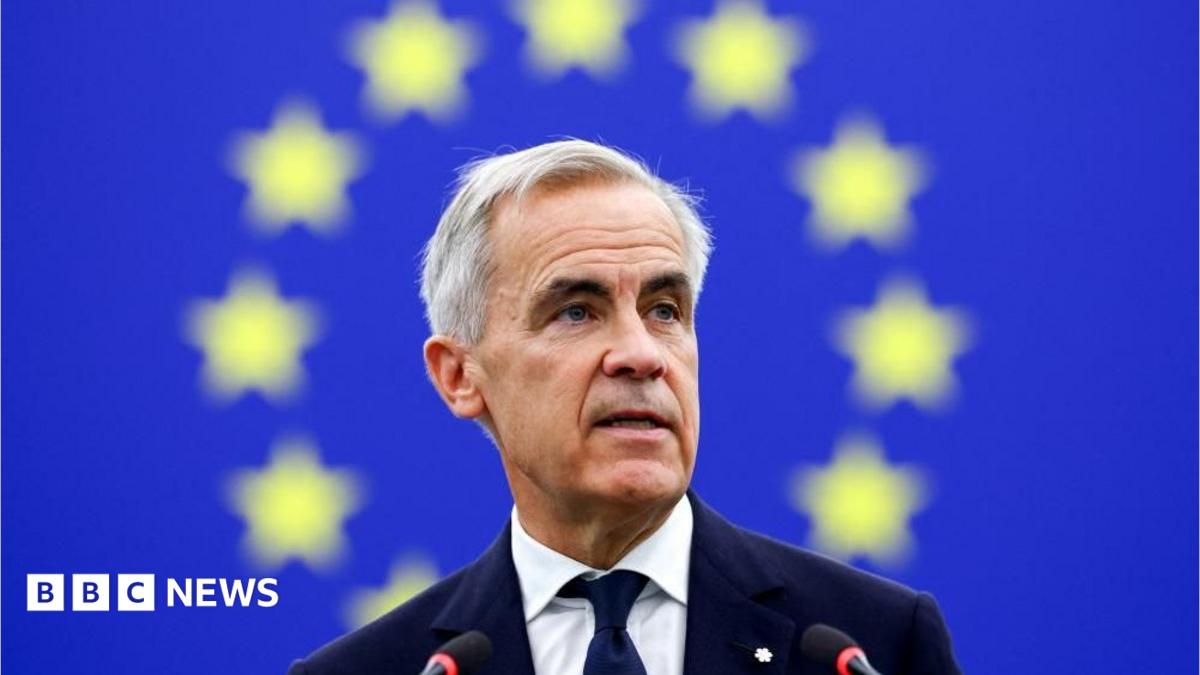
Canadian Prime Minister Mark Carney has formally embraced an ambitious proposal from the European Union to establish Canada as the bloc's very first "associate member." Addressing members of the European Parliament in Strasbourg, Carney advocated for significantly expanded transatlantic cooperation spanning defence, strategic minerals, and energy security during a period of mounting global instability.
Speaking before European lawmakers, Carney underlined that Canada and the European continent are substantially stronger when working together in the face of widespread geopolitical rupture. His speech positioned closer transatlantic alignment as a crucial counterweight to emerging international challenges, asserting that shared democratic principles must serve as the foundation for navigating complex global crises.
Carney’s appearance in Strasbourg followed an initiative introduced a day earlier by European Commission President Ursula von der Leyen. The European Commission chief proposed opening the bloc’s doors to an unprecedented associate membership for Canada, envisioning deeper joint initiatives in vital sectors such as manufacturing, advanced technology, security, critical minerals, and economic resilience.
The prospective associate status represents entirely unchartered territory for Brussels, as such a classification does not currently exist within the European Union's institutional framework. Translating the proposal into concrete policy is expected to require years of delicate negotiations, as well as formal endorsement from all 27 EU member states, several of which have previously voiced hesitation regarding the creation of new tiers of membership.
Even without associate status, Ottawa and Brussels already maintain strong bilateral ties anchored by a comprehensive free-trade agreement. The two sides also actively cooperate on existing research initiatives, economic trade, and international defence matters, providing an established foundation upon which any expanded partnership would be constructed.
The prospect of deeper Canada-EU integration quickly drew sharp criticism from US President Donald Trump, who publicly dismissed the associate membership initiative as laughable. Trump cautioned that he would consider imposing very serious tariffs or halting commerce with Europe on numerous fronts if he perceives the burgeoning alliance as a hostile act or one driven by bad intentions.
These warnings from Washington arrive amid an escalating trade confrontation between Canada and the United States. Cross-border relations have deteriorated significantly after bilateral negotiations broke down last month, sparking a wave of retaliatory, tit-for-tat tariffs between the historic North American allies.
Carney responded firmly to the US President’s remarks during a press conference following his address to European lawmakers. Characterising the Canada-EU initiative as an inherently constructive and positive process, Carney insisted that Canadians remain united in their determination that external powers will not dictate their culture, the languages they speak, or their ability to forge international agreements.
Throughout his parliamentary address, Carney outlined the numerous geopolitical and economic pressures currently battering modern societies. He pointed specifically to the accelerating threat of climate change, the gradual erosion of democratic norms, the weaponisation of international trade, and the use of financial systems and supply chain vulnerabilities as instruments of coercion.
Addressing concerns regarding global power dynamics, Carney clarified that an enhanced Canada-EU relationship is not intended to create a rival superpower bloc. Instead, he framed the partnership as a beacon for other democratic nations, emphasizing that the initiative is rooted in protecting sovereignty and the freedom of citizens to determine their own way of life rather than exerting dominance over others.
Carney also sought to manage expectations regarding institutional integration, reiterating that Canada is neither seeking nor in a position to become a full member of the European Union. He explained that associate membership represents an entirely different framework designed to allow for deep strategic collaboration without full political accession.
A central pillar of the proposed alignment involves shoring up European energy security and accelerating the green transition. Carney noted that Canada is well-positioned to supply liquefied natural gas and hydrogen to European partners while simultaneously drawing on Europe's established expertise in clean-energy technologies.
In addition to energy, the Canadian prime minister highlighted the strategic necessity of pooling technological resources and securing critical mineral supply chains. He argued that mutual collaboration across the full spectrum of strategic capabilities would substantially enhance the collective autonomy and resilience of both economies.
Beyond high-level economic and industrial coordination, Carney emphasized the importance of fostering direct cultural and educational connections. He proposed expanding people-to-people links by integrating Canada into the EU’s flagship Erasmus+ programme, which would offer young people the opportunity to study, live, and work freely on either side of the Atlantic Ocean.
Carney described the unfolding initiative as a unique and positive endeavor that both sides must carefully define together as negotiations progress. He cautioned that the process is still at the beginning of a long journey, confirming that any definitive proposals will eventually be brought before the Canadian parliament for comprehensive debate and a formal vote.
Further negotiations on the framework are scheduled to advance in the coming weeks. Both sides are set to reconvene at a dedicated Canada-EU summit in Montreal at the end of October, where officials will work to drill down into the specific details of the proposed associate partnership.









Comments (0)