 fitri-handayani
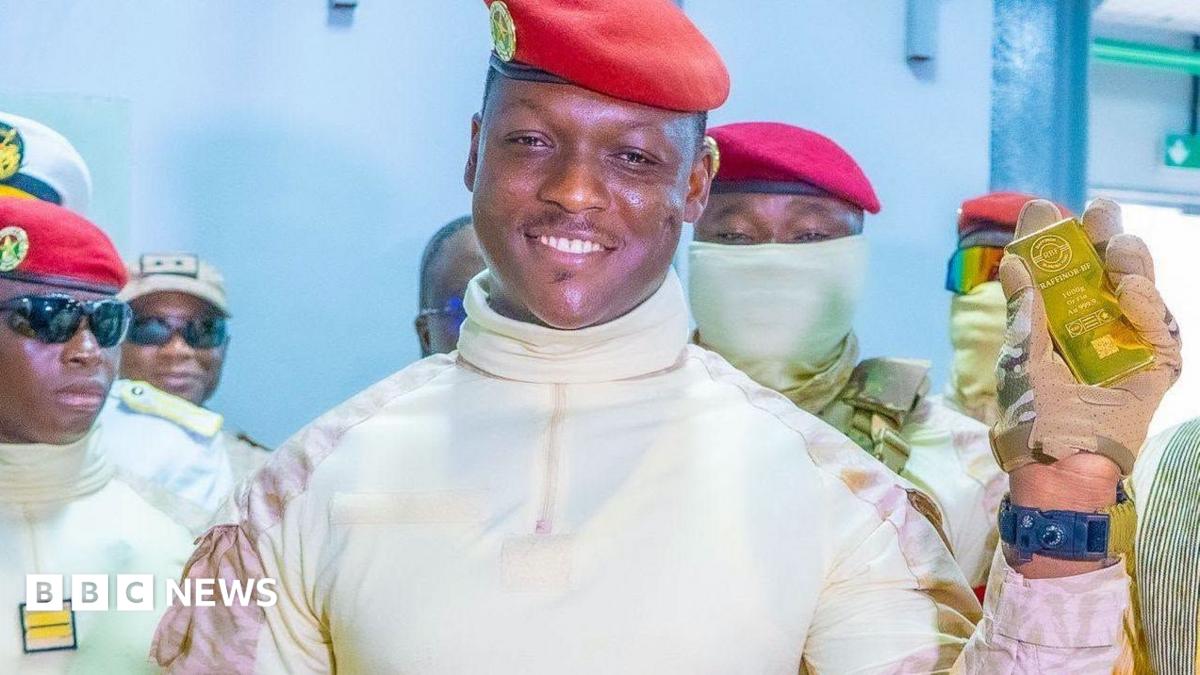
Burkina Faso's military government has inaugurated the country's first gold refinery, a move officials frame as a decisive step toward capturing more value from the nation's most valuable export and loosening its long-standing dependence on foreign processing.
Captain Ibrahim Traoré, who has led the West African state since seizing power in a September 2022 coup, presided over the opening ceremony in the capital, Ouagadougou, on Monday. Speaking at the plant, he described the project as part of a broader strategy to ensure that the country's mineral riches are transformed into finished products within its own borders rather than shipped abroad in raw form.
"We want to refine all our metals on site... we want to have the entire value chain on site," Traoré said, according to remarks carried by the presidency.
The facility, named Raffinor-BF, is intended to anchor an ambitious vision: turning landlocked Burkina Faso into a regional hub for gold refining. The presidency said the plant cost more than 11 billion CFA francs, equivalent to roughly $19 million or £14 million, and was funded by the state, including through the National Precious Metals Company (Sonasp), in partnership with private-sector investors.
At the outset, the refinery will be able to process 164 tonnes of gold annually — a figure that far exceeds the country's current yearly output. Officials say capacity could eventually climb to 515 tonnes, a target that implies the government hopes to attract gold from neighbouring countries as well.
"This is the day we take back the keys to our own house," Mines Minister Yacouba Zabré Gouba said at the inauguration. "Our gold will no longer be used to create added value for others while our people remain in need."
The refinery represents the latest phase of Traoré's nationalist economic agenda, which has prioritised domestic production and tighter state control over strategic industries since he took power at the age of 34. His government has increased its footprint in mining and moved to reorganise the trade in artisanal gold, a sprawling informal sector that authorities have long struggled to monitor.
Two years ago, the junta established a state-owned mining company, and foreign operators are now required to hand the government a 15% stake in their operations while also training local workers. In 2024, the authorities suspended exports of gold produced by artisanal and semi-mechanised mines, saying the measure was needed to bring order to a sector plagued by smuggling and illicit trading.
Those concerns extend beyond lost revenue. The government has repeatedly alleged that illegally traded gold helps finance the Islamist insurgency that has engulfed large parts of the country. Burkina Faso has spent years battling armed groups linked to al-Qaeda and Islamic State, and significant swathes of territory lie outside full government control — a security crisis that has compounded the difficulty of regulating mining activity in remote areas.
Traoré has previously accused smugglers of moving large quantities of gold out of the country illegally and said some of the proceeds end up funding militant operations. The new refinery is presented by his administration as part of the answer, offering a domestic channel through which both industrial and artisanal production can eventually be processed and accounted for.
The economic backdrop has been favourable. International gold prices have reached historically high levels, and global mine output hit an estimated record of 3,672 tonnes in 2025, according to the World Gold Council. The council also reported that Burkina Faso's production rose 17% year-on-year in the second quarter of 2026, helped by increased output at several mines.
Even so, analysts note that building a refinery does not automatically resolve the deeper challenges facing the sector. Artisanal and small-scale mining remains diffuse and difficult to police, and smuggling networks have proven resilient to export bans and regulatory crackdowns. The refinery's commercial viability will depend partly on whether the government can channel enough legally produced gold through it to justify its scale.
Burkina Faso is not alone in pursuing this approach. Several West African governments are seeking to process more of their gold domestically, reflecting a regional shift toward resource nationalism. Guinea and Ghana have both restricted exports of unrefined gold, Mali is building its first refinery with assistance from a Russian firm, and Ivory Coast plans to open its own facility next year.
For Traoré, the refinery also serves a political purpose. He has presented such projects as evidence that Burkina Faso is becoming more economically self-reliant, pointing to parallel investments in cotton, textiles and food processing. His administration has framed the refinery as a symbol of sovereignty — a break from an economic model in which the country's resources generated wealth elsewhere.
Whether the plant can deliver on those promises will depend on execution. The government says the facility should eventually refine all the gold produced by both industrial mines and artisanal miners, a goal that would require sweeping improvements in oversight and supply-chain traceability. For now, the inauguration marks a significant symbolic milestone: a nation long known for exporting raw gold now possesses the infrastructure to refine it at home.








Comments (0)