 fitri-handayani
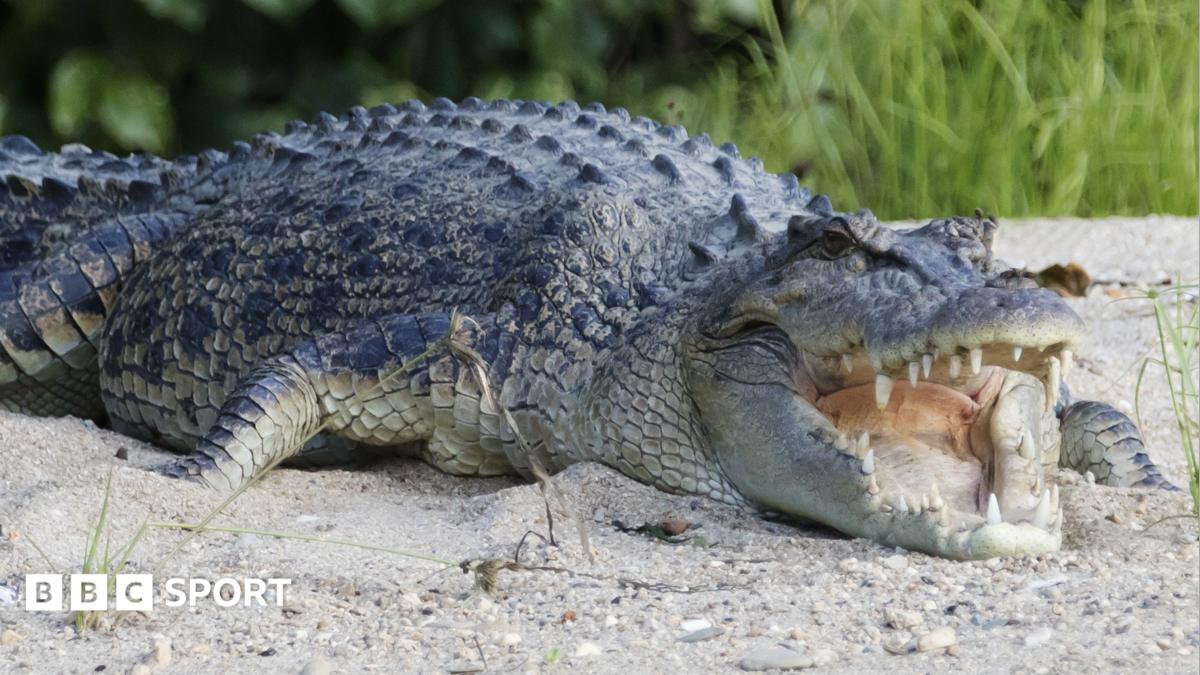
An Australian waterway populated by an estimated 500 saltwater crocodiles has officially received approval to serve as the competitive stage for rowing and canoeing events during the Brisbane 2032 Olympic and Paralympic Games. The Fitzroy River, situated in the regional Queensland city of Rockhampton, will welcome elite international athletes following the completion of an extensive evaluation process that confirmed the location's operational and sporting suitability.
The decision to endorse the Fitzroy River course follows the completion of an independent technical assessment that rigorously examined the venue's overall capability. Undertaken to verify whether the location could satisfy the stringent standards demanded by world-class flatwater competition, the assessment gave the green light for Olympic and Paralympic events to proceed at the central Queensland site.
The comprehensive investigation was commissioned by the Games Independent Infrastructure and Coordination Authority, known as GIICA. In its findings, the authority evaluated how the proposed aquatic course would respond across a diverse spectrum of environmental conditions, fluctuating water levels, shifting weather patterns, and potential flood risks, both during the staging of the Games themselves and throughout the preparatory period leading into 2032.
Notably, the scope of the independent technical assessment did not specifically examine the river's resident crocodile population. Instead, the analytical framework remained dedicated to hydrological, meteorological, and structural factors, ensuring that the course itself could sustain fair and reliable competition under various natural and seasonal pressures.
While the presence of large wildlife has drawn significant public attention, the site chosen along the river—the Fitzroy River Flatwater Facility—is already an established sporting venue. GIICA highlighted that the location routinely functions as a training and competition venue for flatwater disciplines, regularly staging local regattas, hosting school state championships, and accommodating high-performance training camps for national teams.
Because the location is already utilized as an active rowing and paddle-sports hub, established management strategies and safety protocols are operating on site. Contingency plans are routinely enacted whenever crocodiles are sighted in the vicinity of the course, and Olympic organizers and authorities have previously been provided with assurances regarding the safety of competitors on the water.
The native reptiles sharing the river system are saltwater crocodiles, commonly referred to across Australia as "salties." Recognized as the largest living reptiles on the planet, these creatures possess the biological capability to thrive in both freshwater and saltwater environments and can achieve formidable lengths exceeding six meters.
Crucially for Games organizers, the venue has secured formal backing from key governing bodies of international sport. World Rowing, the global authority overseeing competitive rowing, formally endorsed the Fitzroy River course following the release of the technical evaluation, expressing complete satisfaction with the venue's sporting fairness.
Jean-Christophe Rolland, the president of World Rowing, expressed confidence in the location based on the findings. Rolland explained that the extensive analysis undertaken confirmed that the Fitzroy River is capable of providing fair competition conditions during the Games period, fully aligning with the requirements expected for both Olympic and Paralympic rowing regattas.
A matching endorsement was granted by Paddle Worldwide, the international governing organization previously recognized as the International Canoe Federation. The federation's leadership indicated that the comprehensive technical research provided the necessary reassurance for canoe sprint athletes set to compete in 2032.
Paddle Worldwide President Thomas Konietzko emphasized that the quality and thoroughness of the technical work significantly enhanced the sport’s understanding of the field of play. Konietzko stated that the depth of the evaluation provides both the governing body and its athletes with immense confidence that the course can deliver fair competition for Canoe Sprint participants.
The official confirmation was warmly welcomed by Brisbane 2032 President Andrew Liveris, who emphasized the organizational clarity the endorsement brings. Liveris noted on Thursday that this crucial milestone provides additional certainty as Games organizers transition into the subsequent stages of venue planning and delivery, cementing Rockhampton as the exclusive focal point for future design and operational work.
Liveris had previously downplayed concerns regarding the coexistence of Olympic athletes and the resident crocodile population, urging stakeholders to maintain perspective. Addressing the issue last year, the organizing chief drew comparisons to ocean sports, pointing out that people routinely surf in waters populated by sharks, and calling for a constructive, can-do mindset rather than focusing on perceived limitations.
With the independent review finalized and key international sporting federations providing their backing, the focus for the Rockhampton venue now turns to detailed design work, Games-time preparations, and operational execution, ensuring that the Fitzroy River Flatwater Facility is fully primed to host the world's best rowers and paddlers in 2032.









Comments (0)