 irwan-setiawan
The Australian government has introduced a major package of immigration restrictions designed to substantially curtail temporary migration, placing international students, so-called "visa hoppers," and backpackers under stricter regulatory scrutiny. The comprehensive overhaul represents Canberra's latest effort to moderate overall population expansion and regain firm authority over temporary entry streams.
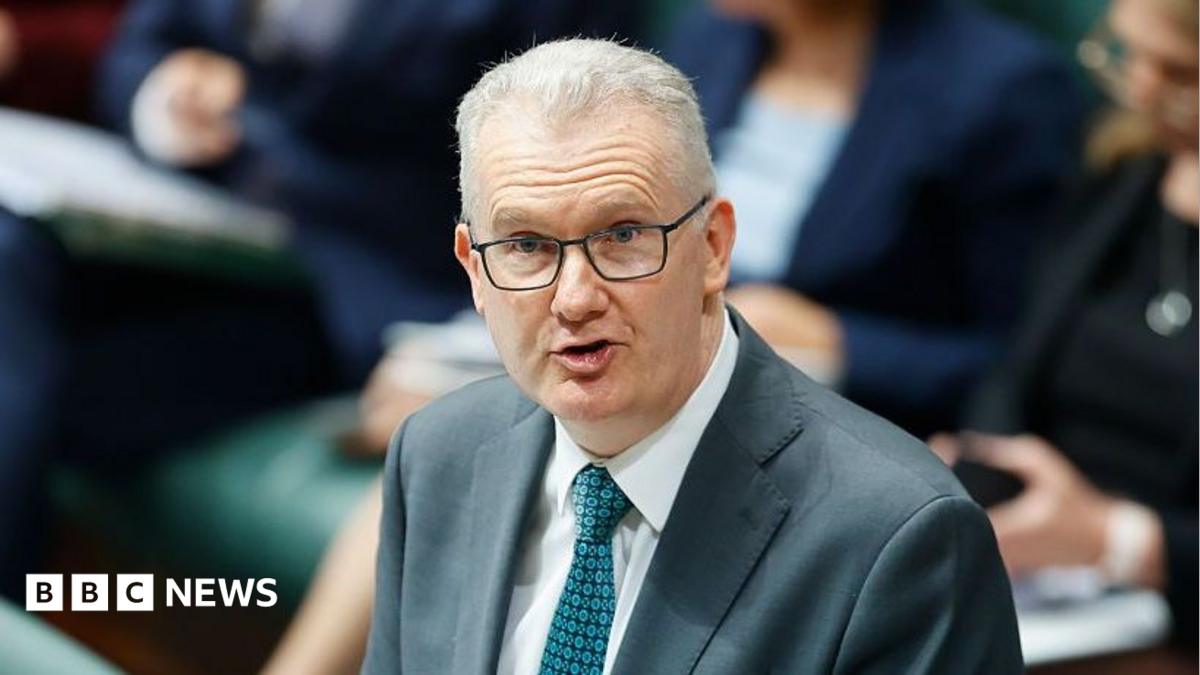
Outlining the measures on Thursday, Home Affairs Minister Tony Burke delivered an address titled "The work of managing the migration program: who arrives, who stays, who leaves." In his remarks, Burke emphasized that while immigration historically serves as a major strength for the nation, the system requires a high level of control. The primary objective of the new framework is to drive annual net overseas migration down to 225,000 individuals by the year 2028.
Under the updated provisions, the government will end the standard practice that allows overseas students and graduate visa holders to bring dependents along with them. Burke confirmed that authorities will no longer automatically increase the overall volume of students by permitting them to sponsor family members, closing a pathway that previously contributed to rising onshore numbers.
Certain categories of applicants, however, will be shielded from the ban on family accompaniment. The policy will include specific exemptions for foreign scholars who are already residing within Australia, alongside candidates originating from Pacific island nations and Southeast Asian countries. Furthermore, doctoral candidates will maintain the right to bring family members, with the minister pointing out that PhD students face distinctly different life and career stages compared to general undergraduate cohorts.
The government is also moving decisively against the practice known as visa hopping, in which non-citizens prolong their stay in Australia by continuously enrolling in consecutive academic programs. The minister noted that under the previous arrangement, some individuals would conclude a course and subsequently apply for lower-level qualifications, occasionally turning to questionable or less legitimate educational providers merely to remain onshore.
To eliminate these pathways, international students will only be permitted to extend their lawful stay if they are progressing upward through the academic hierarchy. As an illustrative example, the minister explained that an individual completing a bachelor's degree will still be fully eligible to transition into a master's degree program, ensuring educational pathways support genuine academic advancement rather than indefinite residency.
Significant structural shifts have also been outlined for the Working Holiday Maker program, a popular visa class for travelers aged between 18 and 30 that serves as a vital labour supply for regional enterprises and agricultural businesses. Under the long-standing model, visitors were granted a 12-month stay, which could be extended into a second year after completing three months of regional employment, and into a third year following six months of similar work.
Moving forward, qualifying applicants seeking second- and third-year extensions will no longer enjoy automatic processing and will instead be subject to a competitive ballot mechanism. The annual intake for second-year working holidaymakers will be capped at 45,000 individuals, marking a noticeable decrease from the 57,000 travelers who successfully qualified during the prior year.
The tightening will be even more severe for third-year stays, where the government plans to enforce a strict ballot limit of just 5,000 visas. This represents a dramatic decline from the 31,000 backpackers who received approval for their third year under the previous framework.
Despite the widespread tightening of working holiday numbers, British passport holders will be completely unaffected by the new ballot system or caps. Their exemption is protected under the existing bilateral terms established in the free trade agreement between the United Kingdom and Australia.
The announcement coincides with fresh demographic data released by the Australian Bureau of Statistics on Thursday, which indicated that Australia's population grew by 1.4% during the 12-month period leading to March 2026, reaching a total of 27.9 million residents. That net growth figure accounted for standard births and deaths, along with a net overseas migration inflow of 292,100 people.
Immigration policy has surged to the forefront of domestic political discourse in Australia, fueled by public concern over escalating living expenses, housing shortages, and the resulting strain placed on community infrastructure and public services. Political opponents have capitalized on these pressures, notably the right-wing populist party One Nation, which recently secured its first lower house seat in May and has experienced a rise in support.
Earlier this week, One Nation unveiled an aggressive platform proposing to eliminate 750,000 temporary migrant visas across a three-year span and enforce a strict annual net migration limit of 130,000 people. Burke strongly rejected that proposal, cautioning that cuts of that magnitude would cause severe damage and risk smashing key sectors of the domestic economy.
The latest directives build upon several restrictive measures implemented by the government in July. Those prior steps included prioritizing onshore family and skilled permanent visa applications over candidates applying from abroad, alongside an outright freeze on working holiday visa processing for 24 separate countries, excluding the United Kingdom.
The swift policy adjustments have nevertheless drawn concern from community support organizations. Violet Roumeliotis of Settlement Services International warned that the national conversation on immigration is increasingly being governed by short-term political calculation rather than the long-term national interest. She argued that blocking family visas for international students exemplifies this dynamic and risks undermining Australia's capacity to attract and compete for global talent.








Comments (0)